
Ecovacs Winbot W3 Omni
Autonomous window cleaning with edge detection and dock automation. The feature set is straightforward: navigate, clean, return. Unlike carpet-navigation vacuums, window cleaners work in constrained, predictable environments, making Level III viable without the sensor overhead.
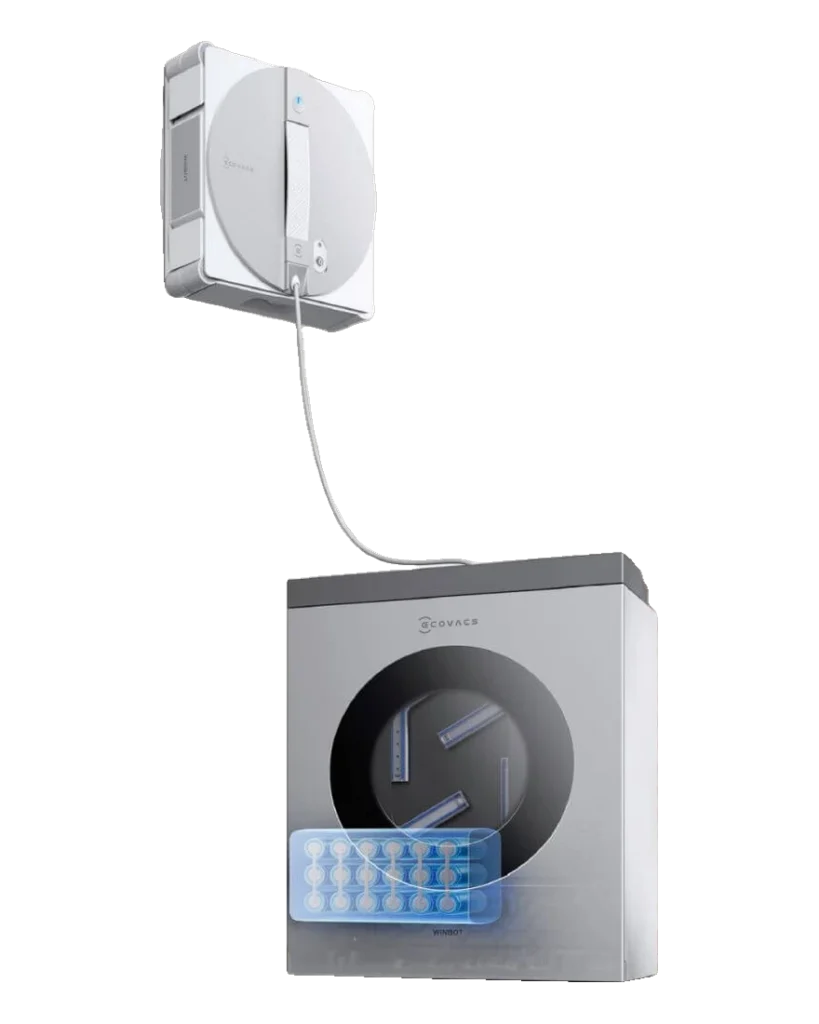
Will the Ecovacs Winbot W3 Omni work on your windows?
Describe your windows using the controls. Each choice reads the spec sheet for you, flagging where the Ecovacs Winbot W3 Omni is built for your space and where it isn’t.
A classification of fit for the conditions you set, not a recommendation. Verdicts describe engineering design intent, not test results.
The full spec sheet.
Priced above the category median, with every figure charted against the category below.
Position shows where the figure sits across the tracked category, not a quality judgment. The vacuum holding the robot on the glass, not cleaning power. The figure has no standard test method, so it is comparable only within a brand and generation.
Living with it.
Early field reports show stable firmware; dock mechanism is the friction point.
February 2026 launch gives limited longitudinal data. Manufacturer has documented WIN-SLAM stability in prior Ecovacs models. Owner forums report occasional dock sensor misalignment on first use; firmware updates addressed reported edge-detection hiccups in v1.1.
$699 to buy, then about $80 a year for the replaceable parts below. Over three years that is roughly $240 past the sticker price. Excludes electricity and any repairs.
- Mop padEvery 3-6 months$20–30
Replacement cadence from the maintenance schedule; prices shown where the source documents them.
NoteTether entanglement near frame hardware: Safety rope can catch on ornate or sharp frame edges. Inspect window surroundings before automated schedules.
NoteWater spillage during dock maintenance: Manual pad removal and dock water access can drip. Position dock on spill-resistant flooring or use absorbent mat.
NoteHigh-voltage dock plug near water: Dock outlet carries mains voltage and water-spray contact risk. Follow manufacturer grounding; GFCI outlet recommended.
How the assessment has moved.
Every announcement, release and reassessment behind the current classification.
-
Jan 2026 · AnnouncementEcovacs reveals Winbot W3 Omni with auto-clean dock at CES 2025
-
Feb 2026 · ReleaseLaunches commercially at $699 in early 2026
-
Jul 2026 · AssessmentRobovations Score recorded at 69 of 100
-
Jul 2026 · AssessmentRobovations Score revised 69 → 61
-
Aug 2026 · AssessmentRobovations Score rescored under v4.0
-
Aug 2026 · AssessmentRobovations Score rescored under v4.2
-
Aug 2026 · AssessmentRecord status: Verified → Provisional
How Ecovacs Winbot W3 Omni compares.



What people actually ask.
OperationDoes the Winbot W3 Omni work on frameless or heavily tinted glass?
OperationHow far does the cable reach, and can I use an extension?
CompatibilityWhat happens during power loss or network outage while the robot is cleaning?
OwnershipHow often do cleaning pads need replacement, and what is the typical annual cost?
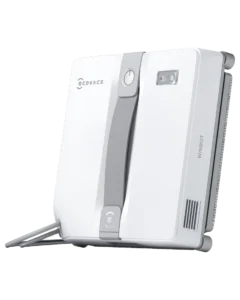 III
III
Ecovacs Winbot W1 Pro
 III
III
HUTT A1
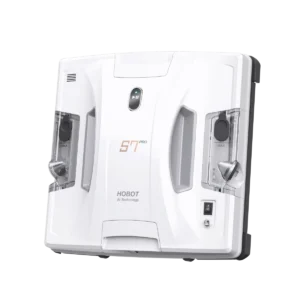 III
III
HOBOT S7 Pro
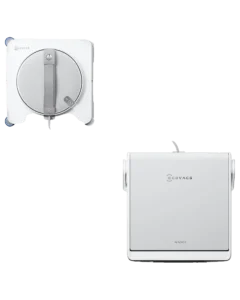 III
III
Ecovacs Winbot W2S Omni
Where it's sold
We may earn commission from qualifying purchases. This does not influence classification.
Reference the Ecovacs Winbot W3 Omni classification.
Embed the Autonomy Ladder™ mark or copy the citation. The mark is served from this record rather than saved as a file, so it always shows the level we currently hold. If we reassess, it updates on your page by itself.
- The mark must link to this record. An unlinked mark is not authorised.
- No recolouring, cropping, rotating, restyling, or re-typesetting. Scale proportionally only, up to 2×: the seal to 536px wide, the standard to 224px.
- Leave clear space equal to half the numeral tile on all sides: 32px on the seal, 22px on the standard.
- The mark states a classification, not an endorsement. It may not appear beside language implying Robovations recommends, rates, or approves the product.
- Hot-link the image from robovations.com. Do not download, self-host, proxy or re-upload it: a saved copy stops updating, and a mark that has stopped updating is a claim we no longer stand behind.
- The mark is live. It reflects the classification on this record as it stands. If we reassess, it changes on your page automatically. If we withdraw the classification, it stops rendering. Nothing is required from you either way.