Skip to content
Saved

Ownership burden/Robot Window Cleaners/4 robots compared/Reviewed Jun 2026

What do robot window cleaners really cost to maintain?
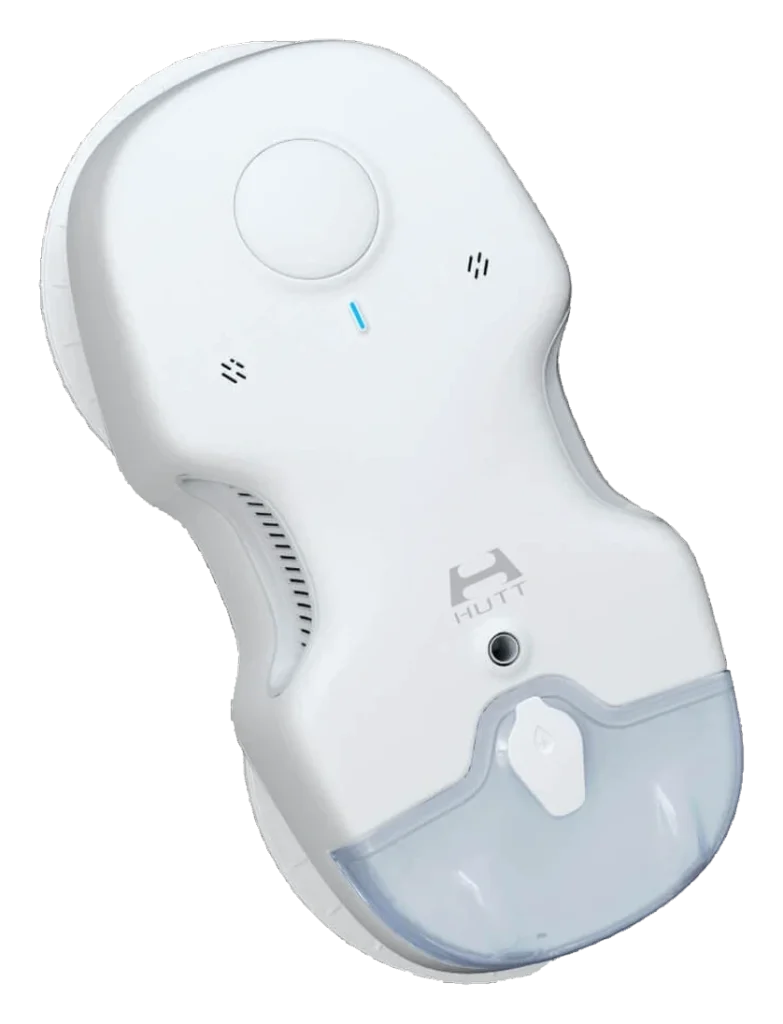
$430 to $8792-year total. Purchase price is between 63% and 80% of what these machines actually cost to run.
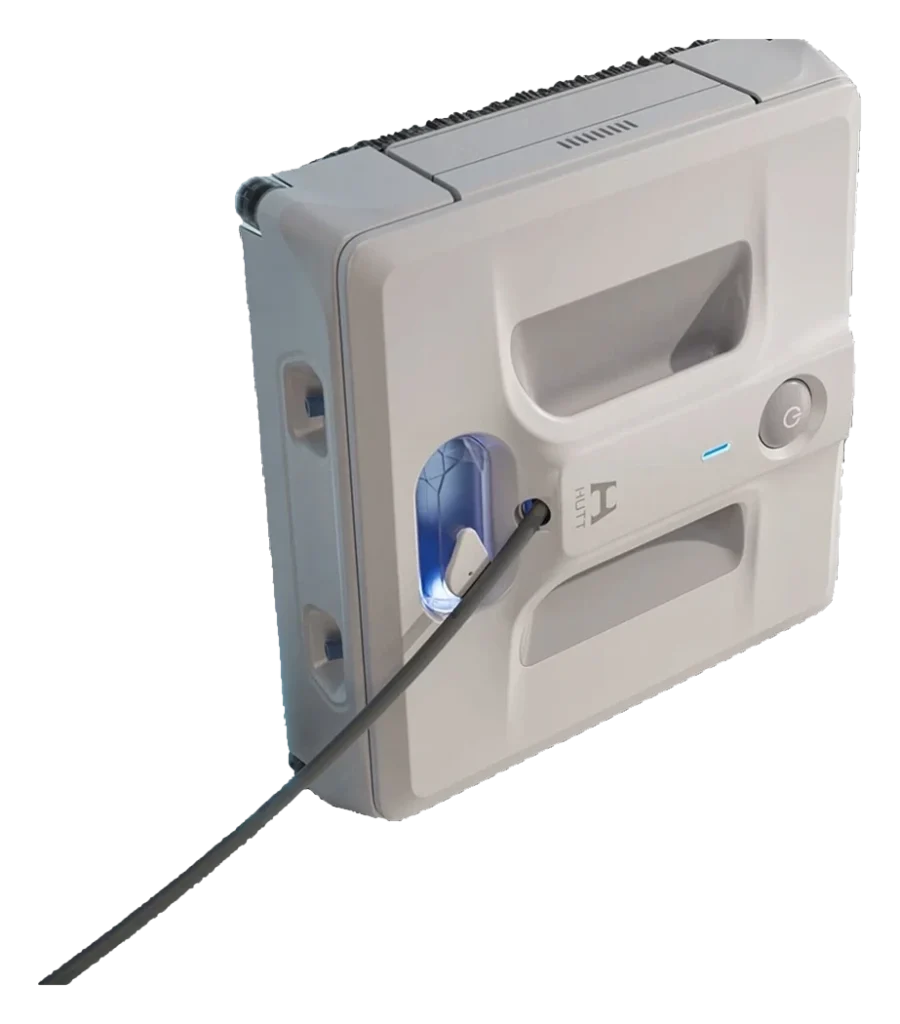
HUTT C6View recordHUTTIIC62-year total$519$399
Hobot R3View recordHOBOTIIR32-year total$570$400
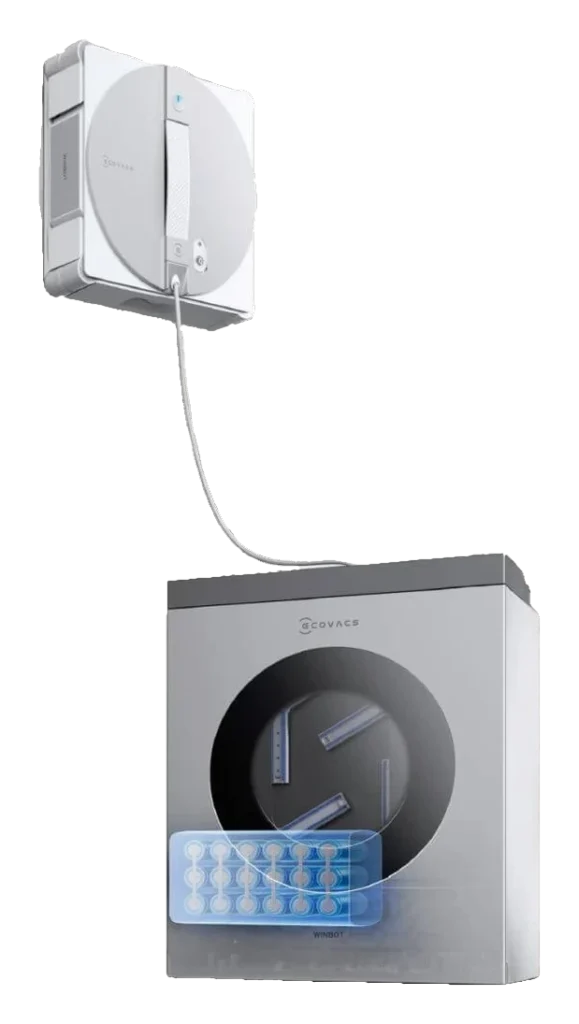
Ecovacs Winbot W3 OmniView recordEcovacsIIIWinbot W3 Omni2-year total$879
HUTT A1View recordHUTTIIIA12-year total$430
Full specifications16 measurements · 48 of 64 documented
MSRP
$399
$400
$699
$270
Rated runtime
25 min
Not documented
130 min
Not documented
Charge time
75 min
Not documented
120 min
Not documented
Battery capacity
14 Wh
Not documented
Not documented
Not documented
Battery type
Not documented
Li-ion
Li-ion
Not documented
Suction power
3,800 Pa
3,000 Pa
3,300 Pa
6,000 Pa
Noise level
70 dB
66 dB
75 dB
Not documented
Navigation
Vacuum suction adhesion to the glass; Z-shaped path across the pane from a one-key start.
Vacuum-based edge detection with dual rotating pad cycles
WIN-SLAM 5.0 with edge detection and obstacle avoidance
Laser edge-detection pathing
Connectivity
Not documented
bluetooth
wifi, bluetooth, alexa
Not documented
Dimensions (W×D×H)
5.5 × 2.3 × 2.8 in
11.6 × 5.8 × 3.7 in
8.7 × 3.5 × 9.4 in
Not documented
Weight
1.3 lbs
2.1 lbs
3.3 lbs
Not documented
Readiness
Promising Progress
Ready Now
Ready Now
Ready Now
Released
Jun 2022
Apr 2023
Feb 2026
Oct 2024
Power type
Mains-corded with backup battery
Mains-corded
Battery or mains-plugged operation
Mains-corded with backup battery
Safety rope rating
Not documented
441 lb
220 lb
326 lb
Backup battery runtime
Not documented
20 min
30 min
20 min

Three-year cost of ownership

What each robot actually costs to own

Purchase price plus documented consumables, subscription gating, and replacement events. Bars share one dollar scale, so length is directly comparable. Costs are typical, drawn from manufacturer maintenance guides and owner reports.
PurchaseConsumablesSubscriptionRepairs

HUTT A1$270 purchase
$4302-year total+$160 past purchase
  • MSRP$270
  • Cleaning pads (2 yr)$140
  • Safety rope replacement (yr 2)$20

HUTT C6$399 purchase
$5192-year total+$120 past purchase
  • MSRP$399
  • Microfiber pads (2 yr)$72
  • Solution-filter cartridges (2 yr)$48

Hobot R3$400 purchase
$5702-year total+$170 past purchase
  • MSRP$400
  • Dual pads (2 yr)$120
  • Motor intake filter (2 yr)$30
  • Bearing lubricant$20

Ecovacs Winbot W3 Omni$699 purchase
$8792-year total+$180 past purchase
  • MSRP$699
  • Cleaning pads (2 yr)$120
  • Cleaning solution (2 yr)$60

Documented failure events

When things break, and what they cost

Field-reported failures placed on the ownership timeline, with associated repair or replacement costs. Sourced from owner forums and manufacturer service documentation.

Month 6 · HUTT C6Minor

Solution-line mineral blockage reduces spray output

$0 (distilled water flush)

Manufacturer maintenance documentation identifies mineral deposit accumulation in solution inlets as a recurring event in hard-water regions. Owner reports describe reduced spray output resolved by a diluted-vinegar flush cycle.

HUTT manufacturer maintenance guide; owner reports
Month 8 · Hobot R3Minor

Pad-rotation bearing drag develops on dual-pad unit

$0-5 (light machine oil)

Manufacturer maintenance schedule calls for bearing lubrication every six months. Owner reports across multiple years document a bearing-drag symptom appearing sooner in humid or hard-water environments; resolved with light machine oil.

Hobot R3 maintenance schedule; owner forum reports
Month 12 · HUTT A1Minor

Spray nozzle mineral clog interrupts cleaning cycle

$0 (manual descale)

Cold-water-only spray systems accumulate mineral deposits in nozzle apertures. Owner reports confirm periodic clogging on tap water in hard-water areas; monthly nozzle clearing is listed as required maintenance in the product documentation.

HUTT A1 owner reports; manufacturer maintenance notes
Month 14 · Hobot R3Major

Dual pad holders accumulate residue causing suction loss

$25-30 (pad pair replacement)

Mineral spray residue compresses pad fibers and reduces suction seal integrity on the dual-holder mechanism. Owner reports describe noticeable adhesion loss at 12-16 months on hard-water installations; pad replacement restores suction.

Hobot R3 owner reports; third-party evaluations
Month 18 · Ecovacs Winbot W3 OmniMinor

Dock inlet filter requires descaling

$0 (manual descale)

Auto-clean dock stations accumulate mineral deposits in the water inlet filter over time. Manufacturer maintenance documentation recommends monthly cleaning; owner reports describe reduced dock efficiency when descaling is deferred past three months.

Ecovacs manufacturer maintenance guide; owner reports
Month 24 · HUTT A1Major

Annual safety rope replacement at scheduled interval

~$20 (rope replacement)

Manufacturer documentation mandates annual safety rope replacement or sooner on visible wear. This is a non-optional maintenance event; deferred rope replacement on a corded tethered robot operating above ground level carries a fall risk.

HUTT A1 manufacturer safety documentation

Consumables breakdown

Annual cost by part type

Each line is the manufacturer-recommended replacement frequency multiplied by the current part cost. No assumptions about deep-cleaning intervals.

Part · frequencyHUTT C6Hobot R3Ecovacs Winbot W3 OmniHUTT A1
Microfiber padsEvery 3-4 months$36-54 / yr$50-60 / yr$40-60 / yr$65-80 / yr
Cleaning solutionPer tank fillvaries / yr$0 (water-only option)$20-30 / yr$0 (tap water)
Solution-filter cartridgeEvery 3-6 months$20-30 / yr$0 / yr$0 / yr$0 / yr
Motor intake filterAnnually$0 / yr$15 / yr$0 / yr$0 / yr
Safety ropeAnnuallyincludedincludedinspect only~$20 / yr
Annual total$60 / yr$85 / yr$60-90 / yr$85-100 / yr

Common questions

What readers ask about this comparison.

Q.
Which robot has the lowest ongoing consumable cost?
The HUTT C6 and Ecovacs Winbot W3 Omni run roughly $60-90 per year in consumables, depending on water hardness and cleaning frequency. Pad replacement is the primary driver for all four; the C6 adds solution-filter cartridges, the R3 adds motor-filter replacement, and the A1’s higher monthly pad cadence (manufacturer-recommended) lifts its annual total.
Q.
Does the Winbot W3 Omni dock reduce maintenance burden compared to the others?
The auto-clean dock automates pad rinsing after each session, reducing the weekly manual rinse required by the R3 and C6. However, the dock itself requires monthly inlet descaling, per Ecovacs maintenance documentation. The effort shifts from pad handling to dock upkeep.
Q.
How often do microfiber pads need replacing across these four robots?
Manufacturer guidance ranges from every one to four months. The HUTT A1 documentation recommends monthly replacement on standard use; the C6, R3, and W3 Omni recommend every three to six months. Actual cadence varies with water hardness, cleaning frequency, and glass soil load.
Q.
Is the Hobot R3 harder to maintain than single-pad robots?
The dual-pad mechanism adds inspection points: two pad holders, two bearing sets, and a rotation coupling per Hobot maintenance documentation. Owner reports describe bearing drag developing within one to two years in humid or hard-water environments. Monthly bearing inspection and lubrication are documented requirements, not occasional tasks.
Q.
What is the safety-rope replacement cost for corded window robots?
The HUTT A1 manufacturer documentation mandates annual rope replacement; estimated cost is roughly $20, with availability pending confirmation from authorized distributors. The C6 and R3 include safety tethers but do not specify mandatory annual replacement in available documentation. The W3 Omni uses a tether with quarterly inspection recommended by Ecovacs.
Next up

Beyond windows: which glass robots work on mirrors, shower glass, and tabletops?

Read the comparison
Comparison ID: RV–CMP–7464 · Last reviewed Jun 23, 2026 · Based on owner reports, manufacturer documentation, and firmware release notes