
Claims against testing
Window robots: which handle more than maintenance dust?
Window robots are sold as grime solutions. This page checks how each one wets the glass, what hands-on tests found on heavily soiled panes, and what it does about a dirty pad.
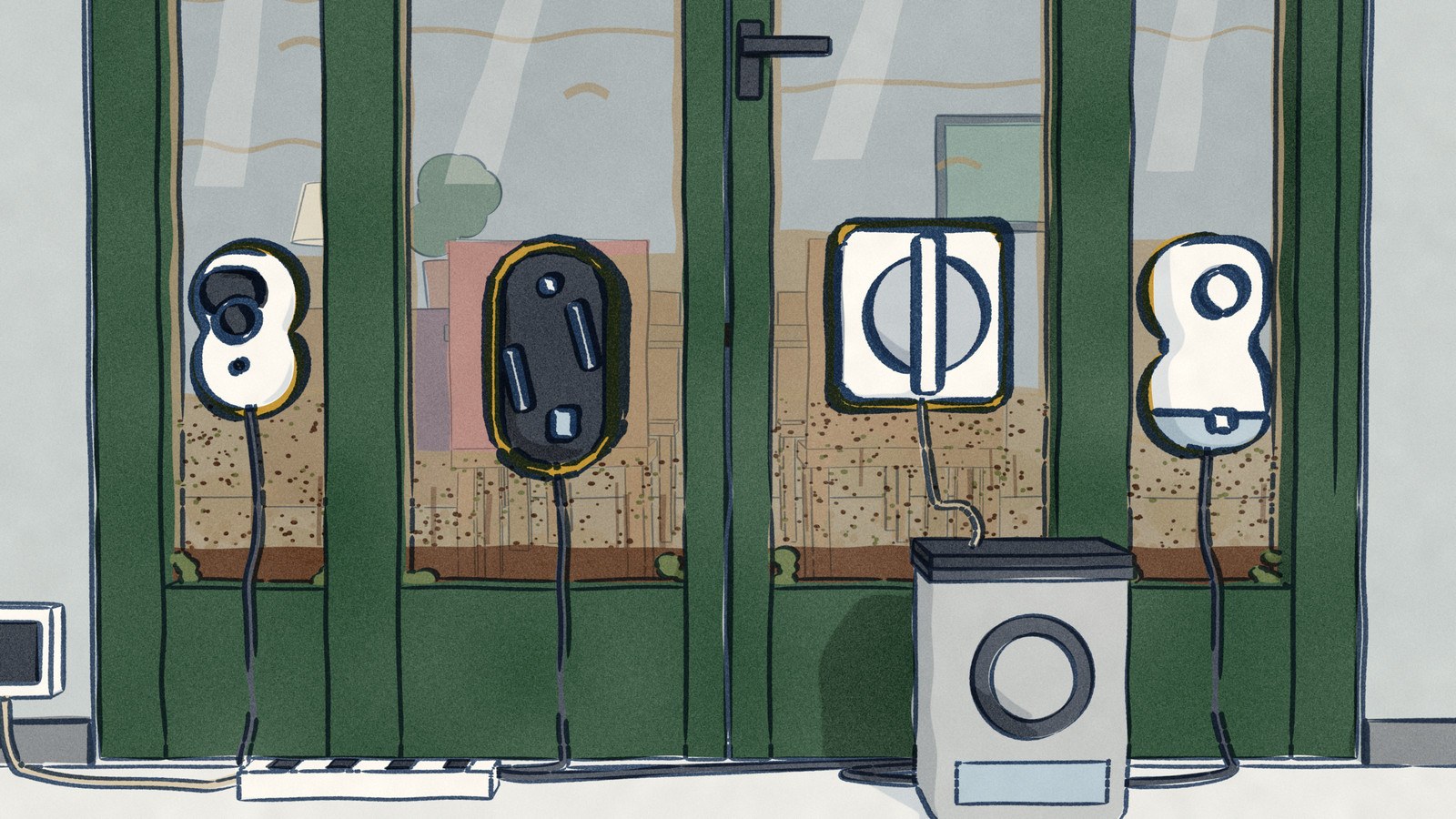
This page checks
- How water reaches the glassSpray, mist or a hand-wetted pad
- Heavy-soil testsStuck-on dirt, put in front of it by a reviewer
- The padsSpares, washing and replacement
- Where reviewers saw it fall shortEdges, corners, streaks

Gladwell
Where to buy
No maker page reached; listed on Amazon US
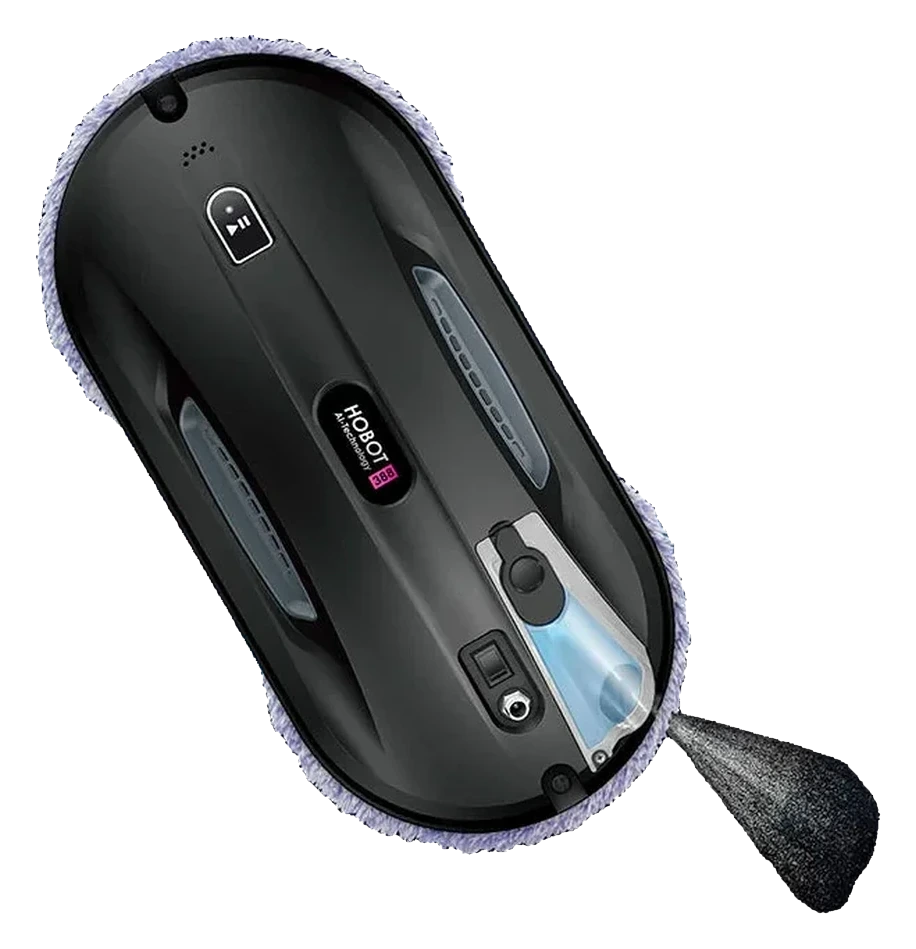
HOBOT
Where to buy
HOBOT 388 app firmware addresses 5 GHz Wi-Fi dropout in owner reports
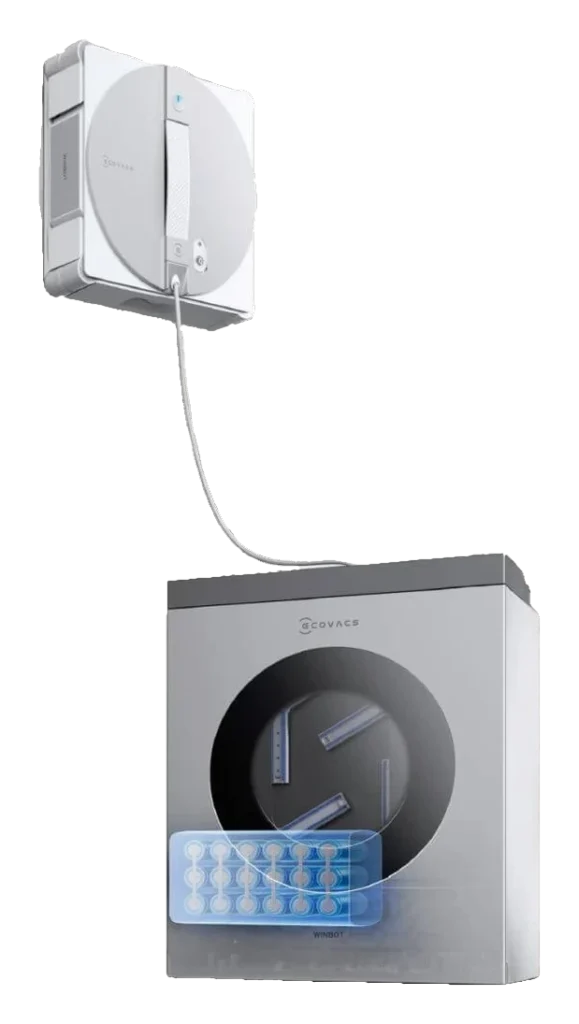
Ecovacs
Where to buy
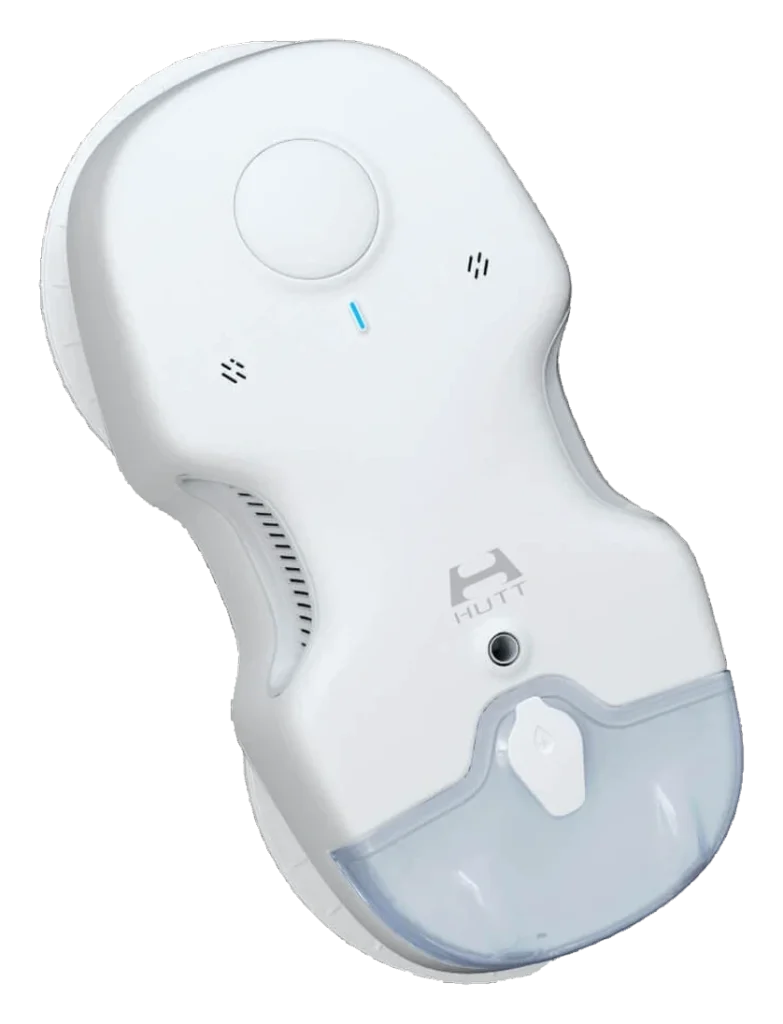
HUTT
Where to buy
Sold out at HUTT's US store, where the C6 page now shows the C65
Full specifications16 figures on record · 15 differ
Some links earn Robovations a commission. Nothing on this page is ranked by it.
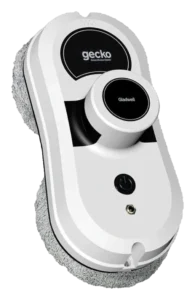 Gecko
Gecko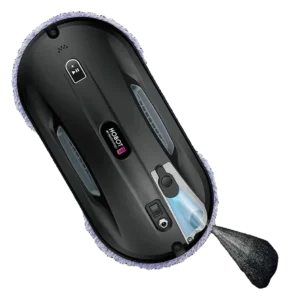 388 Ultrasonic
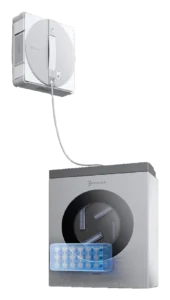 Winbot W3 Omni
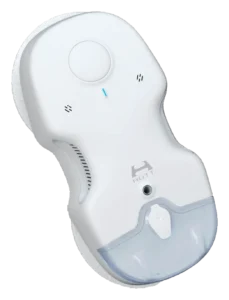 C6
C6Past light dust
What each one does with dirt that is stuck on
Both robots with a heavy-soil test cleaned it only in part. The HOBOT 388 left a door covered in years of dirt improved but still not clean. The Winbot W3 Omni lifted most of an almost eight-year-old patch of grime but not candle wax or pasta sauce. No heavy-soil test was found for the Gecko or the C6.
Not found
No opened page states how its pads are wetted. The maker site returned a 404 and the manual page was blocked.
Searched maker site and manualUltrasonic mist
Mist of 15 micrometers (0.0006 in) sprayed ahead of two microfiber wheels turning at up to 70 rpm.
HOBOT US product pageSpray80 ml tank
Three-nozzle spray ahead of wet mop pads. The page lists an 80 ml tank (±5 ml).
Ecovacs US product pageSpray80 ml tank
Dry and wet modes. Figures are for the C6 from a retailer listing. HUTT's own page now shows the C65.
Retailer listing of maker figuresNo heavy-soil test found
Searched for a hands-on review with a dirty-glass test. None opened.
Searched, none opened- Door with years of dirt: partly cleaned
- Reviewer: may need to run it twice
- Maker's two-pass method: dry run first
- Almost eight-year patch of grime: mostly gone
- Candle wax and pasta sauce: not removed
- Condensation mold: a couple of passes
- Heavy soil: streaks on small panes
No heavy-soil test found
The review pages found for it did not open or gave no test.
Searched, none openedWashable
A review of it describes washable microfiber pads. No spare count found.
Hands-on reviewSpares
Review says the box holds spare cleaning pads and replacement mounting rings.
Hands-on review, May 2021Washed on a station
Station cleans the pads in about 1 minute. Replacement pads listed at $39.99.
Ecovacs US product page6 cloths
Listing for the C6 shows 6 cleaning cloths in the box.
Retailer listing of maker figuresRound pads struggle in corners.
Hands-on guideCannot always clean right to the edge, and cannot work on frameless windows.
Hands-on review, May 2021Streaks on a dry pad, marks left on parking, tapered frames missed on 24 x 22 in windows.
Hands-on review, Apr 2026Not found
Searched, none openedSame on all four: each holds to the glass by suction and wipes with cloth, and no page found describes one that finishes stuck-on dirt in a single pass.
Your home
How each one fits a home like yours
Set the conditions that describe your home. Each robot answers from its own Fit Check; nothing is scored until you choose.
Fit check
Describe your home
Pick what applies. Each robot answers from its own record.
Everything else
Where they land among 27 robot window cleaners
Only the measures on which these four differ. The bar is the whole category; the block is the typical middle half; the tick is the median.
Sources
Where every figure comes from
- Gecko · Amazon US listing title; smartvacguide.com (Gecko guide); searched gladwellclean.com (404) and manual page (403)
- 388 Ultrasonic · hobot.us/pages/hobot-388; MacSources (27 Oct 2020); GadgetGuy (6 Apr 2021); iTWire (9 May 2021)
- Winbot W3 Omni · ecovacs.com US product page; Gizmodo (5 Apr 2026); GadgetGuy (24 Sep 2026)
- C6 · TechPunt listing (HUTT-C6); huttcleantech.com C6 page, which shows the C65
Each water and pad claim was read on the maker's page or a retailer listing on 2 Oct 2026. Dirt results come only from hands-on reviews that were opened, and each is dated.
Questions
What readers ask
Does any of these clean stuck-on dirt in one pass?
No test found shows it. A review of the 388 says its manual calls for a dry first run, and a Winbot W3 Omni review needed a couple of passes on condensation mold.
Why is the HUTT C6 flagged?
HUTT’s US store lists the C6 address as the C65, sold out. The C6 figures here come from a retailer listing of the maker’s figures.
Does a spray tank mean a deeper clean?
Tests found do not show that. A review of the Winbot W3 Omni, which has a spray tank, still saw streaks on heavily soiled glass, especially on small panes.
Common questions