Skip to content
Saved
RELEASED 2022.06REASSESSED 2026.08.07
Ecovacs

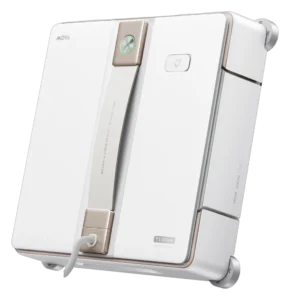
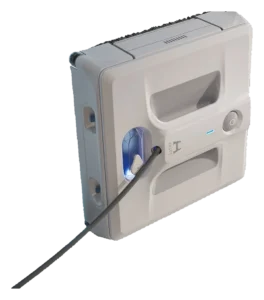
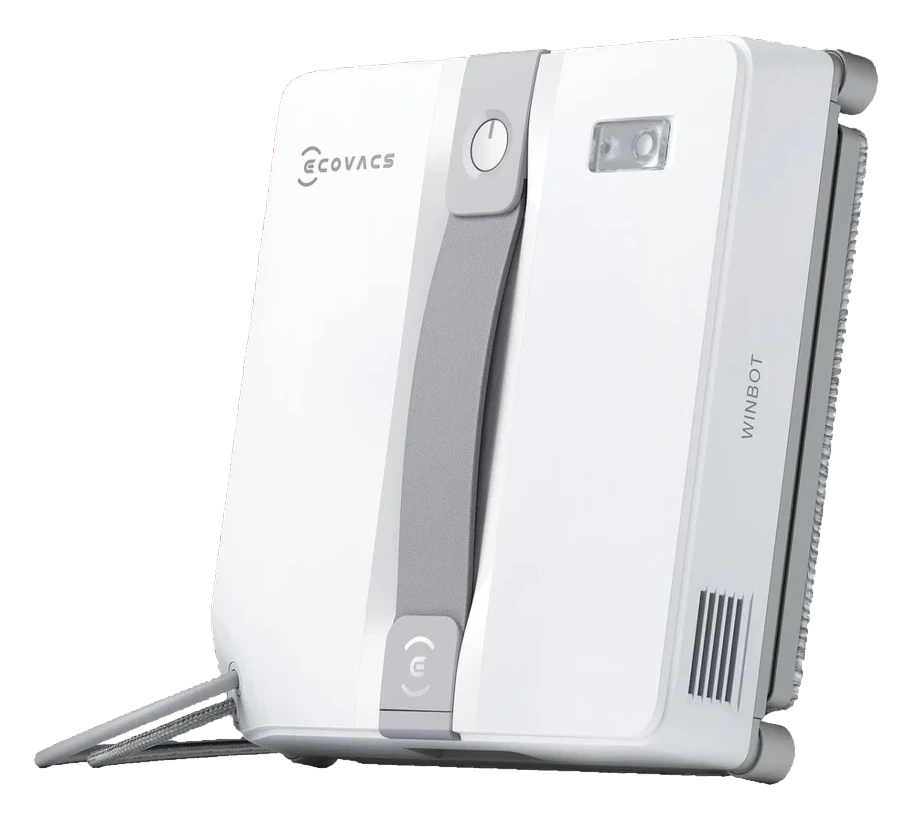
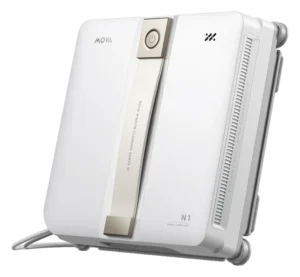
Ecovacs Winbot W1 Pro

WIN-SLAM mapping handles flat glass systematically. The machine runs on mains power through a 4.7 m cord rather than a battery, so a session is limited by outlet reach rather than charge; dual spray pads reduce streaking on typical windows.
Ecovacs Winbot W1 Pro
FIT CHECK

Will the Ecovacs Winbot W1 Pro work on your windows?

Describe your windows using the controls. Each choice reads the spec sheet for you, flagging where the Ecovacs Winbot W1 Pro is built for your space and where it isn’t.

Window style

Frame style

Building height

Power preference

A classification of fit for the conditions you set, not a recommendation. Verdicts describe engineering design intent, not test results.

SPECIFICATION

The full spec sheet.

Manufacturer-published figures, measured against every robot window cleaners we track.

10.6 in diaTOP3.1 inSIDEDimensional drawing
Key specificationsManufacturer-published
Footprint
10.6 in dia · 3.1 in tall
Weight
3.5 lbs
Battery
9.6 Wh · Li-ion
Wi-Fi
Supported
Mapping & navigation

WIN-SLAM cross-pattern mapping with edge detection

Where it lands · ranked across 20 robot window cleanersThis robotMedianTypical range
Adhesion2,800Pamode not stated
2,800 Pa8,000 Pa
Bottom of range
Noise68dB
63 dB75 dB
Near median
Charge time180min
60 min180 min
Top of range
Weight3.5lbs
1.3 lbs4.8 lbs
Near median

Position shows where the figure sits across the tracked category, not a quality judgment. The vacuum holding the robot on the glass, not cleaning power. The figure has no standard test method, so it is comparable only within a brand and generation.

Official referencesProduct page
OWNERSHIP

Living with it.

Three years of field use shows stable navigation; suction motor degradation is the primary reported failure point.

Owner reports and firmware history across 2022-2025 document WIN-SLAM consistency. Suction motor wear occurs by 18-24 months with weekly use in hard-water areas; early-run units show fewer issues. No major recall or firmware regression documented.

Owner effort~30 minhands-on per month
Consumables$90replaceable parts / yr
Reliability trend Stableowner-reported arc
What goes wrong · 5 documented · 0 self-recover
Common
Pad wear and frayingUneven cleaning, water scatter, reduced coverage efficiency
Owner fixInspect weekly; replace pads every 3-4 months. Wash weekly with tap water and soft brush between cycles.
Occasional
Suction motor wearReduced edge grip, repositioning failures near frame edges
Owner fixReplace motor assembly; ~$120. Preventive cleaning of intake ports monthly extends interval.
Occasional
Spray nozzle cloggingStreaking, water pooling, increased motor load
Owner fixSoak nozzles in vinegar solution weekly; replace if mineral deposits persist after 3-4 cleanings.
Occasional
Battery degradationRuntime dropping below 50 minutes per charge
Owner fixBattery replacement kit available; DIY swap or factory service. Occurs by 18-24 months with regular use.
Occasional
Edge detection false triggering on reflectionsRobot retreats from edge, leaving corner glass uncleaned
Owner fixManual reposition or reduce sunlight during operation. Firmware updates may improve detection sensitivity.
Upkeep routine
Weekly52×/yr
Rinse cleaning pads and nozzles under tap water; inspect for mineral deposits or debris.
Monthly12×/yr
Clean motor intake ports with compressed air; inspect the safety rope and carabiner for fraying, cuts or a sticking gate.
Yearly1×/yr
Deep-clean the spray system by soaking the nozzles in distilled vinegar.
As neededno fixed schedule
Confirm the tether is anchored to a fixed object in the room and the carabiner is locked; check that the power cord runs clear of the robot's path. · Replace cleaning pads (~$30-40 per pair) if frayed or uneven water distribution appears.
Safety notes

CautionSuction loss risk at height: If safety rope frays or fails, robot loses primary tether. Inspect rope monthly and test suction before high-altitude use.

NoteWater pooling on horizontal surfaces: Standing water in pans or ledges below window can flow upward into motor. Ensure drainage is clear before extended runs.

RECORD

How the assessment has moved.

Every announcement, release and reassessment behind the current classification.

Coming soon
Just launched
Active updates
Settled
Discontinued
  1. Jul 2026 · AssessmentRobovations Score recorded at 65 of 100
  2. Jul 2026 · AssessmentRobovations Score revised 65 → 67
  3. Aug 2026 · AssessmentRobovations Score rescored under v4.2: 67 → 69
  4. Aug 2026 · AssessmentRobovations Score revised 69 → 65
Editorial comparisons

How Ecovacs Winbot W1 Pro compares.

All comparisons →
Common questions

What people actually ask.

4 answered
OperationDoes the Winbot W1 Pro work on frameless or tempered glass?
Edge detection relies on contrast at frame/glass boundaries. Fully frameless panes confuse sensors; tempered glass works but may require manual repositioning if the robot interprets edge tint as a boundary. Test on one pane first.
OperationWhat is the safety rope for, and how is it anchored?
It is a tether that holds the robot if suction is lost. Ecovacs supplies a 1.5 m rope for the W1 Pro and specifies tying it to a stable fixed object in the room you are working from, naming a table leg, chair leg, curtain rod or stair handrail, then locking the carabiner. It is short by design and anchors indoors. Ecovacs describes no longer rope and no external anchor for this machine; substituting one puts an unrated anchor under a 3.5 lb robot.
OperationCan I use tap water in the spray system, or do I need distilled?
Hard tap water deposits mineral buildup in spray nozzles within 2-3 weeks. Distilled or demineralized water prevents clogging. Some owners use diluted window cleaner (alcohol-based solutions only; ammonia can damage seals).
OperationHow often should I replace the cleaning pads?
Pads typically last 3-4 months with weekly cleaning. Wear appears as frayed edges and uneven water distribution. Manufacturer replacement pads run roughly $30-40 per pair. Hard-water areas see faster degradation.

Availability

Where it's sold

We may earn commission from qualifying purchases. This does not influence classification.

Cite / Embed

Reference the Ecovacs Winbot W1 Pro classification.

Embed the Autonomy Ladder™ mark or copy the citation. The mark is served from this record rather than saved as a file, so it always shows the level we currently hold. If we reassess, it updates on your page by itself.

  • The mark must link to this record. An unlinked mark is not authorised.
  • No recolouring, cropping, rotating, restyling, or re-typesetting. Scale proportionally only, up to 2×: the seal to 536px wide, the standard to 224px.
  • Leave clear space equal to half the numeral tile on all sides: 32px on the seal, 22px on the standard.
  • The mark states a classification, not an endorsement. It may not appear beside language implying Robovations recommends, rates, or approves the product.
  • Hot-link the image from robovations.com. Do not download, self-host, proxy or re-upload it: a saved copy stops updating, and a mark that has stopped updating is a claim we no longer stand behind.
  • The mark is live. It reflects the classification on this record as it stands. If we reassess, it changes on your page automatically. If we withdraw the classification, it stops rendering. Nothing is required from you either way.
Citation
Where to next

Three ways to keep going.

For browsers

See every Level III.

Every robot we’ve classified at conditional autonomy. Sorted by readiness, score, and price. Filter by category, manufacturer, or release date.

Updated weekly with new entries and reclassifications.