
Lymow One
RTK precision in a tracked platform. Centimeter-accurate passes and mulching efficiency at scale, with the base station, antenna, ground stake and mounting hardware in the box rather than sold separately. Trade-off: the station still has to be sited where it has clear sky view, and a satellite fix has to be acquired before the first pass.
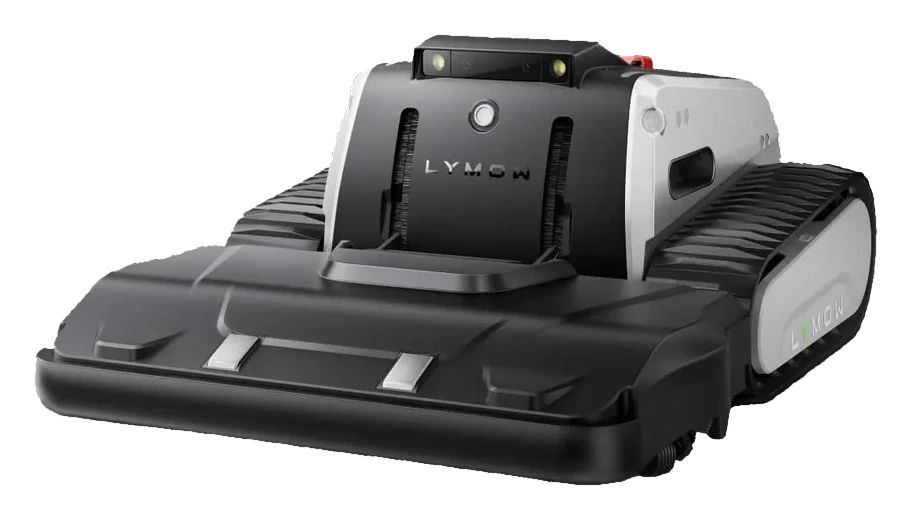
Will the Lymow One work on your yard?
Describe your yard using the controls. Each choice reads the spec sheet for you, flagging where the Lymow One is built for your space and where it isn’t.
A classification of fit for the conditions you set, not a recommendation. Verdicts describe engineering design intent, not test results.
The full spec sheet.
Priced above the category median, with every figure charted against the category below.
- Footprint
- 22 × 29.4 in · 12.6 in tall✓
- Weight
- 77.6 lbs✓
- Battery
- 432 Wh · Li-ion
- Wi-Fi
- Supported✓
- Cutting width
- 15.7 in✓
- Cutting height range
- 1.2-3.9 in✓
- Max area
- 24,800 sq ft✓
- Max slope
- 100%✓
- Drive layout
- Tracked treads✓
- Boundary method
- RTK with VSLAM vision✓
- Blade system
- Mulching blade
RTK positioning with virtual boundary; vision fallback in satellite loss
Position shows where the figure sits across the tracked category, not a quality judgment.
Living with it.
RTK precision reliable in clear-sky yards; tracked platform shows durability confidence. Early production data incomplete.
Manufacturer claims 99% RTK fix availability in open yards. Tracked suspension durability modeled from industrial tracked equipment; no major failures reported in early deployments. Owner data limited due to Q2 2025 release; long-term field performance unproven.
$2,999 to buy, then about $180 a year for the replaceable parts below. Over three years that is roughly $540 past the sticker price. Excludes electricity and any repairs.
- Blades
Replacement cadence from the maintenance schedule; prices shown where the source documents them.
CautionTracked drive increases entanglement risk: Rotating tracks can pull loose clothing or small objects into drive mechanism. Keep clear of mowing zone during operation.
CautionMulching blade operates at high speed: Blade velocity higher than discharge-mowers to achieve fine mulch. Never place hands beneath chassis during operation.
NoteRTK base station electrical hazard: Base station operates on external power. Install on level, dry ground; protect from weather and water exposure.
How the assessment has moved.
Every announcement, release and reassessment behind the current classification.
-
Sep 2026 · AssessmentRobovations Score revised 55 → 59
-
Aug 2026 · AssessmentRobovations Score revised 62 → 55
-
Aug 2026 · AssessmentRobovations Score rescored under v4.2: 61 → 62
-
Aug 2026 · AssessmentRobovations Score rescored under v4.0: 72 → 61
-
Jul 2026 · AssessmentPrivacy 76 → 65, Maintenance 75 → 68, 3 other dimensions · overall held at 72
-
Jul 2026 · AssessmentRobovations Score recorded at 72 of 100
-
Apr 2025 · ReleaseBegins commercial shipment to early backers
-
Oct 2024 · AnnouncementCrowdfunding campaign opens for RTK tracked mower
How Lymow One compares.
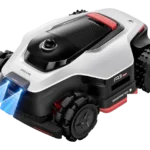
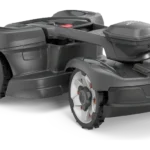
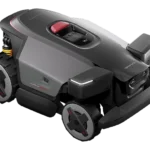
What people actually ask.
OperationWhat is the RTK base station and why does the Lymow One need it?
OperationCan I use the Lymow One without an RTK base station?
OperationHow does the mulching blade differ from traditional discharge or bagging?
ComparisonDoes the tracked suspension perform better on slopes than wheeled mowers?
OperationWhat is the mowing area covered per charge with the Lymow One?
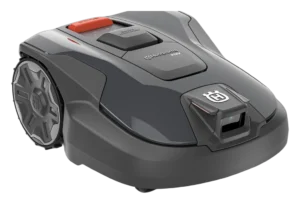 IV
IV
Husqvarna Automower 312V
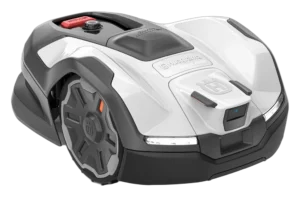 IV
IV
Husqvarna Automower 405VE NERA
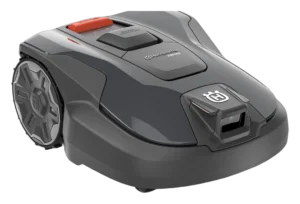 IV
IV
Husqvarna Automower Aspire R6V
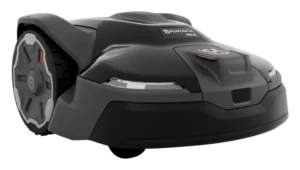 IV
IV
Husqvarna Automower 440 iQ
Where it's sold
We may earn commission from qualifying purchases. This does not influence classification.
Some sellers strike through a “was” price of $3,199, above the $2,999 manufacturer list — a discount measured off that is not a real saving.
Reference the Lymow One classification.
Embed the Autonomy Ladder™ mark or copy the citation. The mark is served from this record, so a reassessment updates it on your page automatically.
Get the embed code and citation
Scale proportionally only, up to 2× (536px wide)(224px wide). No recolouring, cropping, rotating, or re-typesetting.
Robovations. "Lymow One: Autonomy Level IV (Environmental Autonomy)." Autonomy Ladder™, assessed August 2026. https://robovations.com/robots/lymow-one/
- Link it. The mark must point at this record. An unlinked mark is not authorised.
- Hot-link it. Never download, self-host, or re-upload the image. A saved copy stops updating, and a mark that has stopped updating is a claim we no longer stand behind.
- A classification, not an endorsement. It may not appear beside language implying Robovations recommends, rates, or approves the product.