Skip to content
Saved
ROBOVATIONS/CLASSIFICATION RECORD/ROBOT LAWN MOWERSRELEASED 2025.09REASSESSED 2026.01.23
Roborock

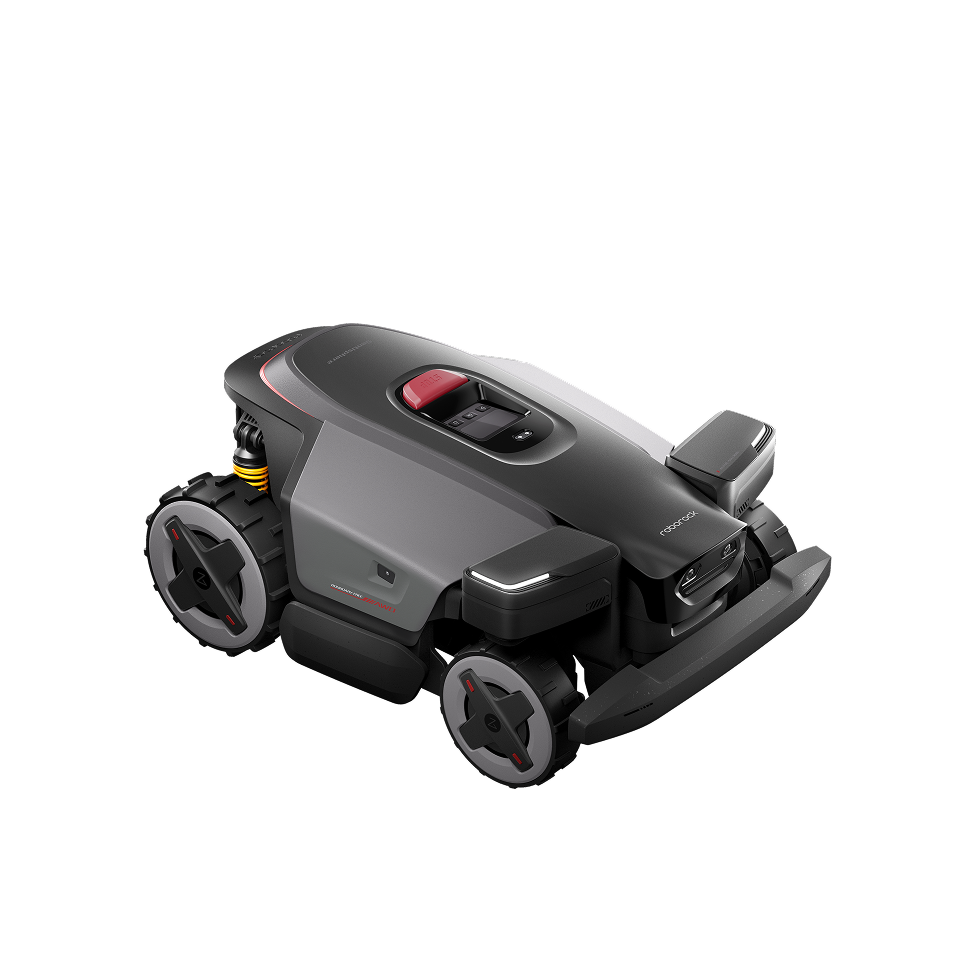
Roborock RockMow Z130

Roborock's first lawn mower brings RTK wire-free autonomy to consumer yards, though limited owner data and premium cost warrant cautious evaluation.
Roborock RockMow Z130
LIST PRICE$2,999MSRP
FIT CHECK

Will the Roborock RockMow Z130 work on your yard?

Describe your yard using the controls. Each choice reads the spec sheet for you, flagging where the Roborock RockMow Z130 is built for your space and where it isn’t.

Yard size

Terrain

Grass type

Boundary setup

A classification of fit for the conditions you set — not a recommendation. Verdicts describe engineering design intent, not test results.

SPECIFICATION

The full spec sheet.

Priced above the category median, with every figure charted against the category below.

26 in17.7 inTOP10.6 in17.7 inSIDEDimensional drawing
Key specificationsManufacturer-published
Footprint
26 × 17.7 in · 10.6 in tall
Weight
47.4 lbs
Battery
162 Wh · Li-ion
Wi-Fi
Supported
Voice
Alexa
Mapping & navigation

RTK (Real-Time Kinematic) positioning with centimeter-level accuracy, lidar obstacle detection, camera-based dock guidance

Where it lands · ranked across 84 robot lawn mowersThis robotMedianTypical range
Runtime140min
50 min240 min
Near median
Price$2,999
$451$32,829
Bottom of range
Noise68dB
50 dB82 dB
Near median
Charge time120min
40 min300 min
Near median
Weight47.4lbs
11.9 lbs160 lbs
Above median

Position shows where the figure sits across the tracked category — not a quality judgment.

OWNERSHIP

Living with it.

Sub-one-year market presence; blade durability and RTK stability remain unproven despite firmware refinement cadence.

Firmware updates show steady obstacle and calibration refinement every 2-3 months across 2000+ pilot units. Blade durability claims rest on manufacturer 3-6 month testing; owner-reported wet-grass dulling at 2-3 months not documented in guidelines.

Owner effort~40 minhands-on per month
Consumables$180replaceable parts / yr
Reliability trendUnprovenowner-reported arc
What goes wrong · 4 documented · 1 self-recover
Occasional
RTK signal lossPositioning failure, return-to-dock triggered
Self-recoversReposition base station for sky view
Occasional
Blade dulling acceleratedWet grass and dense lawns dull blades early
Owner fixReplace blade at 2-3 months instead of 6
Occasional
Charging contact corrosionHumidity causes corroded contacts, blocks recharge
Owner fixClean contacts or add protective cover
Rare
Firmware update stallsApp delivery failures block updates
Owner fixManual factory reset to restore
Upkeep routine
Each useEvery cycle
Grass and debris clearing from blade guard and casters, five minutes typical.
Weekly52×/yr
Docking contact inspection for corrosion, blade guard visual check.
Seasonal4×/yr
Blade replacement (USD 40-60 per set) and RTK base station recalibration if relocated. · Drive wheel soil inspection, caster bearing lubrication, charging contact cleaning.
Yearly1×/yr
RTK antenna replacement and battery health diagnostics via mobile app.
Cost over time · past the sticker
PurchaseRunning cost
Year 1
$3,179
Year 3
$3,539
Year 5
$3,899

$2,999 to buy, then about $180 a year for the replaceable parts below. Over three years that is roughly $540 past the sticker price. Excludes electricity and any repairs.

What you replace
  • BladesEvery 3-6 months
  • BatteryAnnually

Replacement cadence from the maintenance schedule; prices shown where the source documents them.

Safety notes

CautionBlade guard bypass risk: Manual override available via app; disabling guards creates injury risk

NoteRTK placement critical: Marginal sky view causes positioning drift near boundary

CautionSlope operating limit: 20-degree max; steeper slopes cause wheel slip and rollover risk

RECORD

How the assessment has moved.

Every announcement, release and reassessment behind the current classification.

Coming soon
Just launched
Active updates
Settled
Discontinued
  1. Jul 2026 · AssessmentRobovations Score recorded at 64 of 100
  2. Jul 2026 · AssessmentRobovations Score revised 64 → 70
Editorial comparisons

How Roborock RockMow Z130 compares.
All comparisons →
Common questions

What people actually ask.

7 answered
OperationDoes Z130 require a boundary wire?
No. RTK mapping during setup defines yard dimensions and terrain electronically. Virtual exclusion zones defined in mobile app. Manufacturer documentation confirms wire-free operation as core design choice.
OperationHow often must blades be replaced?
Roborock specifies 3-6 month intervals depending on lawn size and grass type. Grass thickness affects dulling rate. Replacement blade sets cost USD 40-60 per set of three, per parts pricing.
OperationDoes rain stop mowing?
RTK operation continues in light rain. Preset soil moisture thresholds pause mowing during heavy rain or saturation. Threshold adjustment not available in current firmware; operation resumes automatically when conditions dry.
OperationHow does obstacle detection work?
Integrated camera and lidar detect toys, pets, and debris during operation. Z130 avoids contact and either returns to dock or resumes alternate zones. Firmware updates refine detection every 2-3 months since launch.
OperationWhat happens if RTK signal drops?
RTK loss triggers return-to-dock; mowing session pauses. Repositioning base station to clearer sky view restores signal within 60 seconds. No GPS fallback available; RTK-only navigation model per current design.
OperationIs Z130 suitable for steep slopes?
Maximum slope specification is 20 degrees. Steeper inclines cause wheel slip and positioning errors. Manufacturer recommends virtual boundary exclusion for slopes exceeding 18 degrees.
OperationCan multiple Z130 units share one RTK base station?
Single base station supports one mower at a time per current firmware. Simultaneous multi-mower operation not supported. Larger properties require multiple base stations per Roborock engineering notes.

Cite / Embed

Reference the Roborock RockMow Z130 classification.

Embed the Autonomy Ladder™ mark or copy the citation. The mark links back to this assessment and updates if the classification changes.

Citation
Where to next

Three ways to keep going.

For browsers

See every Level IV.

Every robot we’ve classified at environmental autonomy. Sorted by readiness, score, and price. Filter by category, manufacturer, or release date.

Browse the database

Updated weekly with new entries and reclassifications.