
iRobot Roomba 960
The Roomba 960 was the first mass-market vacuum to prove vSLAM alone could replace bump-based random navigation. Mapping technology that was flagship-only in 2016 became the category standard.
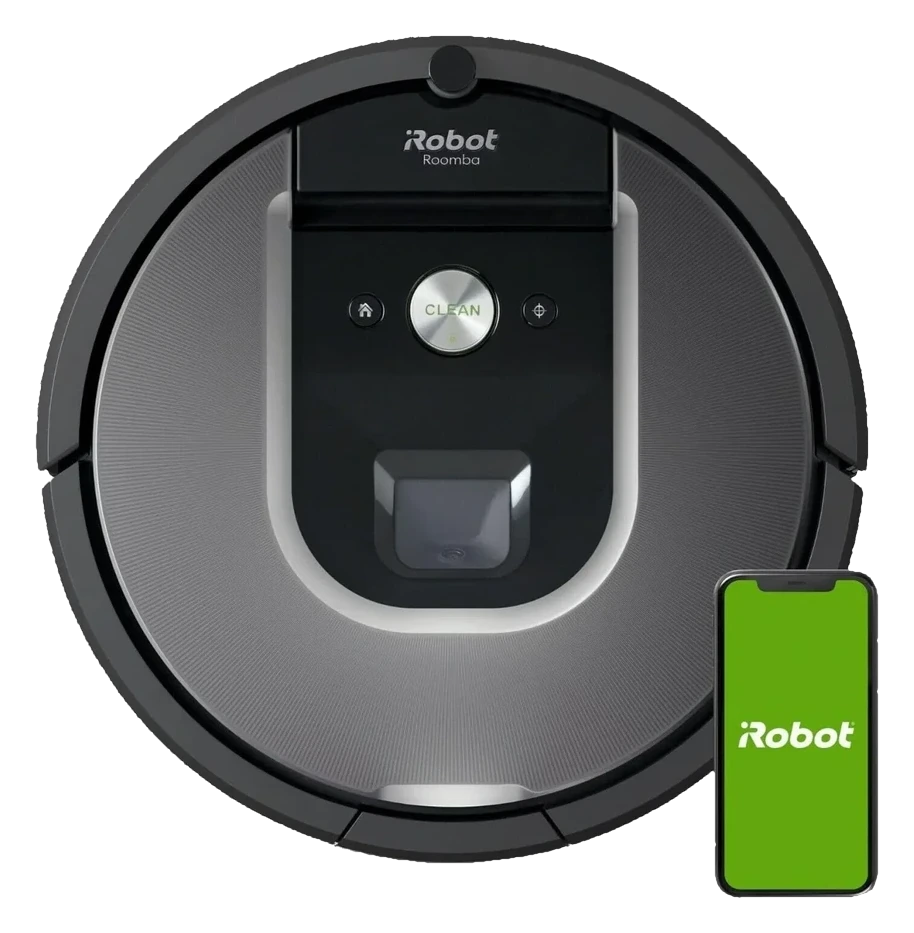
Will the iRobot Roomba 960 work in your home?
Describe your home using the controls. Each choice reads the spec sheet for you, flagging where the iRobot Roomba 960 is built for your space and where it isn’t.
A classification of fit for the conditions you set, not a recommendation. Verdicts describe engineering design intent, not test results.
The full spec sheet.
Priced below the category median, with every figure charted against the category below.
- Footprint
- 13.8 in dia · 3.6 in tall✓
- Weight
- 8.5 lbs
- Battery
- 50 Wh · Li-ion
- Wi-Fi
- 2.4 GHz only✓
- Voice
- Alexa, Google Home✓
- Onboard dustbin
- 600 mL•
- Dock type
- Charge-only dock, no self-emptying
- Threshold climb
- 0.6 in✓
vSLAM camera + iAdapt 2.0 gyroscope guidance
Position shows where the figure sits across the tracked category, not a quality judgment.
Living with it.
Navigation stack stabilized after firmware 1.8; dock reliability proves high across the decade-long owner base.
vSLAM camera refocus issues resolved by firmware 1.6.0 (2018). Dock contact cleaning and recovery behaviors remain consistent across 2024-era deployments. No major recall or regression documented post-2019.
$699 to buy, then about $12 a year for the replaceable parts below. Over three years that is roughly $36 past the sticker price. Excludes electricity and any repairs.
- Brush
- Filter
Replacement cadence from the maintenance schedule; prices shown where the source documents them.
CautionBrush entanglement risk with hair or cables.: Long hair and string can wrap the main brush; always check the brush before operation.
NoteCliff sensor limitation on low-pile transitions.: Fiber-optic cliff sensor can misread dark low-pile carpet as a cliff edge; validation run recommended before unsupervised multi-room deployment.
How the assessment has moved.
Every announcement, release and reassessment behind the current classification.
-
Aug 2026 · AssessmentRobovations Score revised 67 → 65
-
Aug 2026 · AssessmentRobovations Score rescored under v4.2: 58 → 67
-
Aug 2026 · AssessmentRobovations Score rescored under v4.0: 65 → 58
-
Jul 2026 · AssessmentRobovations Score revised 64 → 65
-
Jul 2026 · AssessmentRobovations Score recorded at 64 of 100
-
Jan 2025 · UpdateiRobot Home App Updates Raise Compatibility Questions for Roomba 960
-
Jan 2024 · NewsAmazon Abandons iRobot Acquisition After EU Regulatory Block
What people actually ask.
OperationCan the Roomba 960 clean multiple rooms without returning to dock between runs?
CompatibilityDoes the Roomba 960 work without Wi-Fi after initial setup?
ComparisonWhat is the actual runtime on sealed hard floors versus mixed floor homes?
OperationIs the Roomba 960 compatible with newer iRobot dock stations or spare parts from newer models?
OwnershipHow much does the Roomba 960 cost in the secondary market today?
 III
III
Dreame L10 Pro
 III
III
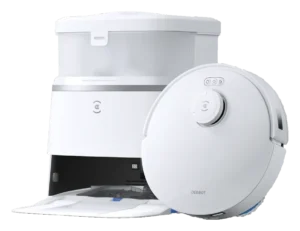
Ecovacs Deebot T30 Pro Omni
 III
III
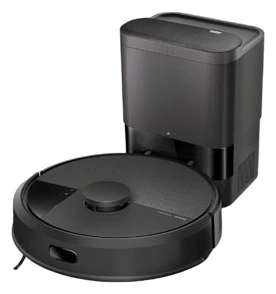
Roborock S8 MaxV Ultra
Where it's sold
We may earn commission from qualifying purchases. This does not influence classification.
Reference the iRobot Roomba 960 classification.
Embed the Autonomy Ladder™ mark or copy the citation. The mark is served from this record, so a reassessment updates it on your page automatically.
Get the embed code and citation
Scale proportionally only, up to 2× (536px wide)(224px wide). No recolouring, cropping, rotating, or re-typesetting.
Robovations. "iRobot Roomba 960: Autonomy Level III (Conditional Autonomy)." Autonomy Ladder™, assessed August 2026. https://robovations.com/robots/irobot-roomba-960/
- Link it. The mark must point at this record. An unlinked mark is not authorised.
- Hot-link it. Never download, self-host, or re-upload the image. A saved copy stops updating, and a mark that has stopped updating is a claim we no longer stand behind.
- A classification, not an endorsement. It may not appear beside language implying Robovations recommends, rates, or approves the product.