
Husqvarna CEORA
Level III (Conditional Autonomy) RTK mower delivering autonomous precision across multi-hectare grounds with centimeter-level accuracy, contingent on professional infrastructure and commercial licensing.
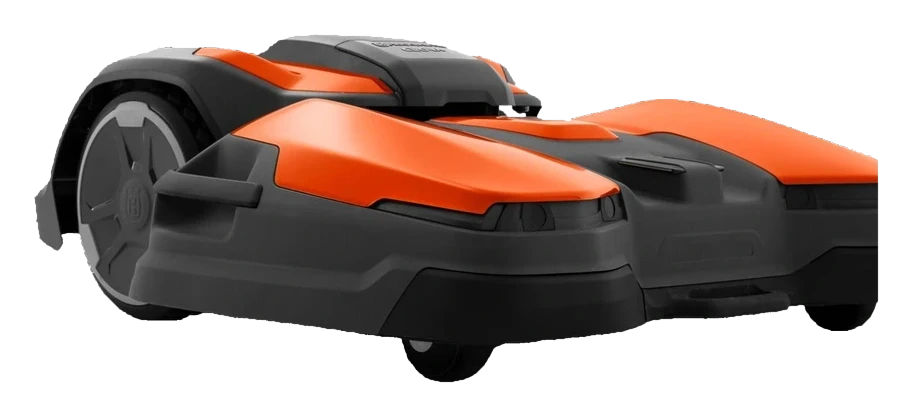
Will the Husqvarna CEORA fit your application?
Describe your use case using the controls. Each choice reads the spec sheet for you, flagging where the Husqvarna CEORA is built for your space and where it isn’t.
A classification of fit for the conditions you set, not a recommendation. Verdicts describe engineering design intent, not test results.
The full spec sheet.
Priced above the category median, with every figure charted against the category below.
- FootprintThe width, depth and height of the robot itself, without its dock.
- 42.5 × 48.8 in · 17.3 in tall✓
- WeightThe robot alone, without its dock, as the maker states it.
- 160 lbs✓
- BatteryStored energy in watt-hours; a larger pack runs longer, not harder.
- 2,352 Wh · Li-Ion
- NetworkA radio the robot carries besides Wi-Fi, so it reaches the maker without your router.
- Cellular
RTK-GPS with centimeter-level accuracy, virtual boundary geofencing, collision detection with forward-facing sensor array
Position shows where the figure sits across the tracked category, not a quality judgment.
How the assessment has moved.
Every announcement, release and reassessment behind the current classification.
-
Sep 2026 · AssessmentAutonomy Ladder reclassified IV → III
-
Sep 2026 · AssessmentRobovations Score rescored under v4.2
-
Aug 2026 · AssessmentRobovations Score rescored under v4.0
-
Jul 2026 · AssessmentRobovations Score revised 80 → 77
-
Apr 2026 · AssessmentRobovations Score recorded at 80 of 100
-
Oct 2024 · UpdateEPOS correction service expands RTK network coverage globally
-
Mar 2022 · ReleaseCommercial launch delivers first units to European sports facilities
Show 1 earlier entryHide earlier entry
-
Jun 2021 · AnnouncementUnveiled as wire-free RTK commercial mower platform
How Husqvarna CEORA compares.
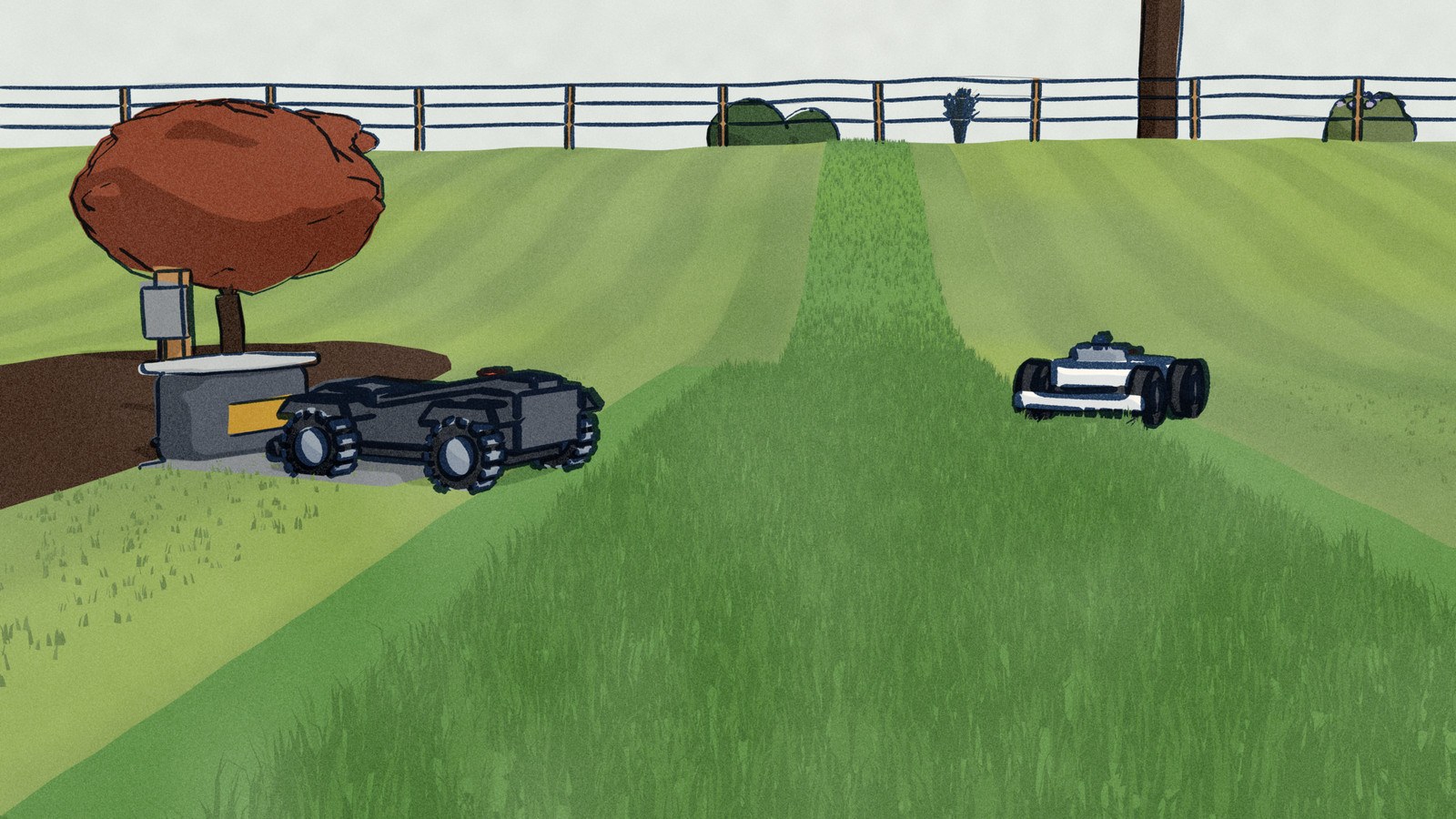
What people actually ask.
OperationDoes CEORA require a boundary wire like consumer robot mowers?
OwnershipWhat coverage area can CEORA handle per charge cycle?
OperationCan CEORA operate in wet or rainy conditions?
OperationHow does CEORA receive its positioning correction data?
OwnershipHow often do blades need replacement?
OperationWhat happens if RTK signal is lost during mowing?
OperationCan CEORA operate on steep slopes?
 III
III
Whisker Litter-Robot 5
 III
III
Whisker Litter-Robot EVO
 III
III
Labrador Systems Retriever
 III
III
Whisker Litter-Robot 5 Pro
Reference the Husqvarna CEORA classification.
Embed the Autonomy Ladder™ mark or copy the citation. The mark is served from this record, so a reassessment updates it on your page automatically.
Get the embed code and citation
Scale proportionally only, up to 2× (536px wide)(224px wide). No recolouring, cropping, rotating, or re-typesetting.
Robovations. "Husqvarna CEORA: Autonomy Level III (Conditional Autonomy)." Autonomy Ladder™, assessed September 2026. https://robovations.com/robots/husqvarna-ceora/
- Link it. The mark must point at this record. An unlinked mark is not authorised.
- Hot-link it. Never download, self-host, or re-upload the image. A saved copy stops updating, and a mark that has stopped updating is a claim we no longer stand behind.
- A classification, not an endorsement. It may not appear beside language implying Robovations recommends, rates, or approves the product.