
Boston Dynamics
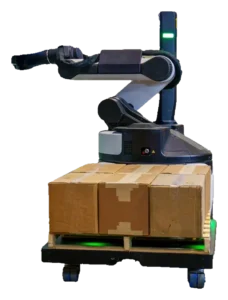
Boston Dynamics Stretch
- Autonomy
- IIIConditional Autonomy
- Score
- Not scored
- Readiness
- Not assessed
- Price
- Not tracked
All specialty robots. Every measure below is plotted against the full class, so a difference can be read against how much the class itself varies.
Up to three
The Autonomy Ladder is the same five rungs for every robot on the site. A rung describes the conditions a robot handles without you, not how good it is.
The Robovations Score is nine inputs across three pillars, each weighted as shown and each scored so that more is better. A robot can lead on one and trail on another, which is the point of showing them apart. Cost of ownership and data handling are reported on each robot's own page and are never averaged into the score.
None of these robots carries a scored assessment yet, so there is nothing to plot here. The classification and evidence below still apply.
A number only means something next to the spread it sits in. Each track below is the real range across every classified robot in the class, with the median marked.
Not compared, because fewer than two of these robots carry a published figure: Price, Suction, Charge time, Noise.
What each design gives up to be good at what it is good at.
Unloading runs without operator input once started, but every trailer begins with a manual positioning step: an operator opens the door, drives Stretch inside, and presses Go.
Tolerance of mixed and messy loads is the advertised capability, yet the machine is built around one environment, the dock and the floor-loaded trailer or container. It is not a general-purpose warehouse robot.
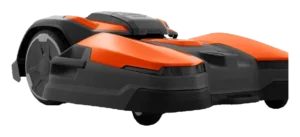
Autonomous operation across large areas reduces labor costs, offset by substantial upfront capital and dealer installation unsuitable for sporadic maintenance.
Centimeter-level accuracy enables professional line patterns, offset by dependency on terrain mapping and boundary redefinition when landscape topology changes.
Weather-resistant design supports year-round operation, offset by recurring blade replacement across three cutting discs on commercial duty cycles.
Stated by the record itself. A robot being wrong for a household is a fact about fit, not a fault.
The upkeep ownership hands back to you, whatever the autonomy level says.
Classifications rest on different depths of evidence. A pre-release assessment and a verified one are not the same kind of claim.
| Robot | Evidence status | Sources reviewed | Last assessed |
|---|---|---|---|
| Boston Dynamics Stretch | Not Consumer-Ready | 8 | Sep 2026 |
| Husqvarna CEORA | Verified | 11 | Sep 2026 |
Comparing across classes is allowed — the page will switch to per-class positioning and tell you it has.