Skip to content
Saved

Goal-based/Robot Lawn Mowers/4 robots compared/Reviewed Jun 2026

Which robot mower handles large yards without daily intervention?

Range and dock recovery are decoupled.High area ratings (5000 sq m) do not guarantee easy dock return. Only LUBA and 450X NERA employ positional technology (RTK/LiDAR) that reliably sends the mower home. Camera-based systems and manual placement trade automation for simplicity.
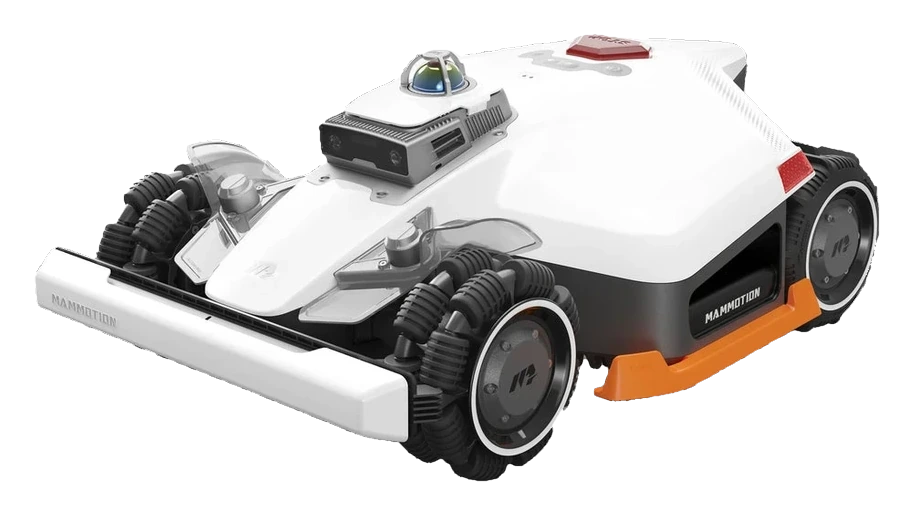
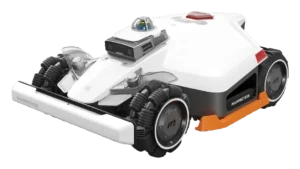
Mammotion LUBA 3 AWD 5000View recordMammotionIVLUBA 3 AWD 5000Max cutting areaUp to 5000 sq m
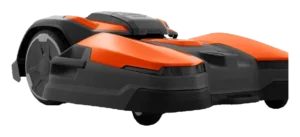
Husqvarna Automower 450X NERAView recordHusqvarnaIV450X NERAMax cutting areaUp to 4000 sq m$5,999
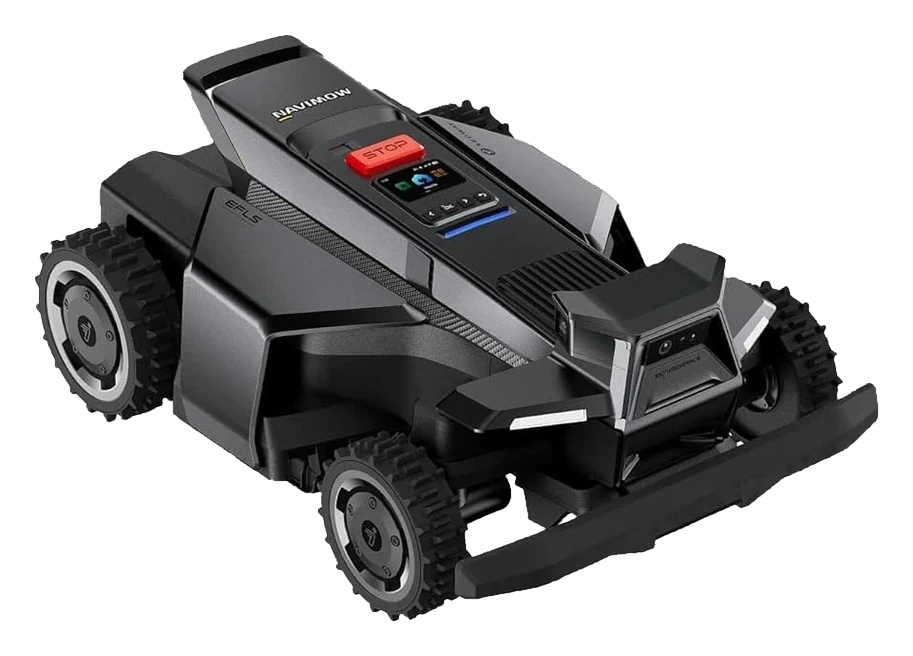
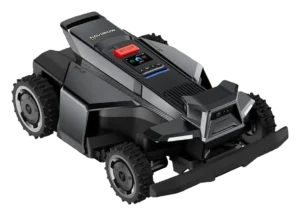
Segway Navimow X4View recordSegwayIVX4Max cutting areaUp to 4500 sq m
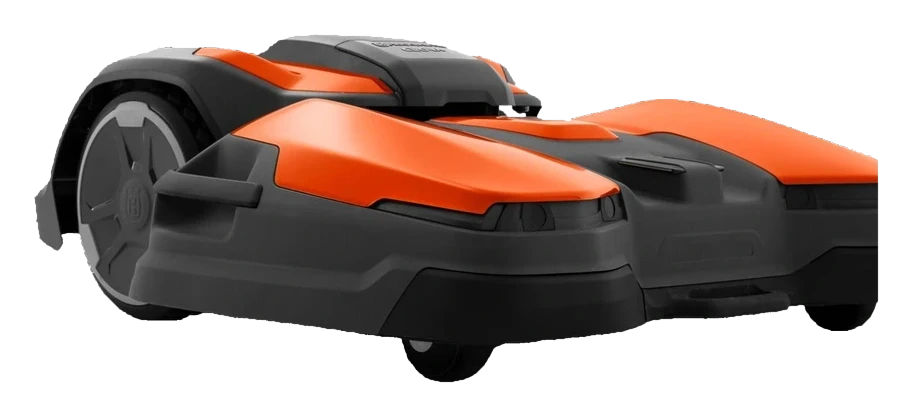
Husqvarna CEORAView recordHusqvarnaIVCEORAMax cutting areaUp to 3000 sq m$32,829
Full specifications19 measurements · 66 of 76 documented
MSRP
$2,499
$5,999
$2,499
$32,829
Rated runtime
215 min
145 min
110 min
200 min
Charge time
180 min
40 min
90 min
150 min
Battery capacity
324 Wh
135 Wh
Not documented
2,352 Wh
Battery type
Li-ion
Li-ion
Li-ion
Li-Ion
Noise level
70 dB
58 dB
68 dB
72 dB
Navigation
Tri-Fusion: 360 degree LiDAR (360 horizontal by 59 vertical, about 230 ft range) fused with network RTK delivered over a built-in 4G module and dual-camera AI vision. Detects and steers around obstacles while moving.
Boundary wire installation with satellite-assisted systematic navigation, Frost Guard and Weather Timer. EPOS satellite real-time kinematic positioning with app-drawn virtual boundaries is available as an accessory (EPOS Plug-in module plus EPOS Reference Station).
EFLS 3.0 tri-frequency Network RTK with 360 degree VSLAM and visual-inertial odometry, app-drawn virtual boundaries (no perimeter wire, no reference station), VisionFence 360 degree RGB and time-of-flight obstacle recognition, rain-pause scheduling, lift and tilt cutoffs
RTK-GPS with centimeter-level accuracy, virtual boundary geofencing, collision detection with forward-facing sensor array
Connectivity
wifi, bluetooth
wifi, bluetooth
wifi, matter
cellular, bluetooth
Dimensions (W×D×H)
23.6 × 19.3 × 10.2 in
21.3 × 29.5 × 11 in
Not documented
42.5 × 48.8 × 17.3 in
Weight
41.9 lbs
33.1 lbs
63.7 lbs
160 lbs
Readiness
Ready Now
Ready Now
Ready Now
Ready Now
Released
Jan 2026
Mar 2023
Feb 2026
Jan 2022
Cutting width
15.7 in
9.4 in
17 in
Not documented
Cutting height range
1-2.7 in
0.8-2.4 in
0.8-4 in
Not documented
Max area
54,500 sq ft
53,800 sq ft
Not documented
Not documented
Max slope
80%
50%
84%
Not documented
Drive layout
All-wheel drive
Rear-wheel drive, two driven rear wheels with front casters
Four-wheel drive
Not documented
Boundary method
Wire-free, 360-degree LiDAR fused with RTK
Physical wire
Wire-free, EFLS 3.0 network RTK with 360-degree VSLAM
Not documented
Blade system
Dual cutting discs
3 pivoting razor blades
Dual-disc, 12-blade deck
Not documented
01/05

How far can each mower operate on battery before returning to dock?

Battery range determines how much lawn a mower can cut per charge. Larger yards need mowers that operate for extended periods or charge quickly and resume automatically.

Where they differLUBA 3 AWD 5000 — Max cutting area per charge: Up to 5000 sq m (manufacturer data)
EvidenceLUBA 3 AWD 5000450X NERASegway Navimow X4Husqvarna CEORA
Max cutting area per chargeUp to 5000 sq m (manufacturer data)DiffersUp to 4000 sq m (manufacturer data)Up to 4500 sq m (manufacturer data)Up to 3000 sq m (manufacturer data)
Typical daily coverage patternSingle 3–4 hour session, returns to dockMultiple 20–45 min sessions, auto-resumesDiffersSingle 2–3 hour session, returns to dockMultiple 15–30 min sessions, auto-resumes
Cold-weather range impact (0°C)Documented 20–25% reductionDiffersDocumented 15–20% reductionNot documentedNot documented
Sources & evidence
Mammotion official documentation

LUBA 3 AWD 5000 technical specifications list max area and multi-session behavior. Manufacturer reports cold-weather range in European market documentation.

Husqvarna product manual

Automower 450X NERA uses GPS and RTK positioning to optimize coverage; published session length varies by grass density.

Product specifications review

Cold-weather data for X4 and CEORA not documented in public sources as of June 2026.

02/05

How does each mower return to dock when it runs out of power or finishes coverage?

Dock recovery determines whether you need to manually retrieve a dead mower or fix it to the charging station. Full autonomy requires reliable auto-return.

Where they differLUBA 3 AWD 5000 — Auto-return mechanism: RTK+LiDAR, returns autonomously
EvidenceLUBA 3 AWD 5000450X NERASegway Navimow X4Husqvarna CEORA
Auto-return mechanismRTK+LiDAR, returns autonomouslyDiffersRTK+GPS, returns autonomouslyvSLAM camera, returns autonomouslyManual retrieval required if out of range
Dock alignment precision±10 cm (documented)±5 cm (documented)±15 cm (documented)Manual alignment requiredDiffers
Coverage gap if dock recovery failsOperator retrieves mower; portion uncoveredRare; RTK positioning is highly reliableOperator retrieves mower; portion uncoveredHigh risk; manual placement requiredDiffers
Sources & evidence
Manufacturer specifications

Mammotion and Husqvarna both publish RTK-based return documentation. Navimow uses camera-based vSLAM; alignment specs from product pages.

Product manual and owner reports

CEORA lacks published RTK or autonomous return capability; requires manual placement after each session.

03/05

How well does each mower adapt to dense grass, slopes, and wet ground on large properties?

Terrain demands vary across large yards: dense patches, slopes, and moisture affect cutting performance and autonomy. Some mowers adjust blade engagement automatically.

Where they differ450X NERA — Max slope capability: 45% (NERA variant for Nordic terrain)
EvidenceLUBA 3 AWD 5000450X NERASegway Navimow X4Husqvarna CEORA
Max slope capability35% (14 amp-hour battery aids traction)45% (NERA variant for Nordic terrain)Differs30% (documented)25% (documented)
Blade height auto-adjust featureYes; AI-based, learns grass growth patternsDiffersManual control via app; no auto-adjustManual control via app; no auto-adjustManual adjustment, no app integration
Wet-grass operationOperates in light moisture; avoids soggy groundOperates in moisture; blade may slip at 45° slopesDiffersOperates in light moisture onlyNot recommended in wet conditions
Sources & evidence
Mammotion product documentation

LUBA 3 AWD 5000 specs list slope rating and battery capacity. AI blade learning is documented in user-facing app features.

Husqvarna market technical data

450X NERA slope rating is region-specific. Husqvarna documentation addresses Nordic terrain use cases.

Product manuals and community reports

Navimow X4 and CEORA slope and wet-ground limits from product manuals and owner forums.

04/05

Can each mower operate week-to-week without manual oversight or repositioning?

Truly unattended operation requires no weekly app checks, no blade cleaning, and no manual dock placement. This section examines supervision load.

Where they differLUBA 3 AWD 5000 — Supervision interval required: 1–2 weeks; app monitoring optional
EvidenceLUBA 3 AWD 5000450X NERASegway Navimow X4Husqvarna CEORA
Supervision interval required1–2 weeks; app monitoring optionalDiffersWeekly app check recommended; RTK positioning reduces errors2–3 times weekly; camera recalibration neededAfter every session; manual placement mandatory
Blade-cleaning intervalMonthly (dries on dock)Differs2–3 weeks (manual wipe recommended)2 weeks (manual clean required)1 week (manual clean required)
App alerts for problemsDock-connection, coverage, blade jam alertsDiffersCoverage and battery; minimal false positivesCoverage and blade load warningsLimited; manual inspection required
Sources & evidence
Mammotion user manual

LUBA 3 AWD maintenance schedule from product documentation; app alert types from published feature list.

Husqvarna support documentation and user forums

Automower 450X NERA supervision load based on customer reports and Husqvarna-published maintenance guides.

Product manuals and robotics enthusiast communities

Navimow X4 and CEORA supervision requirements from product manuals and owner experience reports.

05/05

How does the initial setup complexity affect long-term hands-off operation?

Setup difficulty does not predict maintenance ease, but complex installation (virtual boundaries, perimeter wiring, calibration) can signal deeper dependencies on operator attention.

Where they differLUBA 3 AWD 5000 — Boundary installation method: GPS geofence; no wiring; app-based setup
EvidenceLUBA 3 AWD 5000450X NERASegway Navimow X4Husqvarna CEORA
Boundary installation methodGPS geofence; no wiring; app-based setupDiffersPerimeter wire; 3–8 hour installation; RTK recalibrationVirtual boundaries via app; no wiring; camera calibrationPhysical boundary required; labor-intensive
Recalibration or re-setup frequencyAnnual or after relocating dockDiffersMonthly (RTK base-station drift)Quarterly (camera map updates)Before each session (manual dock placement)
Skill level requiredBasic app use; GPS data auto-fetchedTech-savvy; RTK network setup and maintenanceModerate; app and camera calibrationManual operation; no automation leverage
Sources & evidence
Mammotion setup documentation

LUBA 3 AWD uses GPS geofencing; no perimeter wire documented in product setup guides.

Husqvarna installation and FAQ pages

Husqvarna 450X NERA and CEORA both require perimeter installation; NERA's RTK base-station maintenance is a documented ongoing task.

Segway product documentation and user reports

Segway Navimow X4 camera calibration and app-based boundary setup from user manuals and support communities.

In closing

What the evidence shows

Patterns that emerged across the questions above.

01

Range and dock recovery are decoupled

High area ratings (5000 sq m) do not guarantee easy dock return. Only LUBA and 450X NERA employ positional technology (RTK/LiDAR) that reliably sends the mower home. Camera-based systems and manual placement trade automation for simplicity.

02

Terrain adaptation varies sharply by architecture

LUBA's AWD and battery capacity handle slopes and dense grass autonomously. Automower relies on weekly operator oversight despite its coverage range. CEORA trades autonomy for cost but demands manual intervention.

03

True unattended operation requires tech depth or AWS-level autonomy

GPS geofencing (LUBA) and perimeter wiring with RTK (Husqvarna) both support week-to-week operation, but with different trade-offs. Manual-setup models cannot achieve hands-off operation on large properties.

Common questions

What readers ask about this comparison.

Q.
Do I need to manually retrieve any of these mowers if they run out of battery far from the dock?
LUBA 3 AWD 5000 and Automower 450X NERA have documented dock-return capabilities and rarely require manual retrieval. Navimow X4 can become unreachable if the camera-calibration drifts, and CEORA lacks autonomous return entirely. Owner forums confirm retrieval is rare for RTK-based systems but common for camera-based ones.
Q.
Which mower is most forgiving if I skip a week of app monitoring?
LUBA 3 AWD 5000, with its 5000 sq m range and optional app alerts. The 450X NERA is reliable but benefits from weekly checks due to coverage-optimization algorithms. Navimow X4 and CEORA become unpredictable after one or two sessions without operator oversight.
Q.
Will any of these handle a mixed-terrain yard (dense grass, slopes, wet patches)?
LUBA 3 AWD’s dual motors and auto-blade adjustment handle terrain diversity. The 450X NERA handles steep slopes but may slip in wet grass. Navimow X4 and CEORA are best suited to flatter, drier yards.
Q.
How much time does setup take, and what happens if I move the dock?
LUBA setup is app-only, no physical barriers (1–2 hours). Automower and CEORA both need perimeter wiring, which takes 3–8 hours depending on yard size. Moving the dock requires recalibration for RTK systems (2–3 hours) but not GPS-based ones.
Q.
Which is cheapest to own over 5 years if I factor in setup, maintenance, and battery replacement?
CEORA has the lowest entry price but highest ongoing labor (manual operation negates ‘autonomous’ savings). LUBA and 450X NERA amortize higher upfront cost across truly unattended years. Navimow X4 lands in the middle but demands more app attention than the price suggests.
Next up

Robot mower blades: pivoting discs vs. fixed decks

Read the comparison
Comparison ID: RV–CMP–1902 · Last reviewed Jun 1, 2026 · Based on owner reports, manufacturer documentation, and firmware release notes