
Honor D1 Lightning
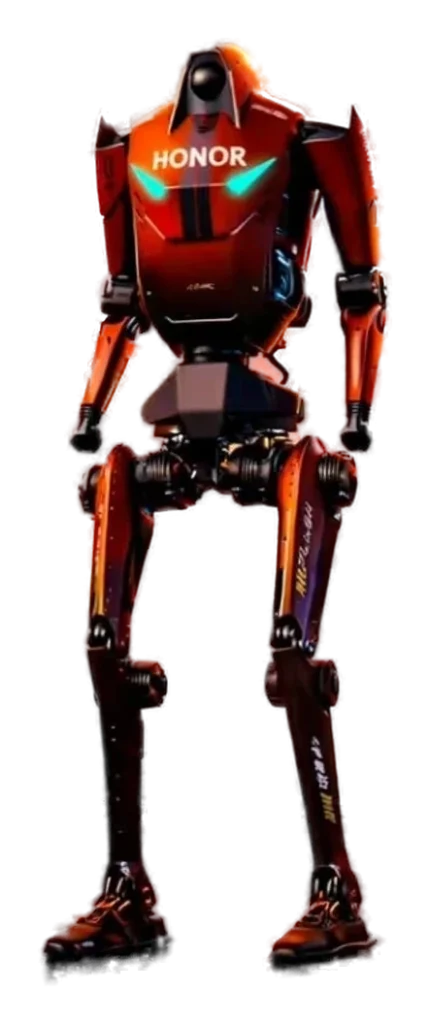
Agile locomotion (running, documented dancing) sets Honor D1 Lightning apart mechanically. Autonomy claims remain locomotion-focused; manipulation capability and real-world task reliability are open questions.
Will the Honor D1 Lightning fit your scenario?
Describe your scenario using the controls. Each choice reads the spec sheet for you, flagging where the Honor D1 Lightning is built for your space and where it isn’t.
A classification of fit for the conditions you set, not a recommendation. Verdicts describe engineering design intent, not test results.
The full spec sheet.
Manufacturer-published figures, measured against every humanoid robot we track.
- Wi-FiThe bands the robot can join; many models need a 2.4 GHz network to set up.
- Supported
Autonomous bipedal gait control and dynamic balance on a prepared, marked course. Honor has not disclosed the sensor or navigation architecture. The machine has no head and no eyes, so camera-based path following does not describe it.
How the assessment has moved.
Every announcement, release and reassessment behind the current classification.
-
Sep 2026 · AssessmentPre-Release Assessment method revised: 53 → 62
-
Aug 2026 · AssessmentPre-Release Assessment revised 47 → 53
-
Jul 2026 · AssessmentPre-Release Assessment recorded at 47 of 100
-
Apr 2026 · DemoCompletes Beijing E-Town half-marathon autonomously in 50:26
-
Mar 2026 · DemoReturns to MWC 2026 with agility demonstrations on stage
-
Mar 2025 · AnnouncementUnveiled at MWC 2025 under Alpha Strategy
How Honor D1 Lightning compares.
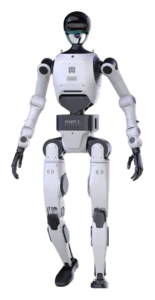
Honor D1 Lightning vs Tiangong 3.0: what can each robot do?
Honor D1 Lightning and X-Humanoid Tiangong 3.0 are both pre-release, Level III humanoids demonstrated at staged events rather than sold to consumers. This comparison sets what each has actually shown…
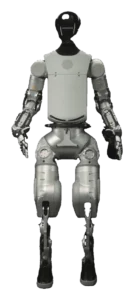
Honor D1 Lightning vs HMND 01 Alpha: what’s each actually for?
Honor D1 Lightning and HMND 01 Alpha are both Level III humanoids with no consumer pathway yet. One has demonstrated marathon-distance locomotion; the other completed a documented industrial manipulation trial…
What people actually ask.
OperationHow did Honor D1 Lightning complete the Beijing E-Town half-marathon autonomously?
OperationWhat sensors enable Honor D1 Lightning's running capability?
OperationCan Honor D1 Lightning perform household chores or manipulation tasks?
OperationWhen will Honor D1 Lightning be available for purchase?
ComparisonHow does Honor D1 Lightning compare to Tesla Optimus and other bipedal humanoids?
OperationIs Honor D1 Lightning using Huawei semiconductor technology?
 III
III
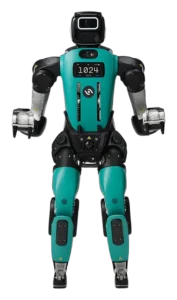
Digit 5
III
X-Humanoid Tiangong 3.0
 III
III
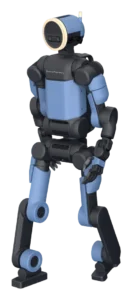
Boston Dynamics Atlas
III
HMND 01 Alpha
Reference the Honor D1 Lightning classification.
Embed the Autonomy Ladder™ mark or copy the citation. The mark is served from this record, so a reassessment updates it on your page automatically.
Get the embed code and citation
Scale proportionally only, up to 2× (536px wide)(224px wide). No recolouring, cropping, rotating, or re-typesetting.
Robovations. "Honor D1 Lightning: Autonomy Level III (Conditional Autonomy)." Autonomy Ladder™, assessed August 2026. https://robovations.com/robots/honor-lightning/
- Link it. The mark must point at this record. An unlinked mark is not authorised.
- Hot-link it. Never download, self-host, or re-upload the image. A saved copy stops updating, and a mark that has stopped updating is a claim we no longer stand behind.
- A classification, not an endorsement. It may not appear beside language implying Robovations recommends, rates, or approves the product.