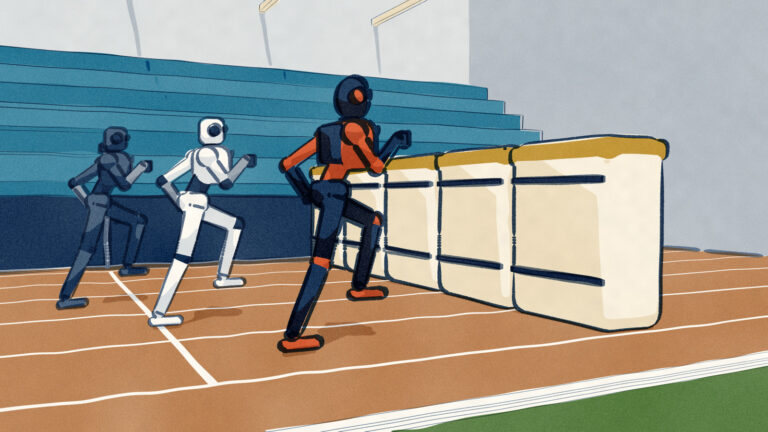
Tiangong Ultra ran 400 meters under the human world record. Last year’s fastest robot took 88 seconds.
Tiangong Ultra’s 38.15-second lap in Beijing was run with nobody allowed to steer, under a rulebook written for robots. What is that time measured against?

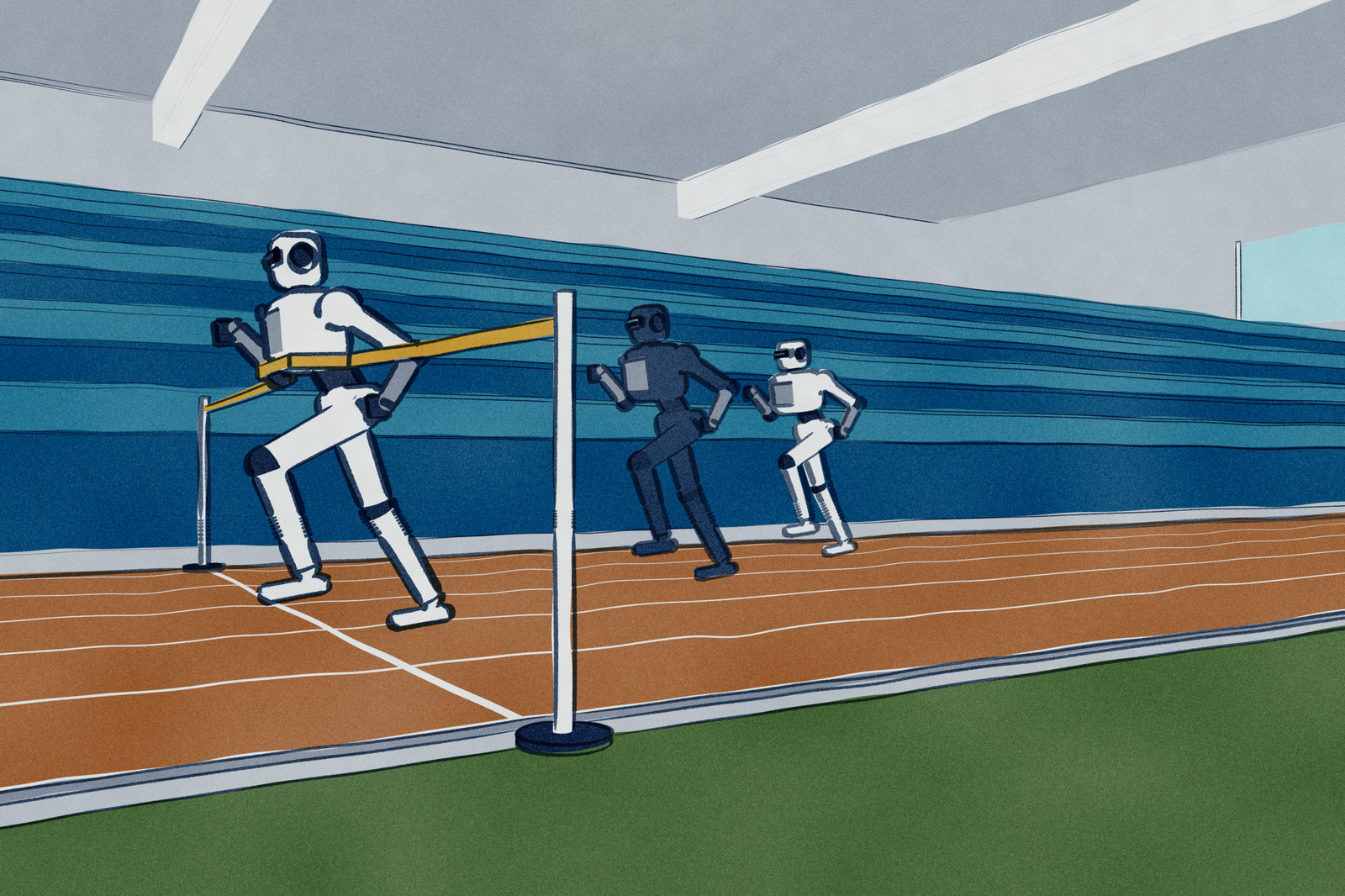
Inside Beijing’s National Speed Skating Oval on August 23, a humanoid robot called Tiangong Ultra ran 400 meters in 38.15 seconds, the first gold of the second World Humanoid Robot Games. The men’s world record, set by Wayde van Niekerk at the 2016 Rio Olympics, is 43.03. Both robots behind it came in under that mark too.
Last year’s robots were nowhere near van Niekerk. At the first Games, in 2025, the fastest large robot needed 1:28.03 for the same distance. So in one year the fastest lap came down by almost 50 seconds, about ten times the margin Tiangong Ultra had over the human record.
No remote control in the 400 meters
If you’ve ever watched a humanoid demo and wondered who was holding the controller, the rules for this lap said nobody could. The 400 meters was one of the Games’ fully autonomous events, which a robot must finish using onboard perception, decision-making and control.
A lap asks more of a machine with no one at the controls than a straight sprint does. For close to 40 seconds the robot has to hold its lane through two bends and pace its battery and motors, with nothing to go on but its own sensors and software.
Most of the program works the same way. Twenty of the 30 competitions are marked “fully autonomous mode only,” every flat running event among them. But the 100- and 400-meter obstacle courses accept either mode, and in weightlifting, kickboxing and jumping a team can still steer its robot by remote.
Figure
Autonomous events vs. remote-controlled events
- The linkEvery decision travels out of the machine and back over this. Latency, a dropped connection and an operator looking elsewhere are all failures of the task, and none of them are faults in the machine. A machine run this way is Level I.
- The operatorThe person at the console generates the action sequence. The machine is the actuator.
- Closed on boardThe same loop, entirely inside the machine. Nothing off-board has to be working for it to keep going, which is what makes it eligible for Level III.
So could anything that ran in Beijing end up in your home? Tiangong Ultra’s maker, the Beijing Humanoid Robot Innovation Center, aims it at industrial handling, inspection and guided-service tasks. The machine in second place, at 39.45, came from a company that sells phones: Lightning was developed by Honor.
Honor unveiled its first humanoid in March as part of a move “to create consumer-grade robots,” aimed at shopping assistance, workplace inspections “and especially supportive companionship.” That announcement, which also covered two new phones, gave no price and no date.
How the lap compares with human athletics
The lap wasn’t the week’s only time under a human mark. Tiangong Ultra’s 100-meter times fell from 9.39 on opening day, August 22, to 8.64 in the final four days later, all under Usain Bolt’s 9.58. How those sprints started, and what stopped the robot past the line, is a story of its own.
Online, the lap went up as a record. One post called it “breaking the human world record once again,” and on August 25 the innovation center claimed four human world records for its Tiangong robots. The report of the gold put it another way.
It is a striking timing comparison, though not an athletics world record: the robot event operates under its own technical specifications and competition rules.
Set side by side, the two years say more than any record. A lap that took the fastest large robot nearly a minute and a half in 2025 took three of them under 40 seconds in 2026, and this time with no one allowed to steer.
How well that rule held is harder to see. The organizers’ table marks which events must run autonomous, a record of what they wanted. It doesn’t count how many robots finished, or how often a person stepped in.
Writing about this year’s rules, one writer looked back at the first Games and the two complaints he heard most there: remote control and constant battery swaps. Then he added, “The rules moved on the first one.”