Tiangong Ultra beat Usain Bolt’s 100-meter time. A crash mat did the stopping.
Tiangong Ultra ran 100 meters in 8.64 seconds, inside Usain Bolt’s 9.58. How it left the line and how it stopped decide whether those numbers belong side by side.
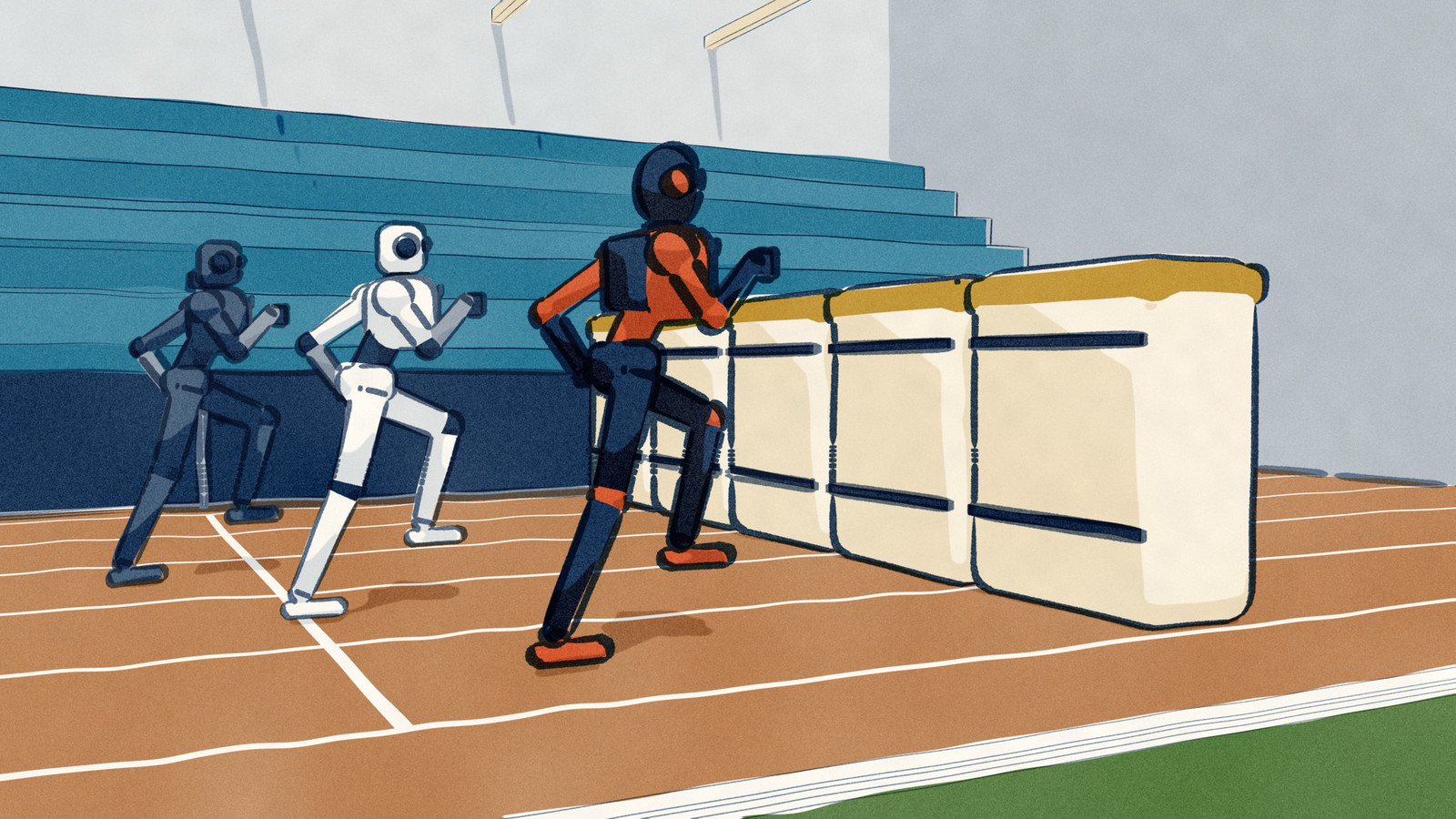
Tiangong Ultra finished its semifinal at the World Humanoid Robot Games in Beijing and kept right on going, into a thick mat placed beyond the finish line “to stop the sprinting machines,” and collapsed from the impact. A small fire broke out in its torso. The clock had already stopped, at 8.86 seconds.
In the final, on the last day of competition, the Beijing Humanoid Robot Innovation Center’s machine went faster still, winning the large-size robot 100 meters in 8.64 seconds. All three of its times at the games came in under the 9.58 men’s world record Usain Bolt set. A year earlier it had won the same event in 21.50 seconds.
At 8.64 seconds, Tiangong Ultra averaged roughly 26 miles per hour, faster than Bolt’s average on his record run. But a human sprinter starts from blocks at the gun and slows down on their own legs. How these robots started and stopped decides what their times belong beside, and what they tell you about machines meant to work among people.
From the gun to the line
So how did they start? “At the sound of the starting gun, three humanoid robots shot off like springs,” went one account of the opening heat. In a small-size heat, team members helped robots into position at the line. Whether any robot used blocks, crouched or stood, and what triggered the clock, no report says.
Once the gun went, nobody steered. Both 100-meter divisions were “Fully Autonomous Mode Only.” Beijing’s half marathon in April had worked differently. There, just 38 percent of the robots ran autonomously, and the rest were piloted remotely.
The opening heat was close. Near the finish, Tiangong Ultra overtook Lightning, a robot from the smartphone maker Honor, and won, 9.39 seconds to 9.47. Then it ran straight into a thick safety mat and stumbled toward the sidelines, and people nearby had to get out of the way. Lightning collapsed after finishing and was carried off on a stretcher.
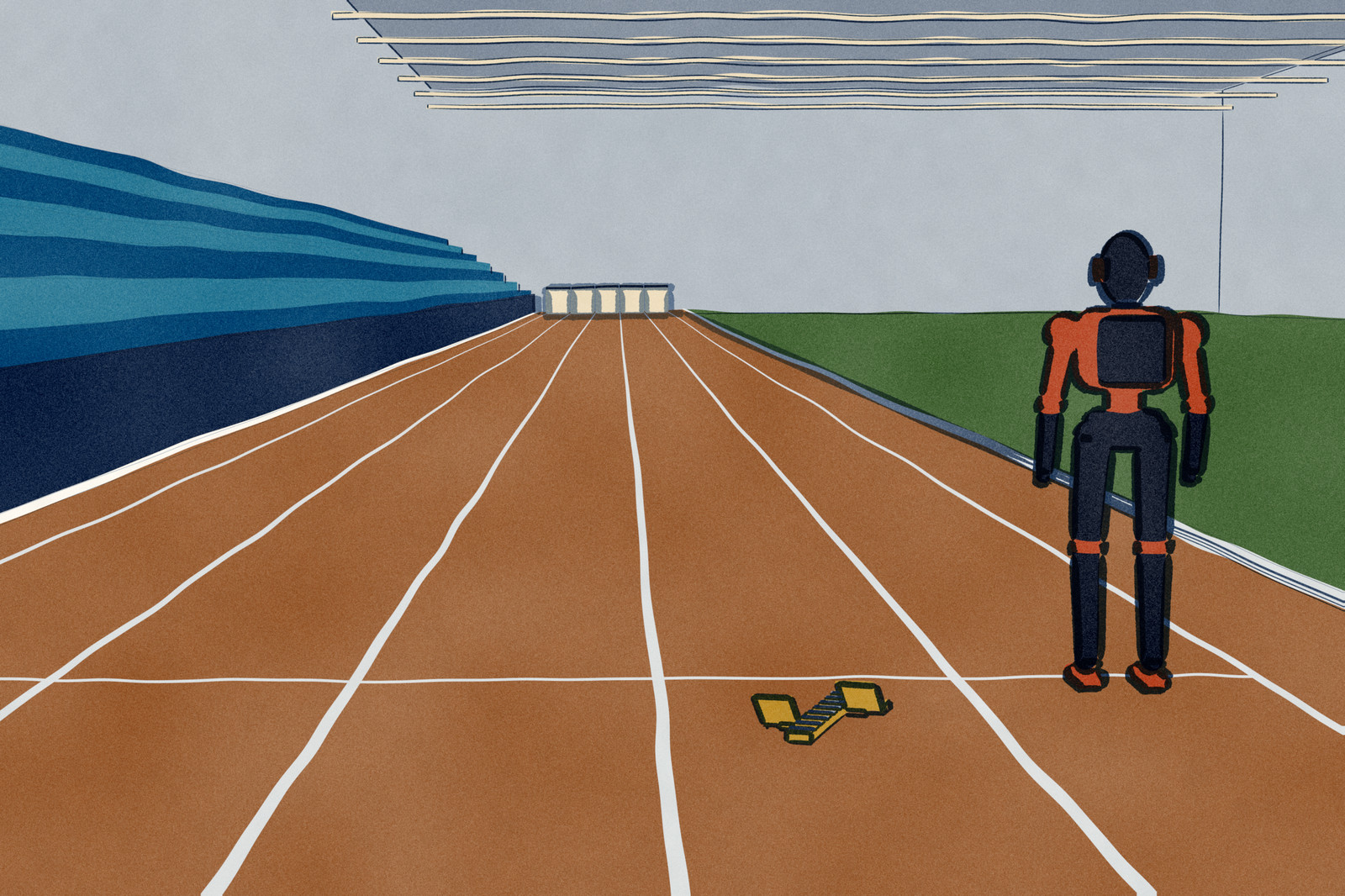
There’s one more time, 9.32 seconds, and who ran it depends on the report you read. One wire report said Honor recorded 9.32 in a test run, and another put Lightning’s 9.32 in a test before the games. A cable news report gave the time to Tiangong Ultra, writing that it “ultimately posted a 9.32-second time during the competition.”
Then there’s where the fastest times come from. The 8.64 and the two times before it come from state broadcaster coverage. That broadcaster is a branch of the state media group, which helps organize the games, alongside Beijing’s municipal government.
What a race can test
Why should a sprint matter to you? Because at least one of these makers is aiming at consumers. Honor, Lightning’s maker, unveiled its first humanoid in March as a move “to create consumer-grade robots” for shopping help, workplace inspections “and especially supportive companionship.” It gave no price and no date for the robot.
If you’re in the United States, an advanced robot built abroad now faces a federal barrier. On July 28, the FCC added foreign-produced advanced robotic devices to its Covered List, which bars new equipment authorizations unless the Department of War grants a conditional approval.
At the games themselves, the event set in a home still let a remote operator steer. A robot working on its own scored at full weight there, and one under remote control at half. The sprints admitted no remote control at all.
Yanran Ding, an assistant professor of robotics at the University of Michigan, described the fastest robots at the April race. “They have huge hip and knee motors. But they have a very lean upper torso,” he said, with arms “just big enough to provide inertial balancing.”
You might guess the race is the hard part. Ding says people “have a cognitive bias to think that running a half marathon faster than a human is more difficult than folding laundry,” a belief he calls “not true.” Alan Fern, who has spent most of his career training two-legged robots to walk, spoke to the running itself.
The basic principles of robots walking have been around for a while. There’s no scientific advance in that aspect of the problem.
Alan Fern, professor of computer science, Oregon State University
So what did the 8.64 measure? A start on a gun and a run to a line, with nobody steering. Slowing down on legs, planting each foot ahead of the body and absorbing the load stride by stride without tipping over, came after the line and off the clock. A thick mat did that part instead.