
Hobot 298
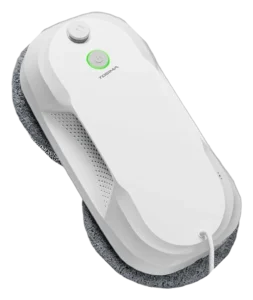
Low cost of entry and straightforward operation for single-story windows. Wired design simplifies extended runs; square pad geometry limits corner coverage compared to edge-detection competitors.
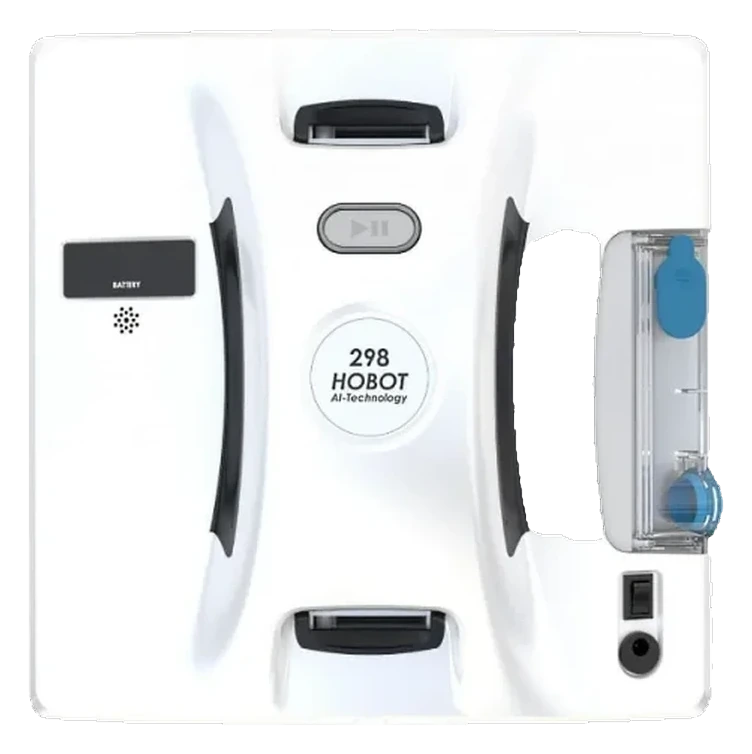
Will the Hobot 298 work on your windows?
Describe your windows using the controls. Each choice reads the spec sheet for you, flagging where the Hobot 298 is built for your space and where it isn’t.
A classification of fit for the conditions you set, not a recommendation. Verdicts describe engineering design intent, not test results.
The full spec sheet.
Priced below the category median, with every figure charted against the category below.
- Footprint
- 9.4 × 9.4 in · 3.5 in tall•
- Weight
- 2.6 lbs•
- Cleaning width
- 9.4 in•
- Backup battery runtime
- 20 min•
- Safety rope rating
- 331 lb•
- Min pane size
- 15 in•
- Power type
- Mains-corded, 100-240V AC•
Onboard edge detection with Smart Route Plan and selectable path modes; run from the app or the bundled infrared remote. Placement on each pane is manual.
Position shows where the figure sits across the tracked category, not a quality judgment. The vacuum holding the robot on the glass, not cleaning power. The figure has no standard test method, so it is comparable only within a brand and generation.
Living with it.
Six years of stable operation; vacuum motor wear is the predictable failure point, not sudden breakdowns.
Owner reports from 2019 onwards document consistent performance with gradual motor degradation at 4-5 year mark. Suction loss tracks with nozzle clogging and filter accumulation, both preventable with maintenance. No major design recalls or firmware regressions (mechanical, not software-driven).
$249 to buy, then about $60 a year for the replaceable parts below. Over three years that is roughly $180 past the sticker price. Excludes electricity and any repairs.
- Mop padEvery 3-4 months$20–25
- FilterAnnually$15
Replacement cadence from the maintenance schedule; prices shown where the source documents them.
CautionElectrical hazard in wet conditions: Wet cable near power source creates shock risk. Keep outlet and connection dry; use circuit breaker or GFCI protection.
NoteSuction-grip dependency at height: Robot relies solely on suction for grip; no secondary tether exists. Inspect intake and filter before each use at elevated heights.
How the assessment has moved.
Every announcement, release and reassessment behind the current classification.
-
Aug 2026 · AssessmentRecord status: Verified → Provisional
-
Aug 2026 · AssessmentRobovations Score revised 69 → 65
-
Aug 2026 · AssessmentRobovations Score revised 64 → 69
-
Aug 2026 · AssessmentRobovations Score rescored under v4.2: 62 → 64
-
Aug 2026 · AssessmentRobovations Score rescored under v4.0: 68 → 62
-
Jul 2026 · AssessmentRobovations Score revised 66 → 68
-
Jul 2026 · AssessmentRobovations Score recorded at 66 of 100
-
Jan 2019 · AnnouncementHOBOT-298 named a CES 2019 Innovation Awards honoree before US launch
How Hobot 298 compares.
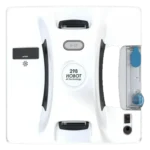
What people actually ask.
OperationCan I use a standard extension cord with the Hobot 298?
OperationDoes the square pad reach corners on all window types?
OperationHow often should I inspect the vacuum motor?
OperationIs the Hobot 298 suitable for second-story windows?
 II
II
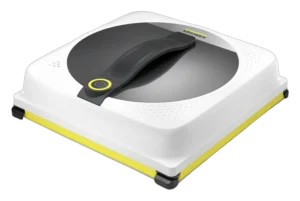
Kärcher RCW 4
 II
II
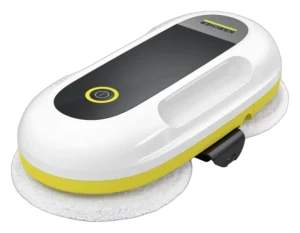
Kärcher RCW 2
 II
II
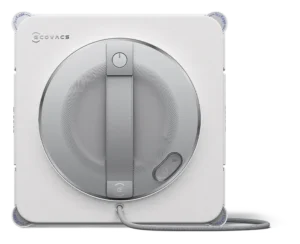
Ecovacs Winbot W2S Pro Omni
 II
II
Tosima W5 Window Cleaning Robot
Where it's sold
We may earn commission from qualifying purchases. This does not influence classification.
Reference the Hobot 298 classification.
Embed the Autonomy Ladder™ mark or copy the citation. The mark is served from this record, so a reassessment updates it on your page automatically.
Get the embed code and citation
Scale proportionally only, up to 2× (536px wide)(224px wide). No recolouring, cropping, rotating, or re-typesetting.
Robovations. "Hobot 298: Autonomy Level II (Assisted Autonomy)." Autonomy Ladder™, assessed August 2026. https://robovations.com/robots/hobot-298/
- Link it. The mark must point at this record. An unlinked mark is not authorised.
- Hot-link it. Never download, self-host, or re-upload the image. A saved copy stops updating, and a mark that has stopped updating is a claim we no longer stand behind.
- A classification, not an endorsement. It may not appear beside language implying Robovations recommends, rates, or approves the product.