
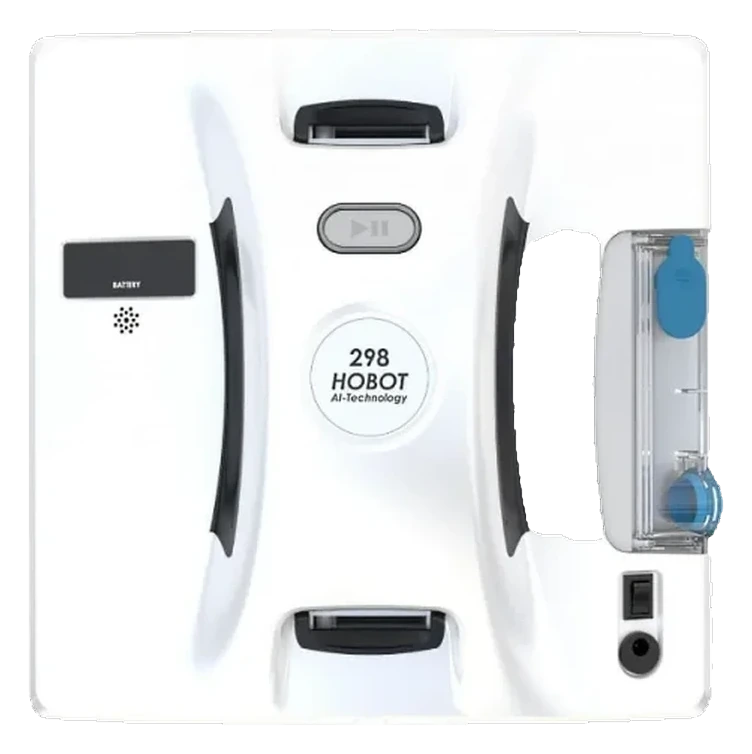
HOBOT
Hobot 298
- Autonomy
- IIAssisted
- Score
- 65/100Capable
- Readiness
- Ready Now
- Price
- $249list
HOBOT
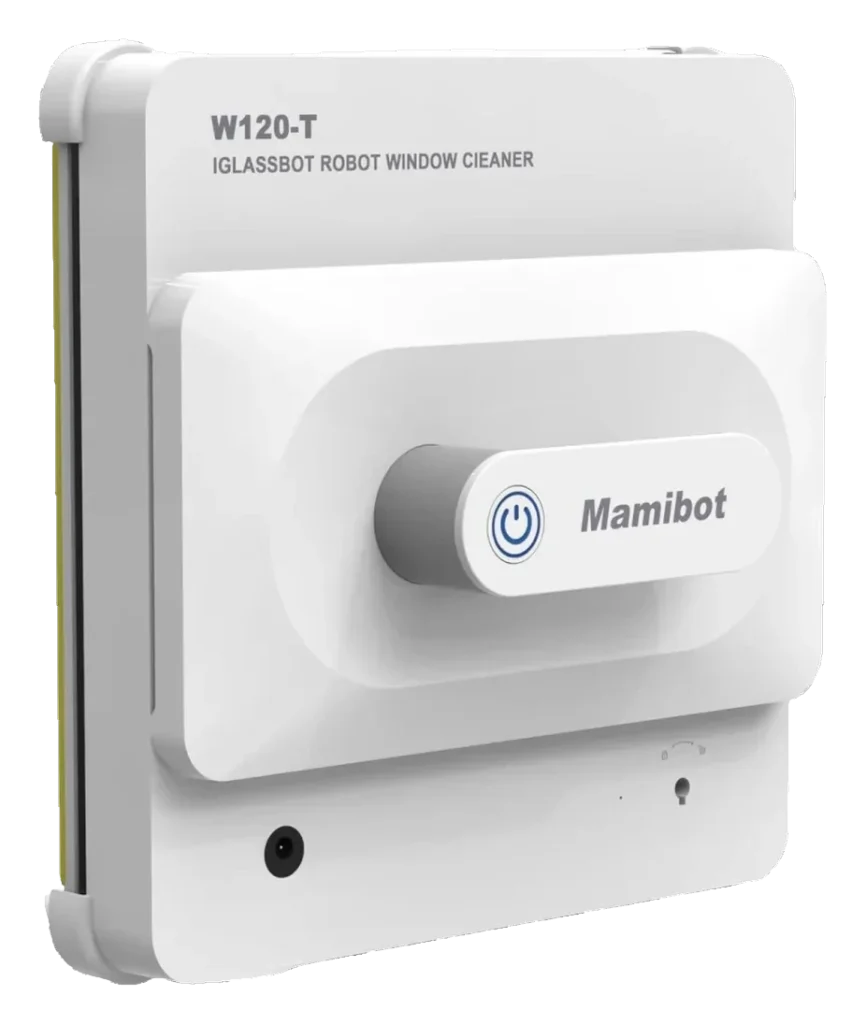
Mamibot
Up to three
All robot window cleaners. Every figure below is placed against the whole class, so a gap can be read against how much the class itself varies.
The conditions each robot was assessed against, side by side. Rows marked in gold are where these machines genuinely differ.
| Condition | Hobot 298 | iGLASSBOT W120-T |
|---|---|---|
| Window style | ||
| Standard residential | GoodOptimized for 6-12 sq ft panes on standard residential frames. Ultrasonic spray performs consistently across typical glass. | GoodFlat glass panes are the design target. Auto-path performs reliably on standard rectangular windows. |
| Large panes (8 ft+) | DependsSquare pad (5×5 in) leaves corner gaps on panes above 15 sq ft. Multiple passes or manual corner cleaning typical. | DependsWater reservoir capacity limits single-mount coverage to approximately 16 sq ft; repositioning required for larger panes. |
| Specialty / texturedthey differ | DependsCurved or heavily tinted tempered glass challenges edge detection. Optical sensors less reliable; manual intervention increases. | PoorCurved, tempered, or unusual geometries cause suction loss. Unit is rated for standard flat glass only. |
| Frame style | ||
| Frameless / minimalthey differ | DependsFrameless glass reduces optical contrast for edge detection. Robot may drift or reposition unpredictably without visual boundary. | GoodFrameless glass relies on suction seal alone; the W120-T is designed for direct glass-surface attachment. |
| Standard mullions | GoodStandard wood, aluminum, or vinyl frames provide clear visual boundaries. Vacuum edge detection works reliably. | GoodStandard framed windows allow rope anchoring to the frame. Manufacturer design assumes frame-mounted tether point. |
| Heavy bezels | DependsMetal frames with deep recesses trap moisture and spray residue. Frequent inspection needed to prevent water pooling and motor intake clogging. | DependsHeavy or aluminum frames may complicate rope routing and tether anchor points; rope must clear frame edges safely. |
| Building height | ||
| Single-story | GoodGround-level and platform-accessible windows are primary use case. Safety and power cord management straightforward. | GoodGround-level windows require no cable extension. Power outlet and tether point management are straightforward. |
| 2 – 3 storiesthey differ | GoodSecond-story windows (15-20 ft) feasible with careful rope rigging and power cord routing from extension outlet. | Depends2-3 story access requires extension cord management. Tether length and cable routing add setup complexity. |
| 4+ storiesthey differ | DependsHeights above 25 feet stretch cable runs and suction reliability limits. External anchor and secondary tether strongly recommended. | PoorUpper-floor windows exceed practical tether and power cable reach. Height access beyond third story is not recommended. |
| Power preference | ||
| Corded OK | Good30-meter power cable with outdoor-rated connector. Requires outlet access; extension cord use discouraged by manufacturer. | GoodW120-T is mains-powered and designed for corded operation. Proximity to power outlet is the only constraint. |
| Cordless preferred | PoorHobot 298 is corded only; no battery option available. | PoorUnit has no battery option. Cordless-only requirement is incompatible with this model's design. |
| No preference | GoodCorded operation is standard; cordless alternative not offered by manufacturer. | GoodCorded operation is the only available mode. Users flexible on power source will find it suitable. |
A robot being poor for a condition is a fact about fit, not a fault. “Depends” means the record names a limit worth reading, not that the answer is unknown.
Nine inputs across three pillars, each weighted as shown and each scored so more is better. A robot can lead on one and trail on another, which is the point of showing them apart.
A number only means something next to the spread it sits in. Each track is the real range across every classified robot in the class, with the median marked.
Not compared, because fewer than two of these robots carry a published figure: Runtime, Charge time.
Written on each record, and the only thing here every robot on the site carries.
What each design gives up to be good at what it is good at.
Mains power removes recharge cycles, and an embedded UPS holds the robot in place for 20 minutes through an outage, but the 4 meter cord ties the machine to a socket within a few paces of the pane.
Auto-path on uniform framed glass is reliable; suction on textured panes and the manual’s outright prohibition on frameless glass are the binding constraints, not cleaning quality.
Sub-$200 dual-pad scrubbing is accessible, but rope anchoring, hand-wetted pads and per-panel remounting keep the owner in the loop every session.
Stated by the record itself. A robot being wrong for a household is a fact about fit, not a fault.
The upkeep ownership hands back to you, whatever the autonomy level says.
Classifications rest on different depths of evidence. A pre-release assessment and a verified one are not the same kind of claim.
| Robot | Evidence status | Sources reviewed | Last assessed |
|---|---|---|---|
| Hobot 298 | Provisional | 4 | Aug 2026 |
| Mamibot iGLASSBOT W120-T | Pending | 5 | Aug 2026 |
Evidence status counts the sources behind a classification, not their kind. A high count can be maker documentation and price coverage, so read it as how much was reviewed rather than as independent testing. How we weigh evidence.
 The full recordHobot 298Specifications, evidence, the Fit Check in full, and every tracked change.
 The full recordMamibot iGLASSBOT W120-TSpecifications, evidence, the Fit Check in full, and every tracked change.
Robovations classifies robots; it does not rank them. Nothing on this page is a recommendation, and no manufacturer influences a classification or its placement here.
Comparing across classes is allowed — the page will switch to per-class positioning and tell you it has.