Skip to content
Saved
ROBOVATIONS/COMPARISON4 CONTENDERSREASSESSED 2026.06.23

Technology-shift

Corded power vs cordless freedom: which window-cleaning robot architecture fits your windows?
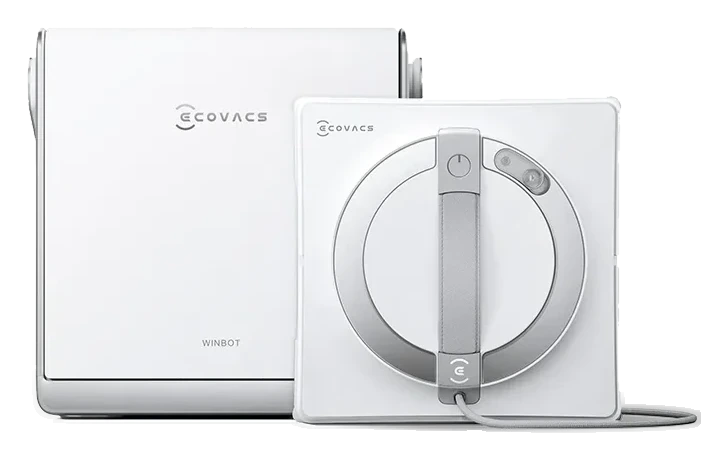
Window-cleaning robots divide between corded tether designs that draw continuous wall power and cordless battery-station designs that trade suction ceiling and runtime for freedom from outlets.

Ecovacs Winbot W2 Pro Omni
Ecovacs

Ecovacs Winbot W2 Pro Omni

$399Level II
Ecovacs Winbot W2S Omni
Ecovacs

Ecovacs Winbot W2S Omni

$473Level III
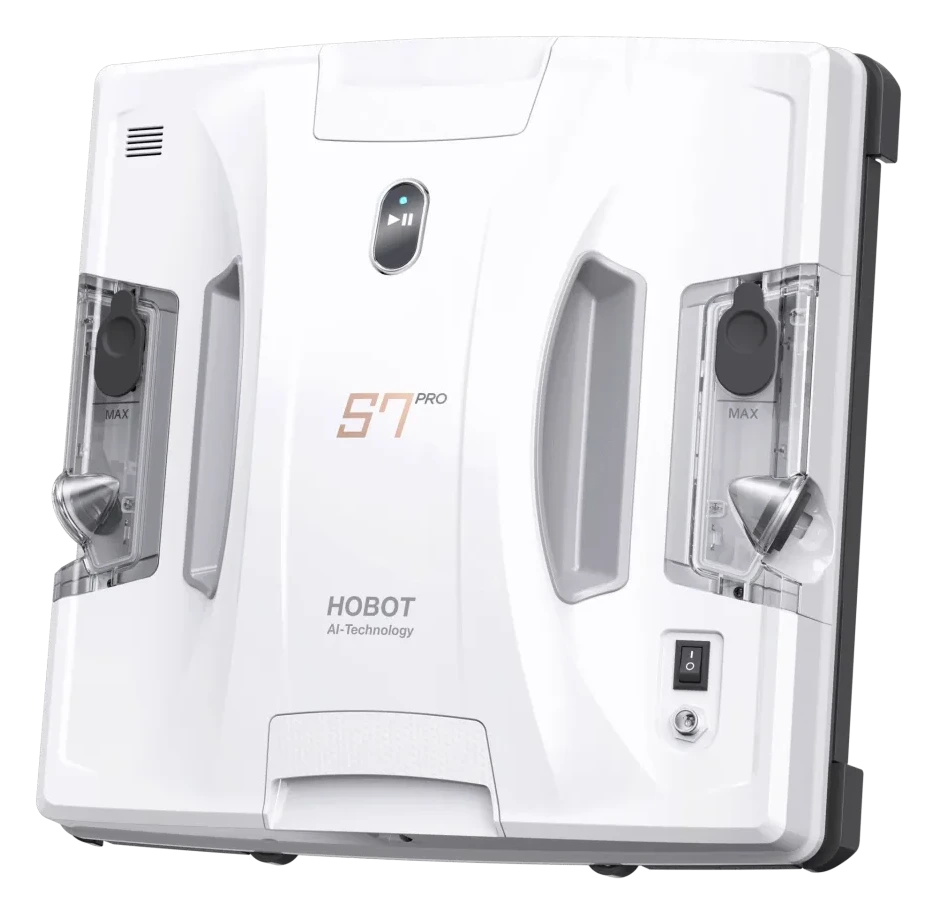
HOBOT S7 Pro
HOBOT

HOBOT S7 Pro

$460Level III
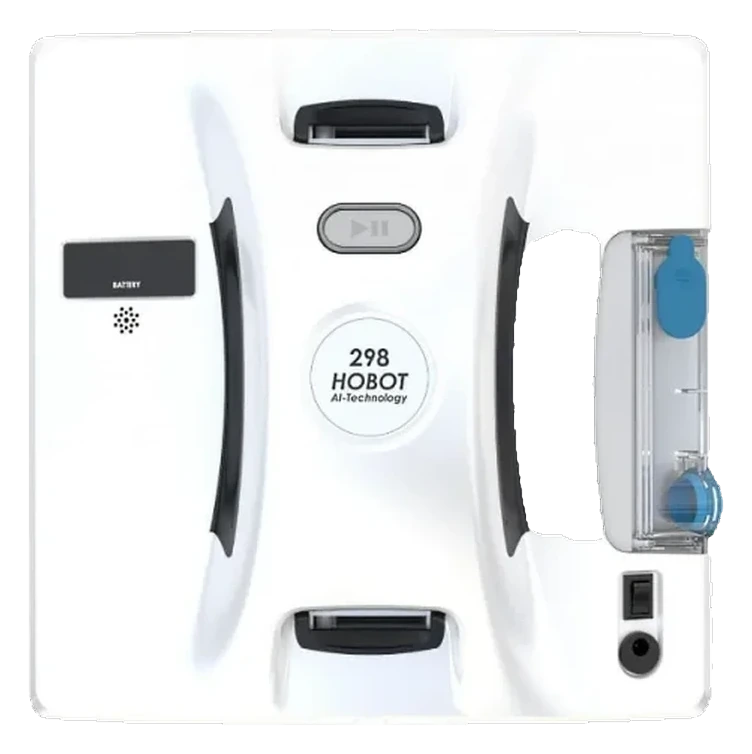
Hobot 298
Hobot

Hobot 298

$199Level II
Price range$199–$473
Autonomy spreadLevel II–III
Contenders4

Classification, not a ranking. Every mark below is documented evidence, not a purchase recommendation.

We may earn commission from qualifying purchases. This does not influence the comparison.

The technological divide

Two architectures, two failure modes

The category has split into two architectural approaches. Each works well in some conditions and breaks down in others.

Approach A · Corded tether power

Corded tether (wall-powered)

CONTINUOUS WALL POWERBuried wireRover

A wire buried around the lawn marks the exact boundary the robot must stay inside.

The robot draws power through a physical cable tethered to a wall outlet, eliminating battery depletion during long sessions. Suction motors run at full rated Pa throughout; reach is bounded by cable length, typically 30 meters.

  • Full suction maintained throughout session
  • Unlimited runtime on single outlet
  • No outlet, no operation
  • Cable management required per window
vs
Approach B · Cordless battery station

Cordless battery station

BATTERY-POWERED PORTABLENetwork signalTransmitterRover

The robot depends on a cellular or WiFi connection to position itself and report status.

A portable dock stores and charges the robot between sessions; the robot operates untethered from the dock for a defined runtime window. Outlet access is needed only at the dock, not at each window.

  • Operates away from outlet proximity
  • No cable routing between windows
  • Runtime ceiling limits session length
  • Suction varies by battery charge state

Where each robot sits

Does the architecture pay off?

Horizontal: where each robot sits between the two architectures. Vertical: its documented result on the headline test.

Handles itPartialStruggles
Hobot 2988000 Pa
Ecovacs Winbot W2S Omni4800 Pa
HOBOT S7 Pro5500 Pa
Ecovacs Winbot W2 Pro Omni2800 Pa
ACorded tether (wall-powered)Cordless battery stationB

Vertical axis — documented result on: Suction output at full rated power

What each architecture can and can’t do

Capability tests

Each capability is documented from owner reports, manufacturer specifications, or third-party reviews. No in-person testing.

CapabilityEcovacs Winbot W2 Pro OmniEcovacs Winbot W2S OmniHOBOT S7 ProHobot 298
Suction output at full rated powerManufacturer Pa spec2800 Pa4800 Pa5500 Pa8000 Pa
Operation without nearby wall outletBeyond 30 m cable reachFailsFailsSupportedSupported
Runtime without outlet connectionOn a single charge or cable20 min backupContinuous40 min110 min
Autonomous path planning within a paneNo operator repositioning mid-paneReactive onlyAuto-pathingWIN-SLAM 4.0WIN-SLAM + TruEdge
Cable-free exterior window accessNo cord visible on facadeCable visibleTether visibleCordlessCordless or wired
Continuous wired fallback mode availableSwitchable to wall powerWired onlyWired onlyNot availableDual mode

What the architecture difference means

Different homes, different sensor stacks

Where each architecture fits, by condition.

Windows far from interior outlets

Cordless designs (W2 Pro Omni at 40 minutes, W2S Omni at 110 minutes per charge) remove the outlet-proximity constraint entirely. Homes where the nearest outlet sits more than 30 meters of cable run from exterior glass make corded tether designs impractical without extension management.

Heavy soiling or large exterior facades

Corded tether robots sustain rated suction indefinitely: the S7 Pro holds 4800 Pa throughout a long session; the Hobot 298 holds 2800 Pa. Cordless units running near battery depletion may see suction reduction before the cycle ends, a limitation relevant to large or heavily fouled panes.

Multi-pane sessions requiring portability

Owner reports on the W2S Omni document 110 minutes of cordless runtime, covering most residential interior window sets on a single charge without trailing cable between rooms. Corded units demand a new cable route for every distinct window zone, scaling setup effort with pane count.

Common questions

What readers ask about this comparison.

Q.
Which of these robots has the highest documented suction?
The Ecovacs Winbot W2S Omni is documented at 8000 Pa per manufacturer specifications, the highest among the four. The W2 Pro Omni follows at 5500 Pa, the HOBOT S7 Pro at 4800 Pa, and the Hobot 298 at 2800 Pa. These are manufacturer-published figures; field conditions vary.
Q.
Can the Ecovacs W2S Omni run in wired mode if the battery depletes mid-session?
Manufacturer documentation for the W2S Omni confirms dual power modes: cordless battery (110 minutes) and continuous wired. Switching to wired during a session is supported. On low battery, manufacturer specs document a 30-minute adhesion hold to give the operator time to respond.
Q.
Does the Hobot 298 have any battery operation at all?
The Hobot 298 specifications document 20 minutes of battery runtime, described as a backup rather than a primary operating mode. Primary operation is corded via the 30-meter cable. Owner reports spanning 5-plus years treat it as a wired unit in practice.
Q.
Why are the two HOBOT units classified differently from the two Ecovacs units in autonomy level?
The Hobot 298 is classified at Level II: vacuum-based edge detection triggers reactive repositioning but no path planning occurs. The HOBOT S7 Pro and the Ecovacs W2S Omni are both classified at Level III: auto-pathing or WIN-SLAM path planning execute systematic coverage within a pane without operator input. The Ecovacs W2 Pro Omni sits at Level II because WIN-SLAM 4.0 maps each window but the operator must initiate each zone via app or remote; autonomous multi-window sequencing is not documented.
Q.
Is the HOBOT S7 Pro's corded tether the same as the Hobot 298's power cable?
Both robots use a physical tether, but the role differs. The Hobot 298’s 30-meter cable is a power supply; the robot depends on it for all operation. The HOBOT S7 Pro’s rope tether functions primarily as a safety anchor for fall prevention; the electrical supply route is a separate connection. Manufacturer documentation for the S7 Pro describes the rope and power circuit as distinct components.
Next up

Beyond windows: which glass robots work on mirrors, shower glass, and tabletops?

Read the comparison

Comparison ID: RV–CMP–7432 · Last reviewed Jun 23, 2026 · Based on owner reports, manufacturer documentation, and firmware release notes