
Hayward SharkVac
Mid-range corded cleaner with a decade of field-proven reliability. SharkVac ignores automation and wall climbing; it is pure floor suction. Smaller pools and owners prioritizing simplicity benefit from the established supply chain and straightforward operation.
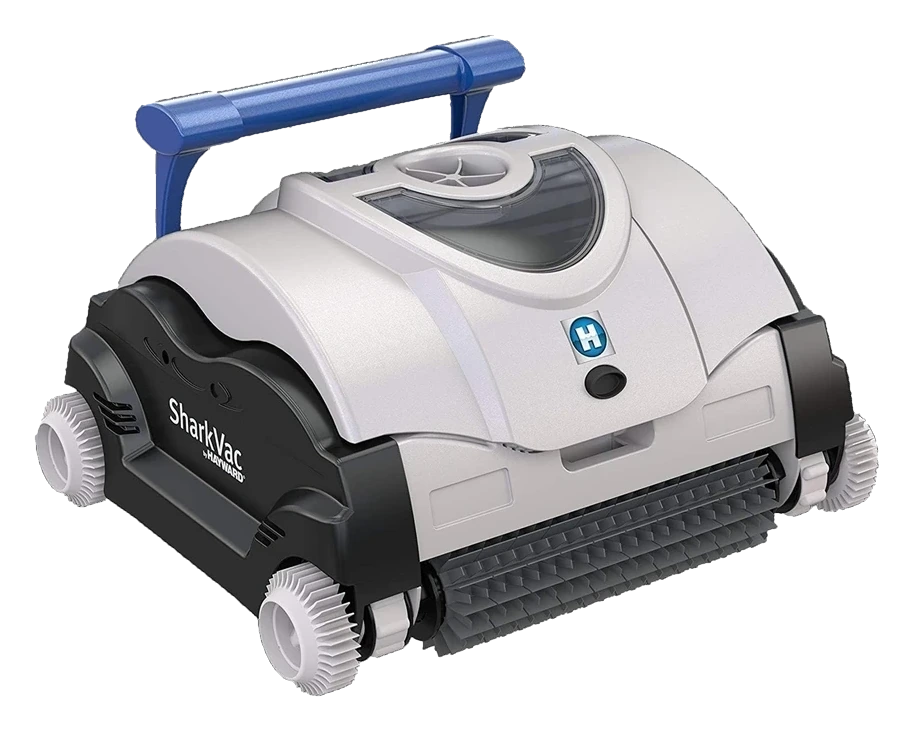
Will the Hayward SharkVac work in your pool?
Describe your pool using the controls. Each choice reads the spec sheet for you, flagging where the Hayward SharkVac is built for your space and where it isn’t.
A classification of fit for the conditions you set, not a recommendation. Verdicts describe engineering design intent, not test results.
The full spec sheet.
Priced near the category median, with every figure charted against the category below.
- Footprint
- 17.7 × 24.6 in · 29.9 in tall•
- Weight
- 21.5 lbs•
- Surfaces cleaned
- Pool floors and coves✓
- Power type
- Corded✓
- Cable length
- 55 ft•
- Filtration
- 5 micron•
Smart steering across floor and coves; no mapping. Manual start at the power supply, fixed two-hour cycle, automatic shutoff.
Position shows where the figure sits across the tracked category, not a quality judgment.
Living with it.
Eleven-year production run with stable motor and filter design. Cable wear and cartridge clogging are expected; no mechanical surprises. Owner base reports 95%+ reliability in normal use.
Pool forums and dealer records spanning 2015-2026 document very few catastrophic failures. Motor reliability is proven. Common issues: cable kinks after 5-7 years (replacement $40-60), cartridge clogging in algae-heavy pools, and occasional pump seal failure (~2% of units over lifetime). No firmware, no surprises.
The independent record is still forming. Failure modes are listed once an outside source reports them.
$1,199 to buy, then about $90 a year for the replaceable parts below. Over three years that is roughly $270 past the sticker price. Excludes electricity and any repairs.
- Filter
Replacement cadence from the maintenance schedule; prices shown where the source documents them.
CautionElectrical hazard from aged cable insulation: SharkVac units 5+ years old should have cable inspected annually for cracks or exposed copper. Use GFCI outlet to mitigate shock risk.
NoteMotor stall under debris load: Heavy leaf or sediment load can stall motor; unit stops and will not restart until clogging is cleared. Periodic manual intake check prevents stalls.
How the assessment has moved.
Every announcement, release and reassessment behind the current classification.
-
Sep 2026 · AssessmentRecord status: Provisional → Pending
-
Aug 2026 · AssessmentRecord status: Verified → Provisional
-
Aug 2026 · AssessmentRobovations Score rescored under v4.2: 54 → 54
-
Aug 2026 · AssessmentRobovations Score rescored under v4.0: 65 → 54
-
Jul 2026 · AssessmentRobovations Score revised 67 → 65
-
Jul 2026 · AssessmentRobovations Score recorded at 67 of 100
What people actually ask.
CompatibilityDoes the Hayward SharkVac have Wi-Fi or an app for scheduling?
OperationWhat is the cable length on the SharkVac and is it easily extensible?
OwnershipHow often do I need to replace the SharkVac filter elements?
OperationDoes the SharkVac climb walls or reach the waterline?
OperationWhat is the age of the SharkVac model and is it still being manufactured?
 II
II
Maytronics Dolphin Nautilus CC Pro
 II
II
Maytronics Dolphin Nautilus Titan
 II
II
Ecovacs Ultramarine P1
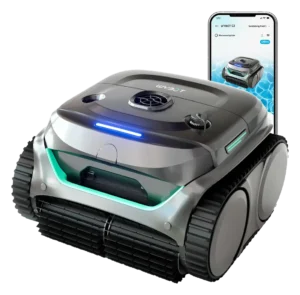
Where it's sold
We may earn commission from qualifying purchases. This does not influence classification.
Reference the Hayward SharkVac classification.
Embed the Autonomy Ladder™ mark or copy the citation. The mark is served from this record, so a reassessment updates it on your page automatically.
Get the embed code and citation
Scale proportionally only, up to 2× (536px wide)(224px wide). No recolouring, cropping, rotating, or re-typesetting.
Robovations. "Hayward SharkVac: Autonomy Level II (Assisted Autonomy)." Autonomy Ladder™, assessed August 2026. https://robovations.com/robots/hayward-sharkvac/
- Link it. The mark must point at this record. An unlinked mark is not authorised.
- Hot-link it. Never download, self-host, or re-upload the image. A saved copy stops updating, and a mark that has stopped updating is a claim we no longer stand behind.
- A classification, not an endorsement. It may not appear beside language implying Robovations recommends, rates, or approves the product.