
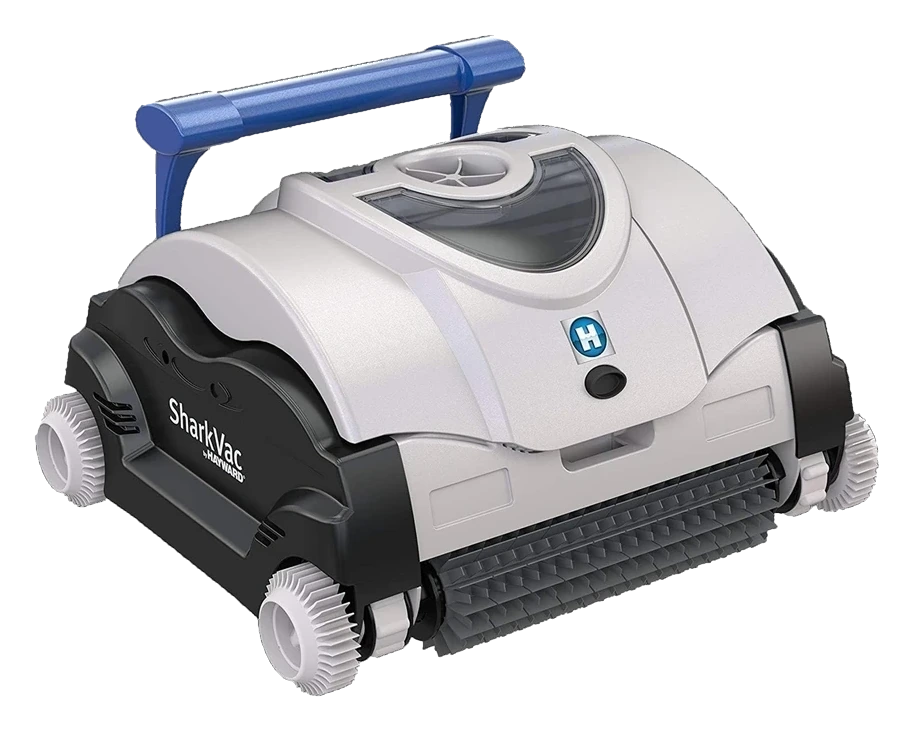
Hayward
Hayward SharkVac
- Autonomy
- IIAssisted
- Score
- 54/100Limited
- Readiness
- Ready Now
- Price
- $1,199list
Hayward
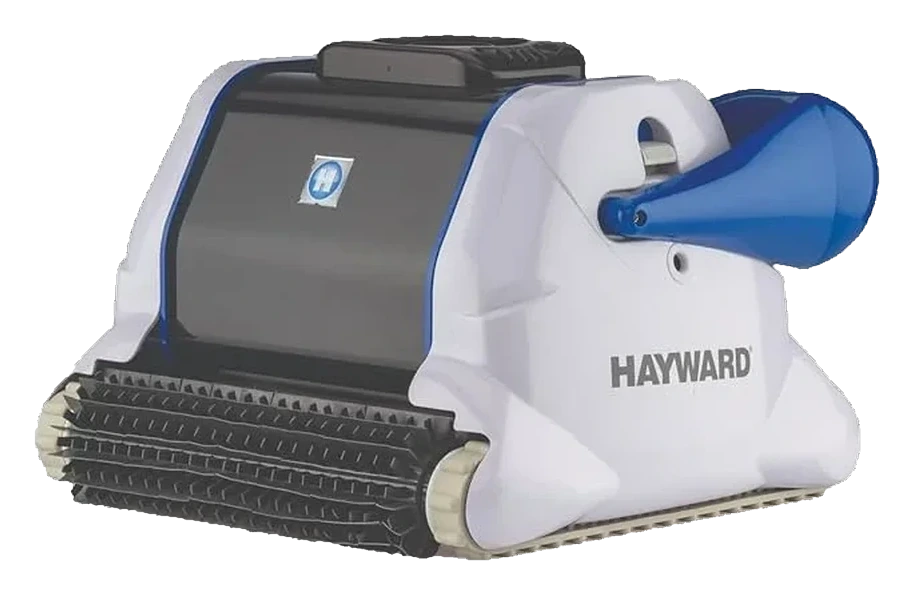
Hayward
Up to three
All robot pool cleaners. Every figure below is placed against the whole class, so a gap can be read against how much the class itself varies.
The conditions each robot was assessed against, side by side. Rows marked in gold are where these machines genuinely differ.
| Condition | Hayward SharkVac | Hayward TigerShark QC |
|---|---|---|
| Pool type | ||
| In-ground | GoodDesigned for in-ground gunite, concrete, and tile pools. Standard corded pool cleaner application. | GoodStandard in-ground operation; random pathing works well in pools under 15k gallons with consistent pump schedules. |
| Above-groundthey differ | PoorSuction-drive design and cable tether not suited for vinyl liners or above-ground pool environments. | GoodSuction cleaners pair directly with above-ground pump filtration; no separate equipment required. |
| Mixed setup | GoodStandard for this category, verify pool type before purchase. | GoodWorks with either pool type, provided pool size stays under 15k gallons and floor is stable. |
| Pool size | ||
| Small (< 400 sqft) | Good10,000-12,000 gal pools clean efficiently in 2-3 hour runs. Cable length adequate for compact footprints. | GoodRandom pathing naturally recycles the floor; small pools see consistent weekly coverage with light debris loads. |
| Medium (400 – 800)they differ | GoodOptimal for 12,000-18,000 gal residential pools. Typical 2-3 hour cycle covers full floor coverage. | DependsPool size around 12k–15k gallons benefits from 8+ hour daily pump schedules; shorter cycles risk coverage gaps. |
| Large (> 800)they differ | DependsPools 20,000+ gal may exceed single-run coverage. Cable extension (additional cost) or multiple runs required. | PoorPools over 15k–20k gallons show unvisited dead zones; random pathing cannot ensure complete coverage. |
| Debris load | ||
| Fine (sand / silt)they differ | GoodSuction captures silt and sand effectively. Filter cartridge replacement every 4-8 weeks maintains performance. | Poor100-micron mesh basket clogs rapidly with fine silt or algae; fine debris forces daily basket empties instead of weekly. |
| Leaves / large debris | DependsLarge leaves clog intake and reduce suction; pre-clean pool surface or reduce run frequency during fall shedding. | DependsModerate leaf load manageable with weekly emptying; heavy seasonal leaf fall requires two to three empties per week. |
| Algae / heavy foulingthey differ | DependsSuction captures algae particles but does not remove thick algae mats. Chemical treatment required first. | PoorActive algae blooms clog the fine-mesh basket within hours; unsuitable for pools experiencing algal blooms without chemical treatment. |
| Coverage you want | ||
| Floor only | GoodFloor-only design is standard for corded budget-tier models. Effective floor coverage with consistent suction. | GoodPurpose-built for floor cleaning with fine-mesh debris capture; operates unattended on level floors. |
| Floor + wallsthey differ | PoorNo wall climbing or vertical reach. Compare to wall-climbing models if wall coverage is required. | DependsFloor cleaning is effective; walls and steps require separate manual tools or a dedicated wall-climbing cleaner. |
| Floor + walls + waterline | PoorFloor-only operation incompatible with waterline cleaning. Manual waterline brushing or separate cleaner required. | PoorNo built-in capacity for wall or waterline cleaning; random pathing keeps the cleaner on the pool floor. |
A robot being poor for a condition is a fact about fit, not a fault. “Depends” means the record names a limit worth reading, not that the answer is unknown.
Nine inputs across three pillars, each weighted as shown and each scored so more is better. A robot can lead on one and trail on another, which is the point of showing them apart.
A number only means something next to the spread it sits in. Each track is the real range across every classified robot in the class, with the median marked.
Not compared, because fewer than two of these robots carry a published figure: Runtime, Charge time, Noise.
Written on each record, and the only thing here every robot on the site carries.
What each design gives up to be good at what it is good at.
A design that has gone a decade largely unchanged at $1,199 MSRP comes with no app, no scheduling and no wall climbing. You are buying floor cleaning only.
You get full-basin cleaning with no programming overhead, but every session starts and ends by hand: the unit is carried to the water, started, lifted out, and the cartridge rinsed.
Two fixed cycles and nothing between them: four hours for a full clean, or 90 minutes on Quick Clean. No scheduling, no pause and no app, so the choice is made at the deck each time.
Stated by the record itself. A robot being wrong for a household is a fact about fit, not a fault.
The upkeep ownership hands back to you, whatever the autonomy level says.
Classifications rest on different depths of evidence. A pre-release assessment and a verified one are not the same kind of claim.
| Robot | Evidence status | Sources reviewed | Last assessed |
|---|---|---|---|
| Hayward SharkVac | Pending | 4 | Aug 2026 |
| Hayward TigerShark QC | Provisional | 10 | Aug 2026 |
Evidence status counts the sources behind a classification, not their kind. A high count can be maker documentation and price coverage, so read it as how much was reviewed rather than as independent testing. How we weigh evidence.
 The full recordHayward SharkVacSpecifications, evidence, the Fit Check in full, and every tracked change.
 The full recordHayward TigerShark QCSpecifications, evidence, the Fit Check in full, and every tracked change.
Robovations classifies robots; it does not rank them. Nothing on this page is a recommendation, and no manufacturer influences a classification or its placement here.
Comparing across classes is allowed — the page will switch to per-class positioning and tell you it has.