
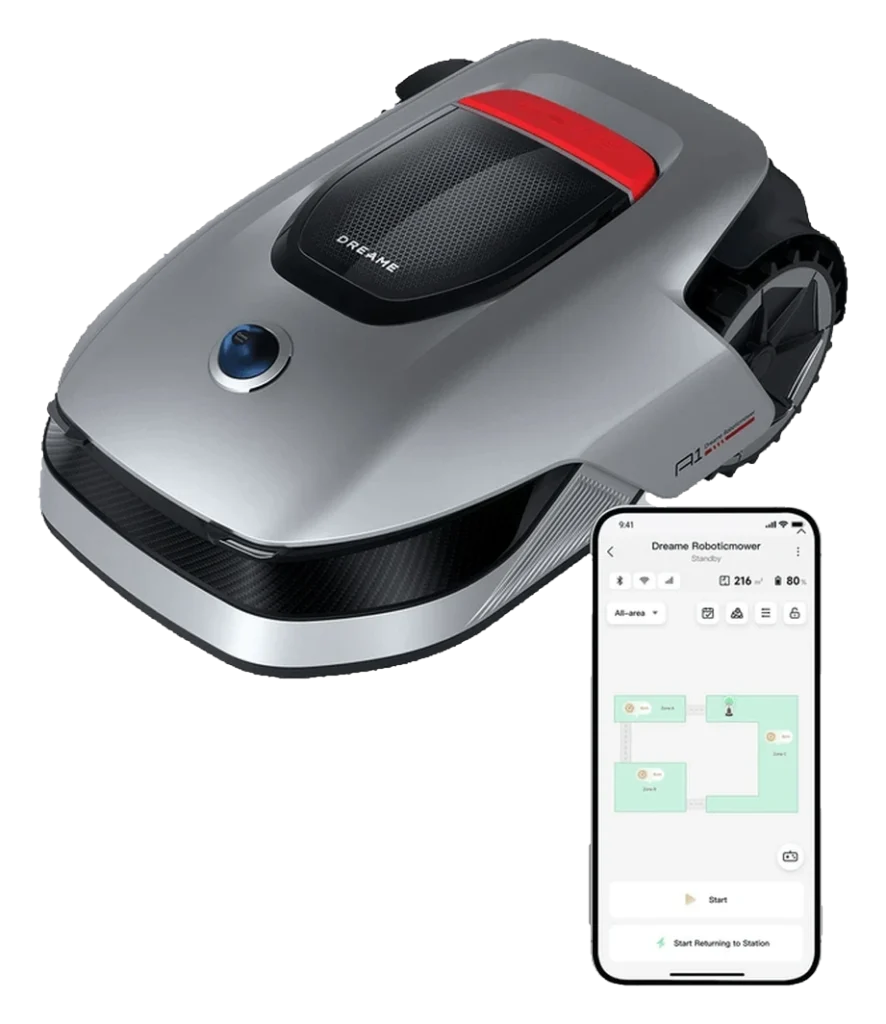
Dreame Roboticmower A1
Systematic coverage at Level III from LiDAR SLAM alone, with no satellite positioning, no reference station and no camera. Rated for 2,000 m2 and a 45 percent gradient, about 24 degrees.
Will the Dreame Roboticmower A1 work on your yard?
Describe your yard using the controls. Each choice reads the spec sheet for you, flagging where the Dreame Roboticmower A1 is built for your space and where it isn’t.
A classification of fit for the conditions you set, not a recommendation. Verdicts describe engineering design intent, not test results.
The full spec sheet.
Priced near the category median, with every figure charted against the category below.
- Footprint
- 17.2 × 25.3 in · 10.3 in tall✓
- Weight
- 26.5 lbs✓
- Battery
- 90 Wh · Li-ion
- Wi-Fi
- Supported
- Voice
- Apple HomeKit
- Cutting width
- 8.7 in•
- Cutting height range
- 1.2-2.8 in•
- Max area
- 21,500 sq ft•
- Max slope
- 45%•
- Boundary method
- Wire-free, 3D LiDAR SLAM (OmniSense)
- Drive layout
- Two-wheel hub motor•
3D LiDAR SLAM (OmniSense 3D Ultra-Sensing), 360 by 59 degree field, detection range up to 70 m, 1 cm mapping precision. No GPS receiver, no RTK reference station and no camera.
Position shows where the figure sits across the tracked category, not a quality judgment.
Living with it.
Solid first-year performance with predictable maintenance cycle; firmware refinements improving edge cases but GPS drift remains seasonal.
Firmware 2.1.4 reduced GPS drift and rain-detection false-positives. Occasional blade jam in dense thatch and LiDAR fogging in high humidity, both resolved by seasonal maintenance or manual cleaning.
$1,999 to buy, then about $280 a year for the replaceable parts below. Over three years that is roughly $840 past the sticker price. Excludes electricity and any repairs.
- BladesAs the blades wear
Replacement cadence from the maintenance schedule; prices shown where the source documents them.
CautionStair safety in low light: Cliff detection activates on 5cm drops but reduced effectiveness in basement environments; supervision recommended in new spaces.
CautionBlade safety during operation: Blade automatically halts within 0.5 seconds of tilt detection, complies with IEC 60335-2-91 standard.
NoteRain sensor false positives: High humidity can trigger premature pause, reducing reliability in tropical climates.
How the assessment has moved.
Every announcement, release and reassessment behind the current classification.
-
Sep 2026 · AssessmentRecord status: Verified → Provisional
-
Aug 2026 · AssessmentRobovations Score revised 80 → 73
-
Aug 2026 · AssessmentRobovations Score rescored under v4.2: 77 → 80
-
Aug 2026 · AssessmentRobovations Score rescored under v4.0: 72 → 77
-
Jul 2026 · AssessmentRobovations Score revised 68 → 72
-
Jul 2026 · AssessmentRobovations Score recorded at 68 of 100
-
Mar 2024 · ReleaseLaunches commercially in North American market
-
Jan 2024 · AnnouncementAnnounced at CES 2024 with wire-free LiDAR design
How Dreame Roboticmower A1 compares.

Can robot mowers handle tall grass on a neglected lawn?
RTK robot mower setup: what app-guided install actually means for owners
Vision-only robot mowers: can camera systems match RTK precision?
What people actually ask.
OperationHow does the A1 navigate without GPS, RTK or a camera?
OperationHow long does setup take, and does the map need redoing?
OperationWhat happens under dense tree canopy or beside buildings?
OperationDoes the mower handle wet grass or rain?
OwnershipWhat maintenance is required per season?
OperationHow does performance differ from RTK competitors like Aiper Scythe or Husqvarna EPOS models?
 III
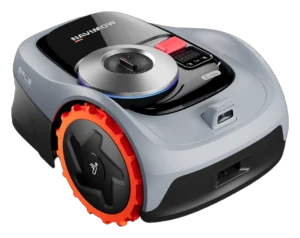
III
Segway Navimow i105N
 III
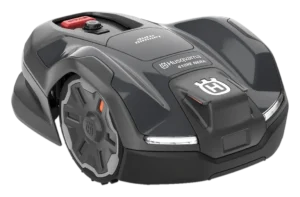
III
Husqvarna Automower 410XE NERA
 III
III
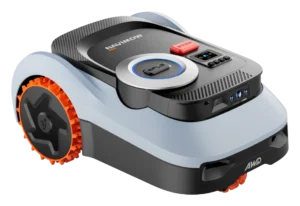
Segway Navimow i2 LiDAR Pro
 III
III
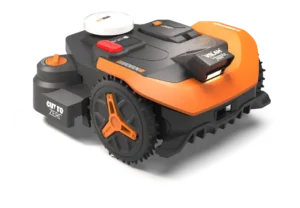
Worx Landroid Vision Cloud WR340
Where it's sold
We may earn commission from qualifying purchases. This does not influence classification.
Reference the Dreame Roboticmower A1 classification.
Embed the Autonomy Ladder™ mark or copy the citation. The mark is served from this record, so a reassessment updates it on your page automatically.
Get the embed code and citation
Scale proportionally only, up to 2× (536px wide)(224px wide). No recolouring, cropping, rotating, or re-typesetting.
Robovations. "Dreame Roboticmower A1: Autonomy Level III (Conditional Autonomy)." Autonomy Ladder™, assessed August 2026. https://robovations.com/robots/dreame-roboticmower-a1/
- Link it. The mark must point at this record. An unlinked mark is not authorised.
- Hot-link it. Never download, self-host, or re-upload the image. A saved copy stops updating, and a mark that has stopped updating is a claim we no longer stand behind.
- A classification, not an endorsement. It may not appear beside language implying Robovations recommends, rates, or approves the product.