
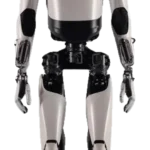
Boston Dynamics Atlas
Enterprise humanoid for material handling: part sequencing, machine tending, order building and barcode scanning. Boston Dynamics states motions are generated autonomously with no teleoperation, and the robot walks to its own charger. Deployment runs through the company, with no open sale and no published price.

Will the Boston Dynamics Atlas fit your scenario?
Describe your scenario using the controls. Each choice reads the spec sheet for you, flagging where the Boston Dynamics Atlas is built for your space and where it isn’t.
A classification of fit for the conditions you set, not a recommendation. Verdicts describe engineering design intent, not test results.
The full spec sheet.
Manufacturer-published figures, measured against every humanoid robot we track.
Position shows where the figure sits across the tracked category, not a quality judgment.
How the assessment has moved.
Every announcement, release and reassessment behind the current classification.
-
Sep 2026 · AssessmentRecord status: Verified → Not Consumer-Ready
-
Aug 2026 · AssessmentPre-Release Assessment revised 54 → 63
-
Aug 2026 · AssessmentAutonomy Ladder reclassified II → III
-
Jul 2026 · AssessmentRobovations Score revised 45 → 54
-
Jul 2026 · AssessmentRobovations Score recorded at 45 of 100
-
Apr 2024 · AnnouncementTransitions to fully electric platform for industrial deployment
-
Apr 2024 · AnnouncementHydraulic Atlas Retired as Electric Successor Unveiled
How Boston Dynamics Atlas compares.


What people actually ask.
OperationWhat changed from hydraulic to electric Atlas?
OperationCan Atlas operate without an operator?
OperationWhat is the battery runtime?
OperationIs Atlas available for purchase?
OperationWhat sensors does Atlas use?
OperationWhat training is required to operate Atlas?
 III
III
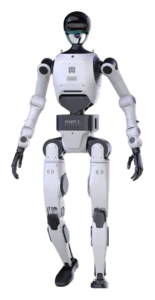
Honor D1 Lightning
 III
III
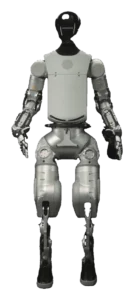
X-Humanoid Tiangong 3.0
 III
III
HMND 01 Alpha
 III
III
Unitree H1
Reference the Boston Dynamics Atlas classification.
Embed the Autonomy Ladder™ mark or copy the citation. The mark is served from this record, so a reassessment updates it on your page automatically.
Scale proportionally only, up to 2× (536px wide)(224px wide). No recolouring, cropping, rotating, or re-typesetting.
Robovations. "Boston Dynamics Atlas: Autonomy Level III (Conditional Autonomy)." Autonomy Ladder™, assessed September 2026. https://robovations.com/robots/boston-dynamics-atlas/
- Link it. The mark must point at this record. An unlinked mark is not authorised.
- Hot-link it. Never download, self-host, or re-upload the image. A saved copy stops updating, and a mark that has stopped updating is a claim we no longer stand behind.
- A classification, not an endorsement. It may not appear beside language implying Robovations recommends, rates, or approves the product.