
Aiper Seagull SE
Budget entry point into cordless pool cleaning. Floor-only design avoids the cost of wall-climbing mechanisms and multi-plane coverage. Trade-off is obvious: walls accumulate algae without a wall-climbing cleaner. Bump-sensor obstacle detection is reliable for open floor spaces but creates irregular coverage patterns.
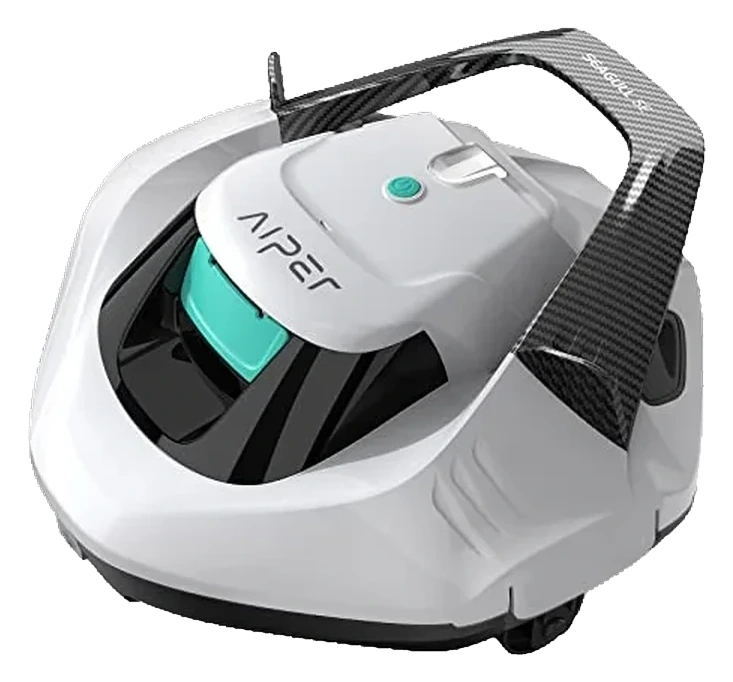
Will the Aiper Seagull SE work in your pool?
Describe your pool using the controls. Each choice reads the spec sheet for you, flagging where the Aiper Seagull SE is built for your space and where it isn’t.
A classification of fit for the conditions you set, not a recommendation. Verdicts describe engineering design intent, not test results.
The full spec sheet.
Priced below the category median, with every figure charted against the category below.
- Footprint
- 15.7 × 15.7 in · 7.1 in tall
- Weight
- 7.9 lbs•
- Battery
- 73 Wh · Li-ion
- Max pool area
- 850 sq ft•
- Cycle length
- 90 min•
- Power type
- Cordless battery•
- Max pool length
- 33 ft•
- Surfaces cleaned
- Floor only
- Filtration
- 180 micron✓
- Filter capacity
- 2 L✓
Not documented by the manufacturer. Observed behavior is reactive obstacle steering with self-parking at the pool wall on low battery; no spatial mapping.
Position shows where the figure sits across the tracked category, not a quality judgment.
Living with it.
Simple ultrasonic design with minimal electronics; mechanical durability is high. No smart-control points of failure.
Owner reports describe consistent reliability over 12+ months. No firmware issues (device is not smart-connected). Ultrasonic sensor reliability high; no documented sensor failure in first 12 months. Battery degradation is the primary wear pattern (~15% capacity loss after 12 months in normal-use scenarios).
$299 to buy. Ongoing running cost for this model hasn’t been assessed yet.
NoteCordless design, minimal electrical hazard: Cordless operation reduces electrical risk; ensure dock charging contacts remain dry and clear of water splash.
How the assessment has moved.
Every announcement, release and reassessment behind the current classification.
-
Sep 2026 · AssessmentRobovations Score revised 40 → 39
-
Aug 2026 · AssessmentRecord status: Verified → Provisional
-
Aug 2026 · AssessmentRobovations Score revised 41 → 40
-
Aug 2026 · AssessmentRobovations Score rescored under v4.2: 69 → 41
-
Jul 2026 · AssessmentRobovations Score revised 70 → 69
-
Jul 2026 · AssessmentRobovations Score recorded at 70 of 100
-
Nov 2022 · ReleaseAiper launches Seagull SE cordless robotic pool cleaner at $249.99
How Aiper Seagull SE compares.
Entry-level pool robots under $600: floor-clean job versus budget ceiling
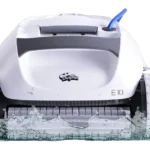
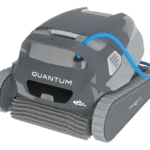
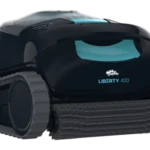
Floor-only vs floor-and-waterline pool robots: which surfaces do they actually reach?
What people actually ask.
OperationDoes the Aiper Seagull SE clean walls or just the floor?
ComparisonHow does ultrasonic navigation compare to visual mapping on other cordless cleaners?
CompatibilityCan I use the Seagull SE without a mobile app?
OperationWhat is the battery runtime, and will it cover my pool?
OwnershipIs the battery replaceable, and how much does it cost?
OperationDoes the Seagull SE work in pools with algae or cloudy water?
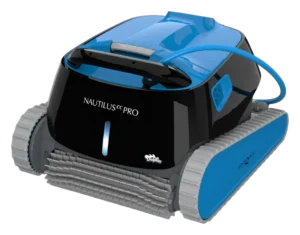 II
II
Maytronics Dolphin Nautilus CC Pro
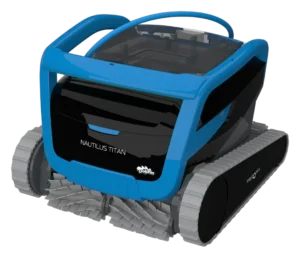 II
II
Maytronics Dolphin Nautilus Titan
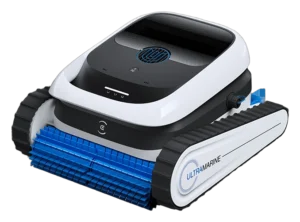 II
II
Ecovacs Ultramarine P1
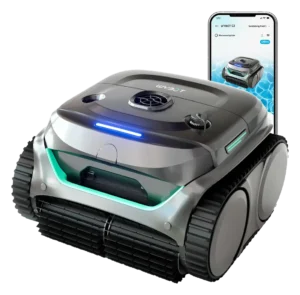
Where it's sold
We may earn commission from qualifying purchases. This does not influence classification.
Reference the Aiper Seagull SE classification.
Embed the Autonomy Ladder™ mark or copy the citation. The mark is served from this record, so a reassessment updates it on your page automatically.
Get the embed code and citation
Scale proportionally only, up to 2× (536px wide)(224px wide). No recolouring, cropping, rotating, or re-typesetting.
Robovations. "Aiper Seagull SE: Autonomy Level II (Assisted Autonomy)." Autonomy Ladder™, assessed May 2026. https://robovations.com/robots/aiper-seagull-se/
- Link it. The mark must point at this record. An unlinked mark is not authorised.
- Hot-link it. Never download, self-host, or re-upload the image. A saved copy stops updating, and a mark that has stopped updating is a claim we no longer stand behind.
- A classification, not an endorsement. It may not appear beside language implying Robovations recommends, rates, or approves the product.