Analysis
Does the Aiper Scuba V3 Ultra Really Map Your Pool, or Just Run a Timer?
Aiper's $2,300 pool robot is classified at Level III for finishing a cleaning cycle without a hand on the controls, but the same classification record scores its own coverage-and-navigation evidence at 30 out of 100, the lowest number on a nine-input scorecard, because no source outside Aiper confirms the pool map survives between runs.
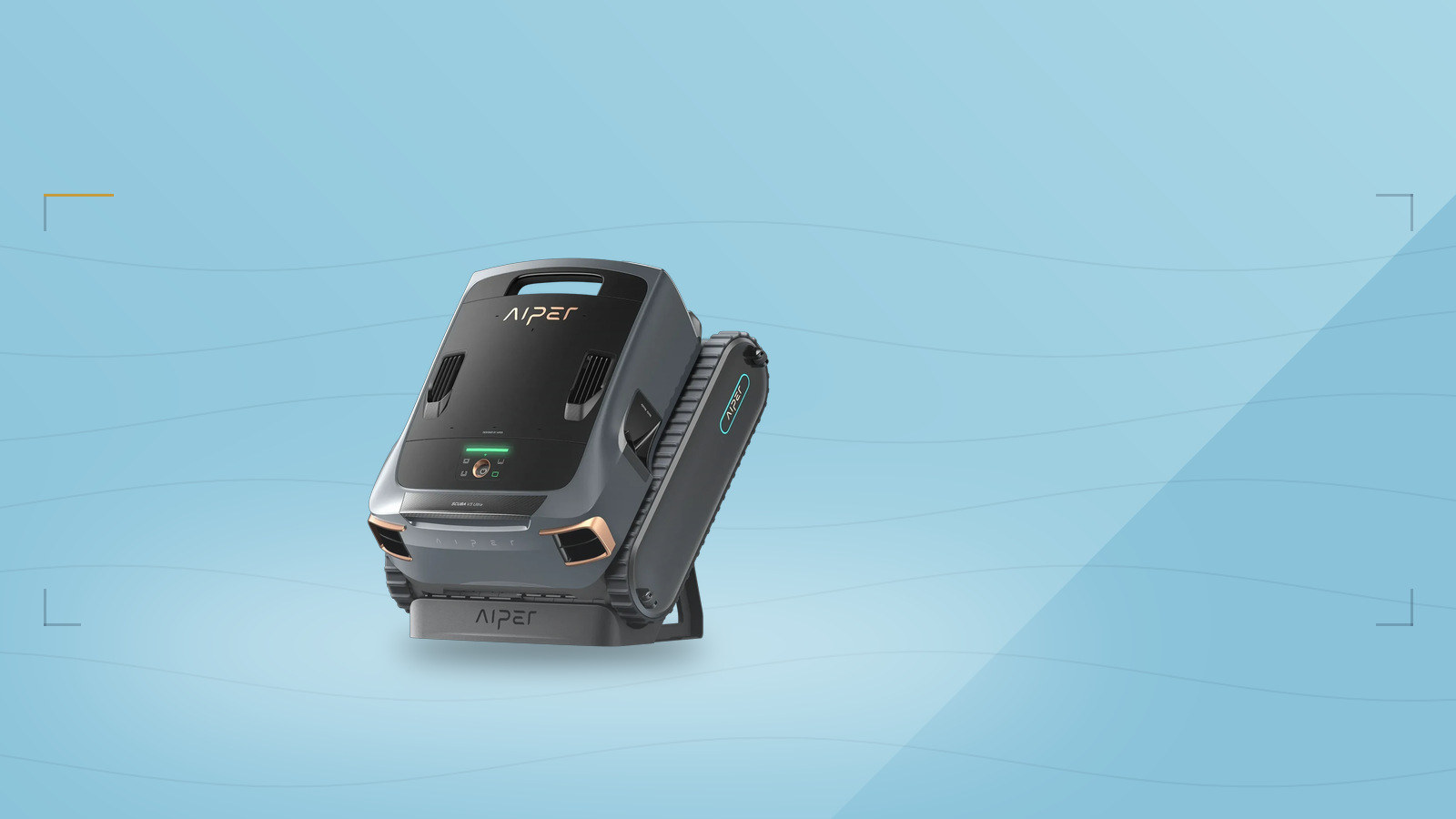
Aiper’s Scuba V3 Ultra launched in June 2026 at $2,299.99 and is marketed on what Aiper calls Cognitive AI: a mapping system meant to track a pool’s floor, walls, waterline and water surface across a single cordless cycle. Robovations classifies the machine at Level III, Conditional Autonomy, on the strength of that claim closing the loop without an operator present for each run.
The same classification record scores the individual inputs behind that placement, and two of them tell a different story than the marketing copy. Coverage and navigation is scored at 30 out of 100. Edge recovery, what the robot does when it wedges against a ladder, a drain or a step, sits at 25. Both are the lowest inputs on the Scuba V3 Ultra’s own scorecard, and both trace to the same root cause: nothing outside Aiper has confirmed what the mapping system actually retains between runs. Robovations weighs task completion at 40 percent of the capability pillar and coverage-navigation at 25 percent, so the mapping gap does not erase the record. It does pull the pillar down beside it.
Autonomy claim vs autonomy evidenceA Level III pool robot, on paper
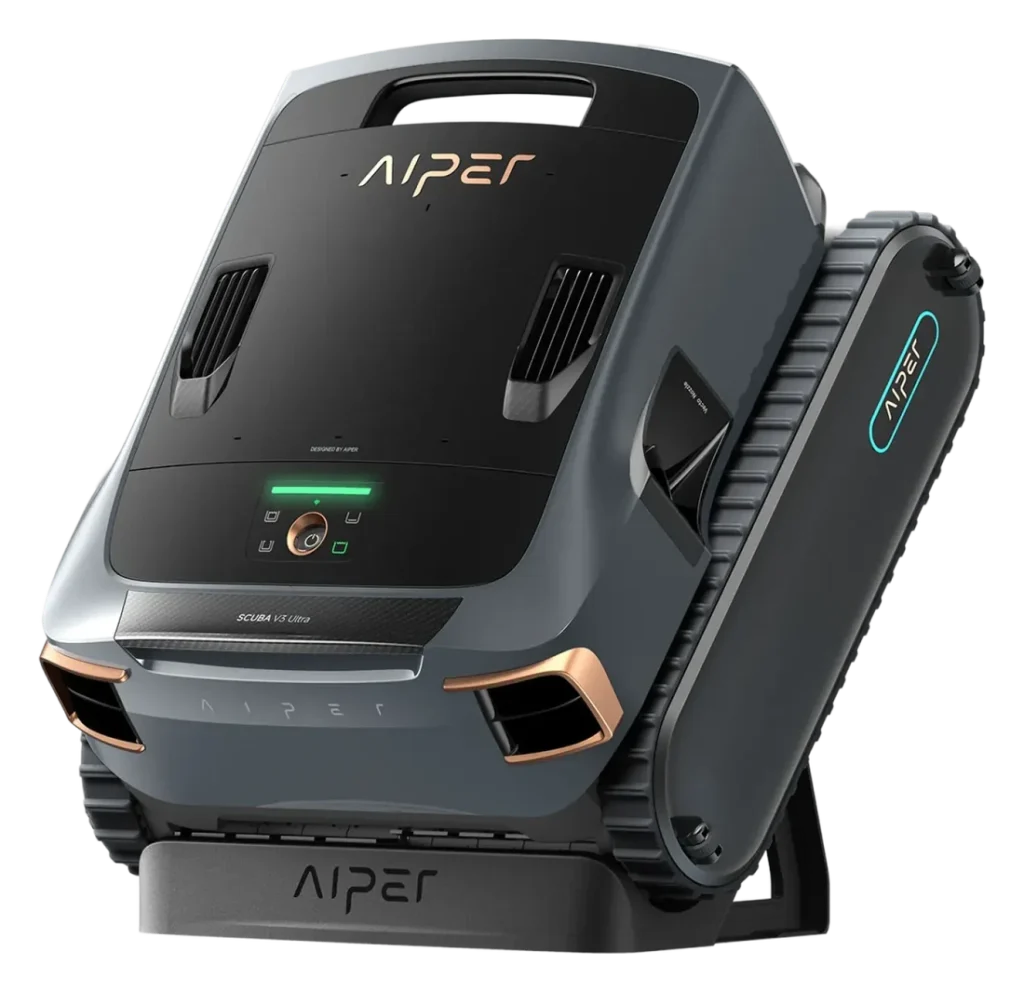
The Scuba V3 Ultra is built for in-ground pools between roughly 12,000 and 25,000 gallons, the size range where seasonal leaf load makes an all-surface robot most useful. Aiper’s published specifications list coverage running to floors, walls, the waterline, the water surface and sun shelves down to 7.87 inches of water, a depth most cordless competitors leave to a hand brush. Cordless operation means no cable to manage or wind around a ladder, and a charging dock replaces the plug-in routine of Aiper’s wired Scuba models. At 28.8 pounds, lifting it out of the water is itself a maintenance step rather than an afterthought.
None of that requires a person to intervene mid-cycle, which is the bar the Autonomy Ladder sets for Level III: a machine that completes a defined task inside a mapped environment without a hand closing the loop in real time. The classification itself is not in question. What it rests on is.
Aiper’s own fit guidance names who the Scuba V3 Ultra suits: owners of spacious in-ground pools with heavy seasonal leaf load, and owners who want scheduling handled through an app rather than manual cable and dock adjustments between sessions. It also names who should skip it. Above-ground pools under 5,000 gallons are flagged as a poor match for the footprint and dock positioning, and buyers prioritizing minimum upfront cost are pointed toward wired cleaners, Aiper’s own included, that cover floors, walls and waterlines for $500 to $800 less without reaching the sun shelf.
The lowest number on its own scorecardWhere the mapping claim breaks down
Task completion, the input measuring whether the robot finishes the job it claims to do, scores 84 on this record: the shipped coverage spec genuinely reaches the shallow shelf most competitors skip. Coverage and navigation measures something narrower and harder to verify from a spec sheet: whether a map is actually built, kept from one run to the next, and updated when the pool changes. Aiper’s own material hedges the mapping claim twice, and no independent test has confirmed a retained map exists at all.
Term
Cognitive AIAiper’s name for the Scuba V3 Ultra’s navigation system. The record does not confirm it against SLAM, gyroscopic tracking, or any documented method: it is presently a manufacturer label, not a verified architecture.Software stability scores higher, at 65, but for a narrower reason than the mapping claim would suggest. The update channel exists: firmware ships through Aiper’s own support portal, and the record shows no owner reporting a regression since the June launch. That confirms the update mechanism works. It says nothing about whether any release has changed what the mapping system tracks between runs, because nobody outside Aiper has published what a firmware update on this model has actually changed.
Edge recovery follows the same pattern for a different reason. The classification record carries no documented failure-and-recovery behavior at all: no account of what happens when the robot wedges on a step or a drain, and no self-rescue behavior published by Aiper. A score of 25 there is not evidence of poor recovery. It is the floor assigned when there is no behavior evidence to score in either direction, and it will move the day a source outside Aiper documents what actually happens.
Robovations Score v4.2
One coverage claim, three unverified pieces
- Floor areawhat the room measures, and the number a spec sheet quotes
- Reachableminus what the chassis cannot get under, and the strip it leaves at every wall
- Sweptminus what the brush cannot reach into. This is the figure that matches the floor afterwards
What independent testers actually foundThe riser, the skimmer, and the three-hour clock
Operating envelope, which measures where the mapped area actually starts and stops, scores 60, and the independent testing behind that number names specific gaps rather than a general limitation. Aiper publishes two separate runtime figures for the same battery: up to four hours in submerged cleaning, and up to eight hours in surface-skimming mode, where the robot floats rather than driving against pool walls and draws far less power. Independent testing measured just under three and a half hours in the combined submerged mode, close enough to Aiper’s four-hour figure to cover one session on most pools in the recommended size range. PCWorld tested the machine directly and found a physical constraint the spec sheet does not mention.
The significant height of the robot prevents it from cleaning the area above any shallow areas in the pool, including the top riser of any steps.
Reported by PCWorld
The same review reported the surface-skimming mode recovering less than half of scattered test leaves over a full three-hour cycle, well short of the coverage the water-surface claim implies. POC Network’s separate testing flagged a related limit on the runtime side: the roughly three-hour battery budget for combined floor, wall and waterline cleaning can run out before a larger pool finishes a scheduled cycle, meaning the app’s own status notifications, which POC Network confirms function correctly, may report an incomplete run rather than a failed one. Failure rate itself scores 60, based partly on PCWorld’s account of recurring task-failure messages during testing, which is documented friction that did not stop the machine from completing cleaning. The Ultra line was introduced at CES 2026, only months before this record was last assessed, so PCWorld’s and POC Network’s testing represents most of the independent record that exists so far. A longer field history would either confirm the recurring failure messages as an isolated testing artifact or establish them as a genuine pattern. Neither can be ruled out yet, and the score reflects that it is too early to tell rather than a documented defect.
A brand with two open charging recallsThe dock is the new failure point
Aiper’s cordless line carries two CPSC recalls, neither covering the Scuba V3 Ultra: the Elite Pro GS100 in 2023, for a charging fault linked to 17 reports of overheating, and the Seagull Pro in 2025, for a higher-current adapter fault linked to 19 reports of units melting or smoking. Both were remedied by free replacement, and neither remains open against a currently sold model.
What that history establishes is a pattern, not a defect on this machine: Aiper’s charging hardware has twice been the failure point on its cordless products, and the Scuba V3 Ultra introduces a new dock two years after the more recent recall closed.
Support longevity, the input tracking whether a manufacturer stands behind a product over time, scores lowest of all the nine inputs on this record at 28. Aiper has not published a warranty specific to the Scuba V3 Ultra, and the record documents no repair channel or parts catalog for it. The one demonstrated support behavior on this platform is the pair of recalls handled through free replacement rather than dispute, and it is credited here because it is the one thing Aiper has actually done on this product line, not because it closes the warranty gap.
What $2,300 buys over five yearsThe maintenance and cost the marketing skips
Routine maintenance scores 48, reflecting a cadence that starts after every session and does not stop there. The debris basket and filter need attention each time the robot runs, and the dock itself adds upkeep that a wired cleaner does not carry.
- Emptying the debris basket and rinsing the filter after every use, roughly five minutes per session.
- Checking the dock’s charging contacts weekly for the algae and mineral buildup Aiper flags as a corrosion risk specific to the cordless line.
- Backwashing or replacing the filter cartridge every three to six months, separate from the roughly $30 to $50 annual brush cartridge.
Consumables score 57, a middling number that reflects a reused, backwashed filter set against an unpriced variable: Aiper’s own service guidance says to replace the battery module once runtime drops below 60 percent of original capacity, an event it estimates at two to four years of use, with no published price for that part. The classification record frames the entire cordless premium, roughly $500 to $800 above comparable wired cleaners, as contingent on that degradation rate proving acceptable across multiple seasons, information that does not yet exist for this model.
Five-year cost of ownership
$2,700
Highest in the pool-cleaner category as measured by Robovations methodology, and the figure still carries that unpriced battery module inside the five-year window.
Aiper’s own readiness note for this record calls the machine provisional rather than established, and names the two things still missing: owner reports on real-world maintenance, and a dock that has not yet been tracked across a full season. Nothing in the evidence gathered so far argues the classification is wrong. It argues that the number attached to navigation is doing exactly what it is supposed to do, which is refuse to credit a claim nobody outside the manufacturer has checked.
A Level III classification describes what the Scuba V3 Ultra is built to do without a hand on the controls. The 30 next to coverage and navigation describes how much of that building anyone outside Aiper has actually confirmed.