Deep Dive
Why Hasn’t Any Consumer Robot Reached the Top of the Autonomy Ladder?
A mapped room, a fenced yard, a walled pool: every one of the 573 robots this publication has classified still needs a boundary drawn by somebody else first. The corpus’s own shape explains why marketed autonomy and documented autonomy keep landing on different rungs, and why the top one has stayed empty.
On this page7 sections
- The Ladder’s Middle Two Rungs Hold 89 Percent of the Corpus
- Level IV Got Rarer When Its Bar Became Behavior, Not Hardware
- A Fallback to a Human Pilot Caps the Rung, Not Just the Task
- Level I Has Nearly Disappeared From the Corpus
- Robot Vacuums Built the Category; Multi-Task Robots Have Barely Started
- The Next Rung to Fill Is Level IV, Not Level V
- No Robot in the Corpus Has Reached Level V
Five hundred seventy-three robots carry a classification on the Robovations Autonomy Ladder as of this reading. Their distribution across five rungs says more about where the technology actually sits than any single spec sheet could, because a spec sheet describes what one machine claims and a population describes what an entire industry has managed to document.
Three hundred thirty-eight of them, 59 percent of the corpus, sit at Level III, Conditional Autonomy. Add Level II, Assisted Autonomy, and the two middle rungs together hold 512 robots, 89 percent of everything this publication has classified.
Level IV, Environmental Autonomy, holds 55. Level I, Manual Automation, holds six. Level V, Generalized Autonomy, holds none.
Not one of the 573 machines classified here operates without a domain someone else designed for it first.
Nine in ten robotsThe Ladder’s Middle Two Rungs Hold 89 Percent of the Corpus
Assisted Autonomy and Conditional Autonomy are not a waypoint between generations, one on the way to becoming the other. Both describe a robot that completes a defined task inside a domain it was built for: a mapped floor plan, a fenced yard, a walled pool.
Level II, Assisted Autonomy, accounts for 174 robots, 30 percent of the corpus. Level III, Conditional Autonomy, accounts for 338, very nearly six in ten. Together they are not the exception in this dataset.
They are the dataset.
That concentration is worth reading against how these machines are usually sold. Marketing copy for a robot vacuum or a robot mower routinely promises to “handle it,” without qualifying what “it” excludes. The Ladder’s own middle rungs describe the qualification the marketing leaves out.
The gap matters because the qualification is doing real work. A robot rated at Level III has documented behavior inside its domain, which is a stronger claim than a spec sheet alone supports. A reader comparing two machines on marketing copy alone cannot tell which one has that documentation and which one is inferring competence from a sensor list.
Term
Conditional AutonomyLevel III on the Robovations Ladder: the robot completes a task end to end without a person intervening, but only inside an environment or domain it has been shown, mapped, or otherwise designed to operate in.Most of what ships as a consumer robot in 2026 already knows its task before it starts.
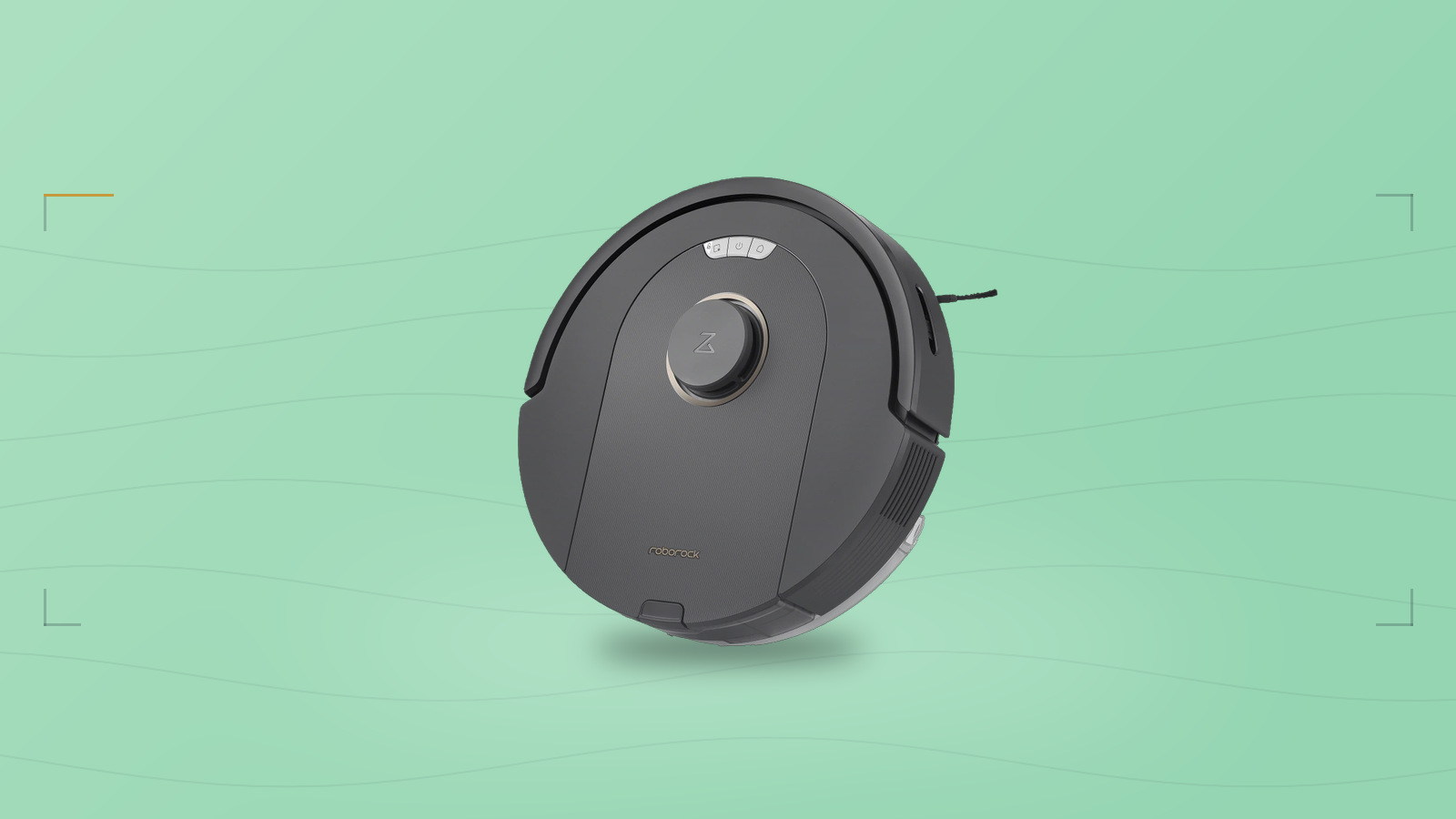
It only needs the domain drawn for it first. The Roborock S8 MaxV Ultra is classified at Level III, Conditional Autonomy: it maps a floor plan, routes around furniture, and returns to its dock without a person steering it, provided the floor plan stays the one it has already mapped.
Take it to a house it has never seen and the classification does not travel with it. It has to remap first, the same as every other robot on these two rungs, which work inside boundaries they were shown, not boundaries they infer from nothing.
That is the actual shape of “autonomous” in this market: conditional on a domain, not universal across one.
A rule that got stricterLevel IV Got Rarer When Its Bar Became Behavior, Not Hardware
An earlier version of this publication’s Ladder treated certain hardware, RTK positioning correction on a mower, chiefly, as evidence of Level IV on its own. A robot with the right receiver earned the rung whether or not anyone had documented it acting on that precision in a way that mattered.
That rule has been retired. The current standard asks for documentation that the robot did something: recovered after getting stuck, ran a space it had not been pre-cleared for, routed around a hazard rather than colliding with it, and that the documentation came from somewhere other than the manufacturer’s own material.
The correction runs in one direction only. A robot with no independent review published yet is not demoted for that silence; the standard asks whether anyone has documented the robot failing, not whether anyone has yet had the chance to watch it succeed. Absence of coverage is a gap in the record, not a finding about the machine.
Fifty-five robots, 9.6 percent of the classified corpus, currently clear that bar. That is not primarily a technology ceiling. It is an evidence ceiling.
Level IV, Environmental Autonomy
9.6%
55 of 573 classified robots have documented behavior clearing the bar, independent of what sensors they carry.
A sensor is a receipt, not a demonstration.
Reading a hardware spec as a behavior claim is the same mistake in miniature. A LiDAR unit, a mapping speed, a boundary-wire spool: none of them state that the robot avoids anything. What counts toward a rung is documentation of the robot acting, not the parts that make acting possible.
A person still closes the loopA Fallback to a Human Pilot Caps the Rung, Not Just the Task
The same standard closes a different door from the top of the Ladder. A robot whose operation depends on a person teleoperating it, even only as a fallback for tasks it cannot finish alone, cannot be classified above Level II here, whatever its sensors, its arm, or its balance can otherwise do.
- Direct remote piloting as the robot’s primary mode of operation caps the classification at Level I.
- Teleoperation held in reserve, for the moments autonomy runs out, caps it at Level II.
- Level III is reserved for a robot that finishes the task inside its domain without a person picking up the controls partway through.
The rule is not a technicality. A sense-decide-act loop that closes through a human operator at a console is a person managing the environment, with the robot as the instrument. The classification describes who is actually doing the environmental reasoning, and a console operator is not the robot.
Teleoperation is common in exactly the classes most likely to attempt something environmentally hard: humanoid robots picking up an unfamiliar object, specialty machines working an unstructured space. Those are the machines with the most incentive to lean on a pilot, and the rule caps them for doing it.
That has a direct cost for a demo reel.
A video of a humanoid robot folding laundry or climbing stairs shows a capability. It does not show who closed the loop while the camera was running, and this Ladder will not classify the robot above Level II until that question has a documented answer.
The vanishing rungLevel I Has Nearly Disappeared From the Corpus
Level I, Manual Automation, describes a machine that runs when told and makes no sensor-driven decision about how.
Six robots in the classified corpus, 1 percent of 573, still sit there. A rung that once described an entire market segment, the earliest scheduled vacuums and mowers with nothing between “on” and “off,” now describes what is left once a product line adds a single autonomous decision.
The rung is not disappearing because those machines stopped selling.
It is disappearing because almost nothing new ships without at least one autonomous decision built in.
One class matured, one has notRobot Vacuums Built the Category; Multi-Task Robots Have Barely Started
Vacuums account for 240 of the 573 classified robots, 42 percent of the corpus and more than the next two classes combined. Lawn mowers follow at 125. Pool cleaners follow at 75. Those three domestic classes, floor, yard, water, hold four robots in every five this publication has classified.
Humanoid robots make up 59 records, 10 percent of the corpus. Specialty machines hold 43. Window cleaners hold 25. Multi-task robots, machines built to move between different jobs rather than master one, number six: the same count as the entire Manual Automation rung.
A category’s size in this corpus tracks how long it has had one bounded problem to solve, not how ambitious its marketing is. A robot vacuum has one floor, one dock, and one debris type to reckon with, refined across roughly two decades of competing product cycles. A robot mower has one yard and one boundary to hold. A pool cleaner has one basin.
The count is a proxy for accumulated documentation, not for engineering difficulty. Every one of those product cycles left an independent review, a teardown, or an owner thread behind it, and this Ladder credits exactly that kind of documentation when it assigns a rung. A newer category has fewer cycles behind it and fewer places that documentation could have come from.
The Mammotion LUBA 4 AWD is classified at Level IV, Environmental Autonomy, one of 125 robots in a mower class that has had years of boundary-wire and RTK product cycles to build an evidence record most newer classes have not had time to accumulate.
Robovations Score v4.2
What the 85 is made of
Roborock S8 MaxV Ultra
- Capability40% of the score78med 66
What it does without you.
- Dependability40% of the score93med 66
Whether it keeps doing it.
- Ownership burden20% of the score84med 67
What it asks of you.
this robotcorpus median
Bar length is the pillar's score out of 100, against the corpus median. Each pillar's weight is printed beside its name. Value and price are published alongside the score and never averaged into it.
A multi-task robot cannot borrow that head start. It has to build a comparable record in every domain it claims, not once.
Humanoid and multi-task robots face a structurally different problem than a vacuum or a mower, and the teleoperation rule above is a second obstacle layered on top of the first. A single-purpose robot only has to solve one domain and document it. A multi-task robot has to solve, and independently document, several domains, while also clearing a rung its own reliance on remote piloting keeps capping.
The 59 humanoid records and six multi-task records in this corpus are still mostly building that record rather than clearing it.
That is a difference in how long a problem has been worked and how many hands are still on the controls, not a difference in ambition.
Figure
Where the named robots in this piece land
Evidence takes years, not updatesThe Next Rung to Fill Is Level IV, Not Level V
The mower class offers the clearest precedent for how a rung fills in. RTK correction reached consumer mowers years before this publication’s evidence standard would credit any of them with Level IV, because the standard asks for a documented behavior and behavior takes time and use to surface. The hardware arrived first; the documentation of it mattering arrived later, machine by machine, season by season.
Vacuums took a comparable path. The category’s 240 records did not reach Level II and Level III concentration through one firmware release; they reached it through roughly two decades of competing product cycles, each one adding independently observable behavior for the next classification to credit.
Nothing about the humanoid and multi-task classes suggests that pattern will run faster for them. If anything it runs slower, because a multi-task robot needs the pattern to repeat once per domain it claims, and because the teleoperation cap holds the rung at Level II for exactly the machines leaning hardest on a pilot to cover what autonomy cannot yet do on its own.
The likely next movement in this corpus is not a robot reaching Level V. It is more robots reaching Level IV inside the domains that already have years of product cycles behind them, the same way the mower class did, while humanoid and multi-task robots spend years building the record vacuums and mowers already have.
The rung nothing has reachedNo Robot in the Corpus Has Reached Level V
Level V, Generalized Autonomy, asks for the domain restriction itself to come off: a robot that completes tasks it was not specifically built for, wherever it is asked to do so, without someone drawing the boundary first.
Level IV took a stricter definition of evidence to populate with 55 records.
Level V asks for a different kind of machine.
0
out of 573 classified robots hold Level V, Generalized Autonomy
Every machine in the corpus operates inside a domain designed for it by someone else.
That is a description of where the population sits, not a prediction of when it moves. The distance between Level IV and Level V is not one more sensor or one more firmware update; it is the difference between a robot that handles the conditions it was built for and a robot that handles conditions nobody built it for.
Nothing in the current data closes that distance. Walking, rolling, or floating, every one of the 573 robots this publication has classified still works inside a boundary somebody else drew first, and the corpus’s own shape, 89 percent concentrated on two rungs built around exactly that kind of boundary, is the clearest evidence of where the whole category currently stops.
Five hundred seventy-three classifications describe one honest center: a robot that completes a defined task inside a domain built for it, and a top rung nothing has reached.