Do robot vacuums process data on-device or in the cloud?
Where a robot vacuum's work runs, on the machine or on its maker's servers, decides what still works when the Wi-Fi drops or the servers go dark.
On this page3 sections
Unplug the router while a robot vacuum is out on the floor, and it keeps whatever it carries on board: the navigation that steers it around the furniture, and its obstacle recognition where that runs on the machine. A server shutdown leaves it in the same position for good.
Neato’s owners were left there in October 2025, when the brand’s parent company, Vorwerk, began switching off the servers behind their robots. The machines still cleaned from a button press. The app, the schedules and the no-go zones went with the cloud.
Every connected robot vacuum splits its work between the machine and its maker’s computers. Where that line falls decides what you keep when the Wi-Fi drops, and what you lose for good if the servers shut down. So which jobs does your robot do itself, and which does it send away?
What the robot works out for itself
Two places a decision can happen
On-device inference versus the cloud round-trip
- Stays putMap and compute are hardware you own, so the same three streams never leave the building.
- Camera framesCrosses the wall. Anything over this line is held on a vendor server, under their retention policy rather than yours, for as long as they choose.
- Obstacle photosCrosses the same wall to the same server.
- MapsCrosses the same wall to the same server.
Obstacle recognition is the clearest case for keeping the work on the machine. A robot rolling toward your phone charger has to recognize the cable and turn before it gets there. Sending each camera frame to a data center and waiting for a verdict adds delay the robot can’t spare. And the recognition stops altogether when the Wi-Fi drops.
When iRobot introduced the Roomba j7 in September 2021, one launch report explained that its recognition ran on board: “the robot is doing object detection internally, as opposed to sending images to the cloud to be identified.” The j7 could pick out headphones, power cords, shoes, socks and its own dock.
Teaching it to see was done back at iRobot, from more than a million images collected in more than a thousand homes and labeled. Chief executive Colin Angle said everyone at the company with a dog “was instructed to take pictures whenever their dog pooed.”
The S8 MaxV Ultra combines “advanced 3D structured light and an RGB camera” to recognize objects in its path. Where that recognition is computed, Roborock’s page doesn’t say. The one job it places on the machine is the voice assistant: say “Hello Rocky,” and the robot starts a clean “even without network connection.”
What passes through the maker’s servers
The work left on servers is the work that can wait. A firmware update, a map you check on your phone from across town, or a command from a smart speaker doesn’t need to happen in under a second. Each needs a network connection to reach the robot anyway.
Even the j7 sent some images out. When it found an obstacle, it could send you a photo and ask whether to set a keep-out zone around it, for a while around clothing or for good around something like a power strip. The photo traveled from the robot through a server to your phone, encrypted end to end, and iRobot didn’t get to see it.
Term
End-to-end encryptionThe data is scrambled on the device that sends it and unscrambled only on the device it is sent to. A server that relays it in between can pass it along but cannot read it.Anything that reaches a server can travel further than its owner meant. Photos from development versions of the j7 reached gig workers labeling them for Scale AI in 2020. And security researchers reported in 2024 that data from Ecovacs robots stayed on the company’s cloud servers after an owner deleted their account.
When the network goes dark
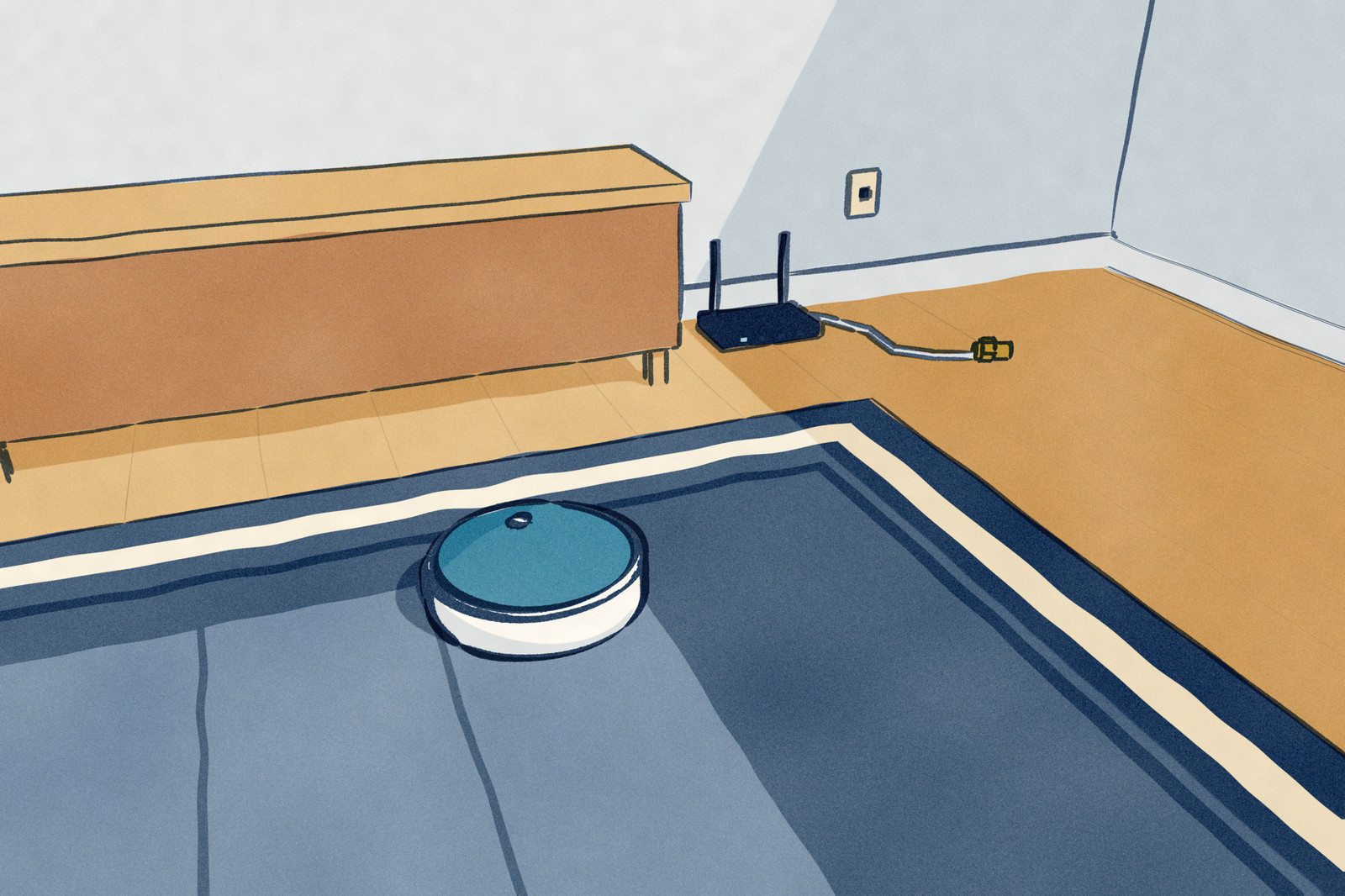
So a robot vacuum works in both places, and the split follows how fast each job has to happen. Steering runs on the robot, and on a j7 so does recognition, so both carry on with the router unplugged. The map on your phone, a command from a smart speaker and firmware updates pass through a server, and they stop when it does.
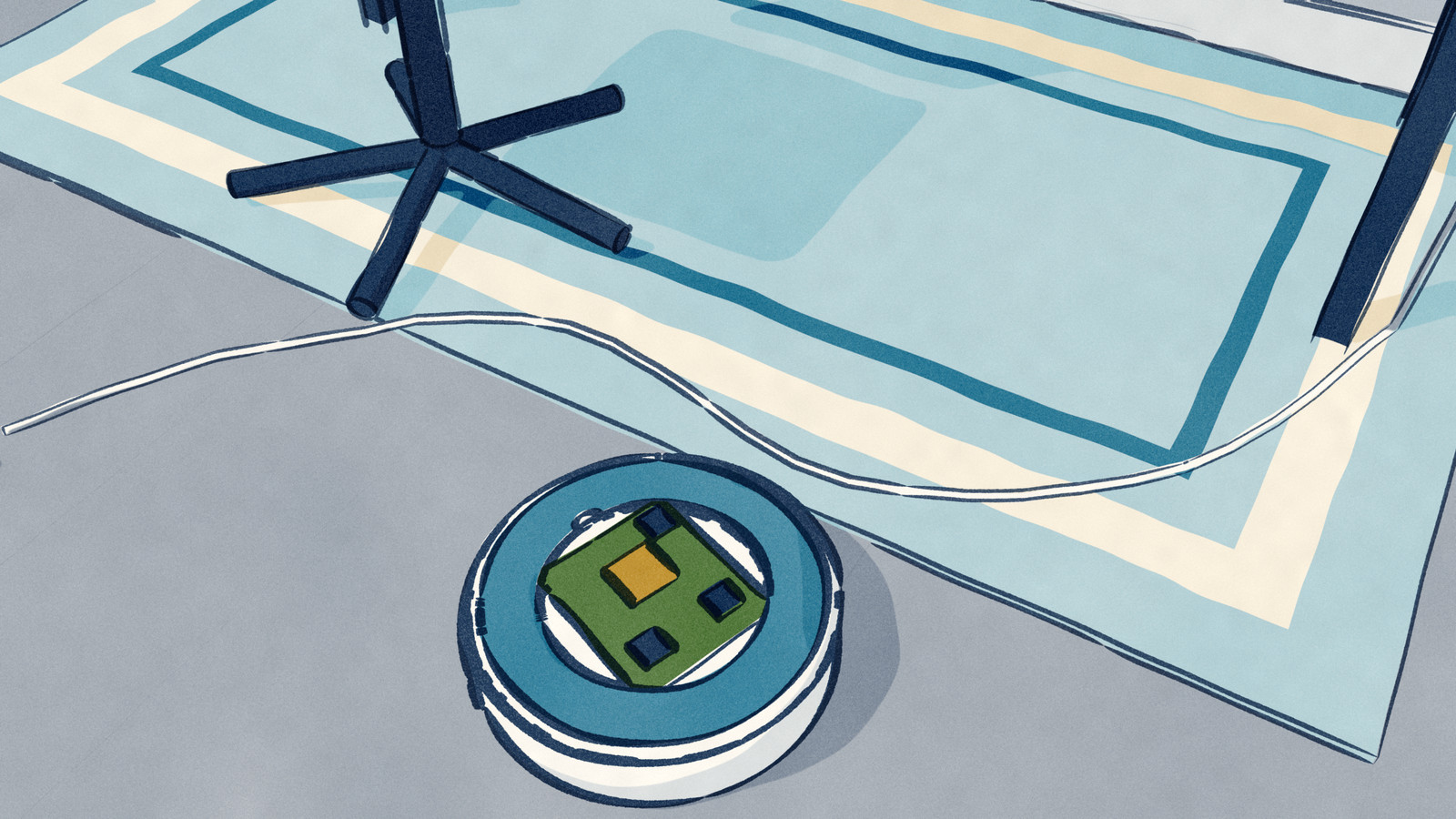
Some owners have moved the server’s half onto the robot themselves. Valetudo replaces the maker’s cloud with software that runs on the robot, so control no longer depends on a working internet connection. A robot running it, the project says, “will continue working even after the vendor has ended support for that model and shut down the corresponding servers. This is a recurring theme with IoT devices.”
Getting there takes work. The supported robots include models from Dreame, Roborock, Xiaomi and several other brands, but the Roborock entries stop at older machines such as the S7 and Q7 Max, and the S8 MaxV Ultra isn’t one of them. On some models, bringing the server’s half of the robot home starts with taking the whole robot apart.