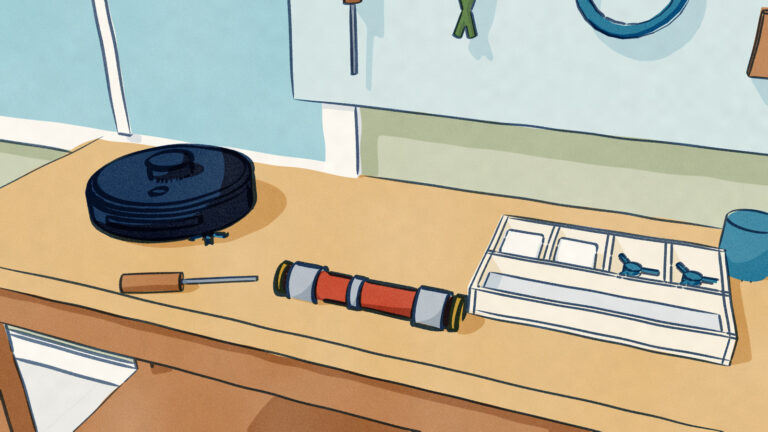
What happens to a robot vacuum when its maker shuts down the servers?
Vorwerk promised Neato owners five years of cloud service when it closed the brand in 2023. It began switching the servers off in October 2025.
On this page5 sections
On October 6, 2025, Neato Robotics posted a short announcement on its support site: “we are now phasing out Neato cloud services.” For owners wondering what their vacuums would do afterward, it offered one line of instruction: “Simply press the button once to launch a full house run.”
Neato had not operated as a company for more than two years. Vorwerk, which owned the brand, closed it in May 2023, saying Neato had not “achieved its self-defined economic goals for several years now,” and promised to keep supporting existing Neato products for five years.
A team of 14 employees in Milan was kept on to secure Neato’s cloud services for “at least five years.” The October notice described Vorwerk’s upkeep of that cloud as honoring an “original five-year service promise,” and it ended the promise less than two and a half years in.
The phase-out would run through the fourth quarter of 2025. If you owned a Neato, you had been counting on 2028, the end of the five-year promise. The servers were going three years early.
Vorwerk’s stated reason was regulation. Security standards, compliance obligations and regulatory frameworks had advanced since 2023, the company said, to the point where the old platform could no longer be run safely and sustainably. When a reporter sent Vorwerk questions at the end of November 2025, the press office replied in early January:
Updating this environment would not be technically meaningful, nor would it ensure the level of quality and sustainability our customers can expect.
So when did the servers go dark? The notice gave no end date, and coverage updated at the end of December still read, “Neato has not provided a specific shutdown date.” By another account, “by December at the latest” the app was showing a message: the servers used to control the robots had been shut down.
What stopped and what kept running
A Neato in your home belongs to one of two families, and Neato’s support site still hosts manuals for both: the Connected D Series, from the D3 to the Botvac D7 Connected, and the D Series, made up of the D8, D9 and D10.
Every Neato robot vacuum lost the same things with the servers: the MyNeato app, remote start and scheduling, Alexa and Google Assistant integrations, stored maps and no-go zones, and over-the-air software updates.
Losing the updates froze the firmware. Each robot keeps whichever software version it last installed, and no later fix can reach it. The warranty still holds, though, and online support continues.
The hobbyist route ran through the same servers. Home Assistant, the open-source home automation platform, reached Neato robots by polling the company’s cloud with credentials issued by the Neato Developer Network. With that network gone, no new setup is possible, and existing ones “may continue to work until the cloud is fully shut down.”
The cleaning survived, though accounts of how well differ. One press of the button starts “a full house run” for you, Neato’s notice promises. A German tech news site wrote that the robots can only be started by hand, clean the whole home each time, and “probably no longer recognize previously learned rooms or restricted zones.”
At worst, the machines “mindlessly bounce around between rooms.” Owners are left with a routine: clear away cables and other obstacles first, and close the doors to rooms that should stay uncleaned.
Which work happens on the machine
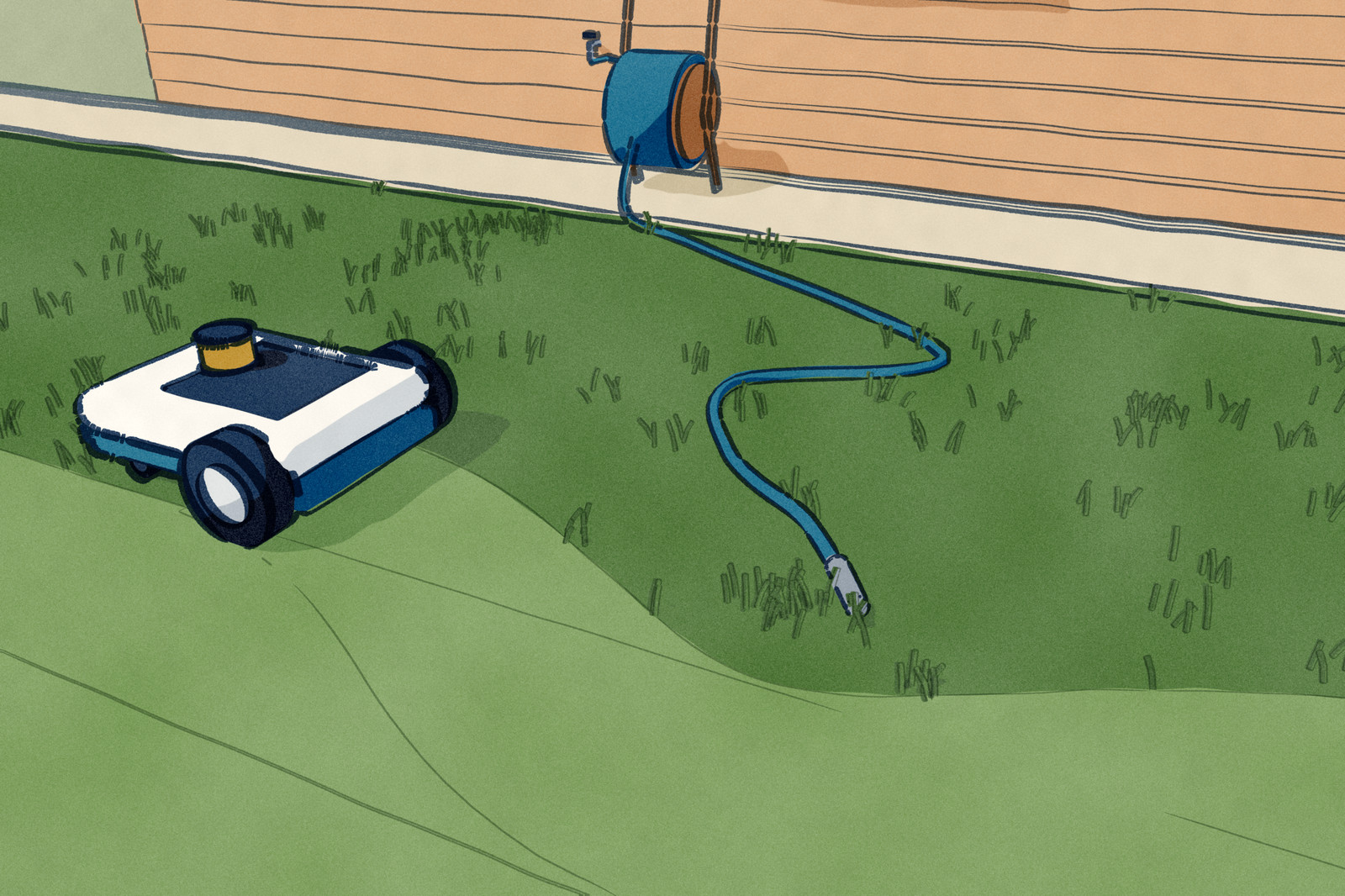
The part that survived is the part a maker cannot easily move off the robot. A vacuum working around a chair leg, or a mower rounding a garden hose, has to read the obstacle, update its own position and change course while its wheels keep turning.
Sending sensor data to a data center and waiting for a reply would be too slow, and it would stall the robot every time the Wi-Fi dropped, so localization, mapping during the run and obstacle avoidance are computed by processors inside the housing.
What can wait for a server
Work that happens at the pace of a person can live elsewhere. A cleaning schedule fires a few times a week. A map with named rooms and no-go lines is edited on your phone and read at the start of a run.
A voice command travels from a smart speaker through the speaker company’s servers to the robot maker’s. Each can tolerate a delay of seconds, so a maker is free to keep it on its own servers, and Neato’s lost features match that list almost item for item.
Architecture
What stays on the robot, what depends on the vendor
- Stays putMap and compute are hardware you own, so the same three streams never leave the building.
- Saved mapsCrosses the wall. Anything over this line is held on a vendor server, under their retention policy rather than yours, for as long as they choose.
- SchedulesCrosses the same wall to the same server.
- Remote startCrosses the same wall to the same server.
So where does your robot draw that line? It is seldom written down. A product page names the navigation sensor, the battery and the suction.
It rarely says whether the room map is stored on the robot, whether a schedule set in the app is copied to the machine, or whether the start button still works once the account behind it is gone. Neato owners got those answers from the October notice and the months after it.
What owners asked for
By March 10, 2026, almost 4,700 people had signed a petition started by Alexander Schöcke. It set out three options for Vorwerk: reverse the shutdown, publish the firmware and cloud server software as open source, or open the robots to platforms such as Home Assistant.
According to press coverage, Vorwerk examined releasing the source code and rejected it, citing intellectual property, legal questions over hardware still under warranty, and overlaps with other Vorwerk products.
For some Neato owners, Vorwerk’s answer was a replacement. A later notice on the Neato support site offers customers in Europe who bought a Neato robot since May 2023 and “actively used the cloud features” a free Kobold VR7, a current Vorwerk robot vacuum, in exchange for the Neato. Vorwerk calls the program “a voluntary measure by Vorwerk without any legal obligation.”
Owners of some other brands have a community-built version of the petition’s second option. Valetudo, open-source software for “cloud-free vacuum robots,” publishes installation guides for certain Dreame, Roborock and Midea models.
Term
Open sourceSoftware published with its source code under a license that lets anyone read, modify and share it. Code released that way can be maintained by people outside the company that wrote it.One maker did publish its server software. Moxie, a companion robot for children made by the startup Embodied, did its processing on Embodied’s cloud servers, so it would stop working when they did. Families used it to support children’s social development, including autistic children.
Embodied announced in December 2024 that it was closing after failing to secure “critical funding,” and its chief executive, Paolo Pirjanian, announced OpenMoxie, a server application owners could run on their own computers.
A Moxie could use it only after a final over-the-air update pointed the robot at a local server, and that update could reach it only while Embodied’s servers were still running.
Embodied released the code “as is,” with “no guarantees, promises, or warranties,” and with no employee left to support or update it. So a robot that missed the final update would stay bricked, and nobody had committed to maintaining OpenMoxie for the robots that switched.
What sellers have to disclose
In November 2024, Federal Trade Commission staff found that for 161 of the 184 connected products they surveyed, the maker’s product page said nothing about how long the software would be supported, or when support would end.
The European Union is writing that disclosure into law. Under the Cyber Resilience Act, whose main obligations apply from December 11, 2027, a manufacturer must set a support period for each connected product. Its end date “(including month and year) needs to be clearly and understandably specified at the time of purchase.”
The support period is when the manufacturer “will ensure that vulnerabilities of that product are handled effectively.” Security obligations of that kind are what Vorwerk cited when it switched Neato’s servers off.
So what happens to a robot vacuum when its maker shuts down the servers? It keeps cleaning, because the work a run cannot wait for happens on the machine. Whatever the maker kept on its servers goes with them: for Neato, your app, the schedule, the saved map, the voice commands and every future update.
Neato owners had a date of their own, from a five-year promise: 2028. The servers went dark in 2025.