
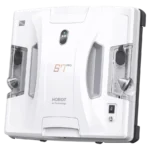
Hobot R3
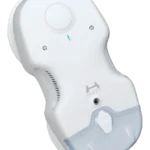
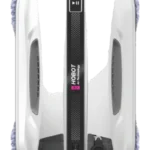
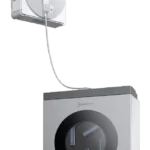
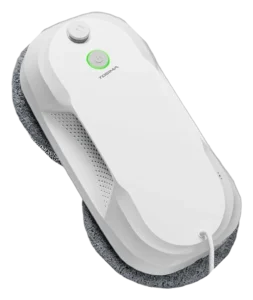
Dual rotating pads reach corners that static square pads leave behind. The power cord is 4 meters, so a session covers the windows around one socket. HOBOT supplies a 4.5 meter safety rope to be tied to a fixture indoors, and an embedded UPS holds the robot on the glass with an alarm for 20 minutes if mains power is lost.

Will the Hobot R3 work on your windows?
Describe your windows using the controls. Each choice reads the spec sheet for you, flagging where the Hobot R3 is built for your space and where it isn’t.
A classification of fit for the conditions you set, not a recommendation. Verdicts describe engineering design intent, not test results.
The full spec sheet.
Priced above the category median, with every figure charted against the category below.
Position shows where the figure sits across the tracked category, not a quality judgment. The vacuum holding the robot on the glass, not cleaning power. The figure has no standard test method, so it is comparable only within a brand and generation.
Living with it.
Four years of stable operation; pad-rotation bearings show wear by year three; suction motor remains consistent longer than simpler competitors.
Owner reports from 2020 onwards document reliable edge detection and rotation consistency. Pad-rotation bearing degradation reported at 30-month mark; motor integrity holds longer due to simplified intake design. No major design recalls or firmware issues (mechanical system, no software updates).
The independent record is still forming. Failure modes are listed once an outside source reports them.
$400 to buy, then about $85 a year for the replaceable parts below. Over three years that is roughly $255 past the sticker price. Excludes electricity and any repairs.
- Mop padEvery 3-4 months$25–30
- FilterAnnually$15
Replacement cadence from the maintenance schedule; prices shown where the source documents them.
CautionElectrical hazard with wet cable: Power cord and connector operate in spray-heavy environment. Use GFCI outlet; keep connection point dry. Wet-cable insulation damage creates shock risk.
NoteSuction-only grip at height: Robot relies on vacuum suction for grip; no mechanical tether beyond safety rope. Inspect motor suction before high-altitude use.
How the assessment has moved.
Every announcement, release and reassessment behind the current classification.
-
Aug 2026 · AssessmentRecord status: Verified → Pending
-
Aug 2026 · AssessmentRobovations Score revised 58 → 55
-
Aug 2026 · AssessmentRobovations Score rescored under v4.2: 55 → 58
-
Aug 2026 · AssessmentRobovations Score rescored under v4.0: 61 → 55
-
Jul 2026 · AssessmentRobovations Score revised 62 → 61
-
Jul 2026 · AssessmentRobovations Score recorded at 62 of 100
-
Nov 2023 · NewsBearing wear pattern surfaces in year three owner reports
How Hobot R3 compares.

What people actually ask.
OperationHow is the Hobot R3 different from the Hobot 298?
OperationCan both pads rotate simultaneously, or do they alternate?
OperationWhat power requirement does the R3 demand?
OperationIs the R3 suitable for tinted or heavily soiled windows?
 II
II
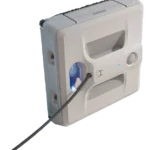
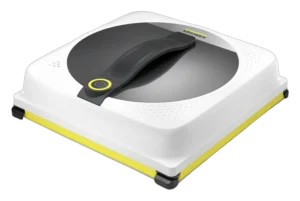
Kärcher RCW 4
 II
II
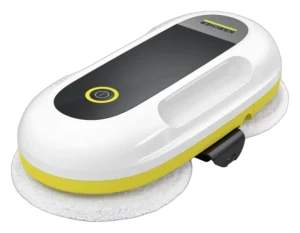
Kärcher RCW 2
 II
II
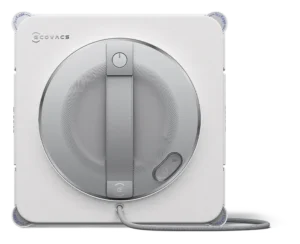
Ecovacs Winbot W2S Pro Omni
 II
II
Tosima W5 Window Cleaning Robot
Reference the Hobot R3 classification.
Embed the Autonomy Ladder™ mark or copy the citation. The mark is served from this record, so a reassessment updates it on your page automatically.
Get the embed code and citation
Scale proportionally only, up to 2× (536px wide)(224px wide). No recolouring, cropping, rotating, or re-typesetting.
Robovations. "Hobot R3: Autonomy Level II (Assisted Autonomy)." Autonomy Ladder™, assessed August 2026. https://robovations.com/robots/hobot-r3/
- Link it. The mark must point at this record. An unlinked mark is not authorised.
- Hot-link it. Never download, self-host, or re-upload the image. A saved copy stops updating, and a mark that has stopped updating is a claim we no longer stand behind.
- A classification, not an endorsement. It may not appear beside language implying Robovations recommends, rates, or approves the product.