
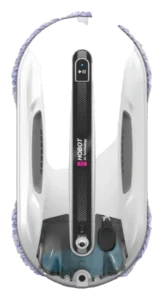
- Changes
- 2
- Tracking since
- Nov 2023
- Latest
- Sep 8, 2024
- Net movement
- Classification stable
Hobot R3 retail price settles below launch MSRP at major online channelsHobot R3 bearing wear pattern surfaces in year three owner reportsNov 2023Sep 2024
- 2024
-
Hobot R3 retail price settles below launch MSRP at major online channels
Retail pricing for the Hobot R3 has settled in the $349-$369 range at major online channels, down from the $399 launch MSRP, consistent with mid-lifecycle pricing for a four-year-old product line.
Full assessment3 claims · 3 technical notes · 2 sources
Where it standsAutonomy LadderIIIIIIIVVLevel IIAssisted AutonomyHuman ReadinessReady NowNew to MarketWaitKnown IssuesRobovations Score04055708555CapableWhat happenedThe price reduction does not reflect a hardware revision or capability change.
WatchingWhether Hobot introduces a successor model that displaces the R3 in its current retail position.
Bottom lineThe price adjustment reflects normal mid-lifecycle market correction, not a product improvement. The core wired constraint and bearing maintenance profile remain unchanged.
ImpactOn autonomy
- No capability change accompanies price adjustment; Level II classification unchanged
- Dual rotating pad mechanism and vacuum edge detection remain unchanged from launch specification
On readiness
- Lower retail price improves value positioning relative to newer cordless window cleaners entering the segment
- Availability through established retail channels confirmed; no signs of discontinuation or inventory drawdown
Claim check3 maker claims checked against the record. Open one to read the finding.
Premium rotating-pad technology
Documented findingDual rotating pad design remains differentiated vs. static-pad window cleaners; the price reduction does not signal a capability downgradeCompetitive pricing in window cleaning category
Documented findingAt $349-$369 retail price, the R3 competes against newer cordless entrants from Ecovacs and others that carry lower cable management burden; the wired constraint is not addressed by the price move20-meter cable covers most residential installations
Documented findingCable length limitation vs. competitors (Hobot 298 ships with 30m cable) is a documented trade-off unaffected by the price change; owner skip-for reports cite this limitation consistentlyEvidence2 sources · 0 linked
12Aug 2024Sep 2024filed 8 Sep 2024- 1Amazon product listing, Hobot R322 Aug 2024named, not linked
- 2Hobot official website product page1 Sep 2024named, not linked
Technical notes3 sectionsPrice Movement Context
The Hobot R3 launched at $399 MSRP in mid-2020. By mid-2024, major online retail listings showed retail pricing in the $349-$369 range. Robovations records document the R3’s price range as $349-$499 (discounted to full-price span), consistent with periodic promotional pricing appearing at the lower bound.
No Hardware Revision
Retail product listings as of mid-2024 do not reference a hardware revision, model suffix, or component change. The unit shipping in 2024 carries the same dual rotating pad assembly, 20-meter power cable, and vacuum-based edge detection as the original 2020 launch unit. Hobot’s product page URL and model designation remain unchanged.
Competitive Position
The window cleaner segment saw new cordless entrants in 2022-2024 (including the Ecovacs WINBOT W2 Omni) that remove the power cable constraint. The R3’s price reduction narrows the cost gap to cordless competitors while the wired design remains a functional trade-off rather than a capability difference. Availability through Amazon and specialty robotics channels confirmed active as of Q3 2024.
- 2023
-
Hobot R3 bearing wear pattern surfaces in year three owner reports
Owner reports accumulating from 2020-era Hobot R3 units describe pad-rotation bearing degradation as a predictable failure around the three-year mark, with audible grinding and increased drag during rotation cycles as primary signals.
ReliabilityFull assessment3 claims · 3 technical notes · 2 sources
Where it standsAutonomy LadderIIIIIIIVVLevel IIAssisted AutonomyHuman ReadinessReady NowNew to MarketWaitKnown IssuesRobovations Score↓ moved by this entry04055708555CapableWhat happenedThe failure does not brick the unit but reduces corner-cleaning effectiveness and requires a $35-50 service event.
WatchingWhether Hobot issues updated bearing specifications or an extended pad-holder kit addressing the wear rate.
Bottom lineThe rotation mechanism delivers its advertised corner advantage; the trade-off is a maintenance cost not prominently disclosed at purchase that materializes around year 3.
ImpactOn autonomy
- Bearing drag reduces pad rotation speed; corner coverage degrades without failure indication
- No autonomous fault detection; robot continues cycling on worn bearings until owner intervenes
- Degraded rotation affects edge-repositioning cycles; manual pad inspection required to confirm function
On readiness
- Year 3 maintenance burden confirmed higher than initial purchase documentation indicated
- Owner reports describe $35-50 bearing replacement cost not reflected in original maintenance estimates
- Weekly pad inspection requirement gains additional step: rotation force check for early bearing wear
Claim check3 maker claims checked against the record. Open one to read the finding.
Dual rotating pads for superior corner coverage
Documented findingOwner reports confirm corner advantage; pad-rotation mechanism introduces bearing wear as a predictable maintenance cost by year 3Durable wired design for extended runs
Documented findingWired power delivery confirmed durable; rotating pad bearings are the primary wear component, not the power systemLow-maintenance reusable pads
Documented findingPads themselves are rinsable and reusable; the rotation bearings require separate inspection and eventual replacement independent of pad conditionEvidence2 sources · 0 linked
12Oct 2023Nov 2023filed 14 Nov 2023- 1Amazon customer reviews, Hobot R3 listing28 Oct 2023named, not linked
- 2Reddit r/roboticvacuums community thread on window cleaner long-term reliability9 Nov 2023named, not linked
Technical notes3 sections
Bearing Wear Pattern
Owner reports from units placed in service mid-2020 describe a consistent failure sequence: audible grinding during pad-rotation cycles, followed by reduced pad speed, followed by complete rotation stop if bearings seize. The mechanism uses small sealed bearings in the pad-holder assembly. No firmware or software component governs the rotation speed indicator; degradation is mechanical and not logged by the robot.
Service Requirements
Replacement involves removing the pad-holder assembly, pressing out the worn bearings, and pressing in replacements. Owner community documentation describes the procedure as 30-45 minutes with basic hand tools. Replacement bearing sets from third-party suppliers run roughly $35-50; Hobot does not list the bearings as a separately purchasable spare part in its standard accessories catalog as of late 2023.
Diagnostic Indicators
Audible grinding during active rotation cycles is the primary signal. Secondary indicator: uneven pad wear pattern where one pad shows heavier soiling from carrying more load than the other. Owners report the failure typically affects one bearing before the other, so asymmetric wear is an early warning sign. Manufacturer maintenance documentation does not include bearing inspection in the standard schedule.