
Booster Robotics T1
Bipedal developer platform sold in three manipulation configurations, from 23 DoF standard to 41 DoF with dexterous hands. Booster targets competitive robotics, research, education and developer projects. Classification reflects that market, not consumer readiness.
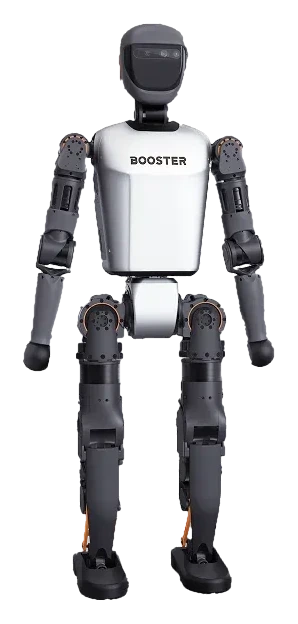
Will the Booster Robotics T1 fit your scenario?
Describe your scenario using the controls. Each choice reads the spec sheet for you, flagging where the Booster Robotics T1 is built for your space and where it isn’t.
A classification of fit for the conditions you set, not a recommendation. Verdicts describe engineering design intent, not test results.
The full spec sheet.
Priced above the category median, with every figure charted against the category below.
Autonomous bipedal locomotion in structured environments; depth camera, 9-axis IMU and 6-microphone array; NVIDIA Jetson AGX Orin compute rated at 200 TOPS, with an added Intel i7-1370P on the standard model
Position shows where the figure sits across the tracked category, not a quality judgment.
How the assessment has moved.
Every announcement, release and reassessment behind the current classification.
-
Aug 2026 · AssessmentPre-Release Assessment revised 49 → 58
-
Jul 2026 · AssessmentPre-Release Assessment revised 48 → 49
-
Jul 2026 · AssessmentPre-Release Assessment recorded at 48 of 100
-
Oct 2024 · ReleaseMade available to RoboCup teams and academic institutions
-
Aug 2024 · AnnouncementAnnounced as child-size humanoid developer platform
What people actually ask.
OperationWhat is the Booster T1 used for?
OperationIs the Booster T1 available for individual purchase?
OperationWhat is the timeline for consumer availability?
OperationDoes the T1 integrate with existing ROS infrastructure?
 II
II
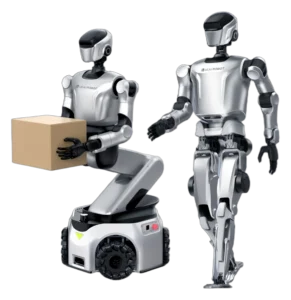
Leju Kuavo 5
 II
II
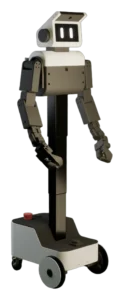
Nori A3
 II
II
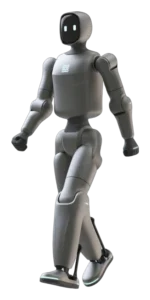
Zeroth Bridge
 II
II
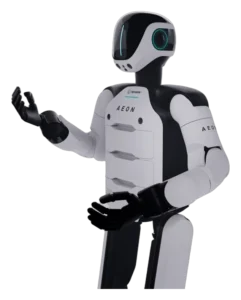
Hexagon AEON
Reference the Booster Robotics T1 classification.
Embed the Autonomy Ladder™ mark or copy the citation. The mark is served from this record, so a reassessment updates it on your page automatically.
Get the embed code and citation
Scale proportionally only, up to 2× (536px wide)(224px wide). No recolouring, cropping, rotating, or re-typesetting.
Robovations. "Booster Robotics T1: Autonomy Level II (Assisted Autonomy)." Autonomy Ladder™, assessed August 2026. https://robovations.com/robots/booster-robotics-t1/
- Link it. The mark must point at this record. An unlinked mark is not authorised.
- Hot-link it. Never download, self-host, or re-upload the image. A saved copy stops updating, and a mark that has stopped updating is a claim we no longer stand behind.
- A classification, not an endorsement. It may not appear beside language implying Robovations recommends, rates, or approves the product.