Skip to content
Saved
Humanoid Robots

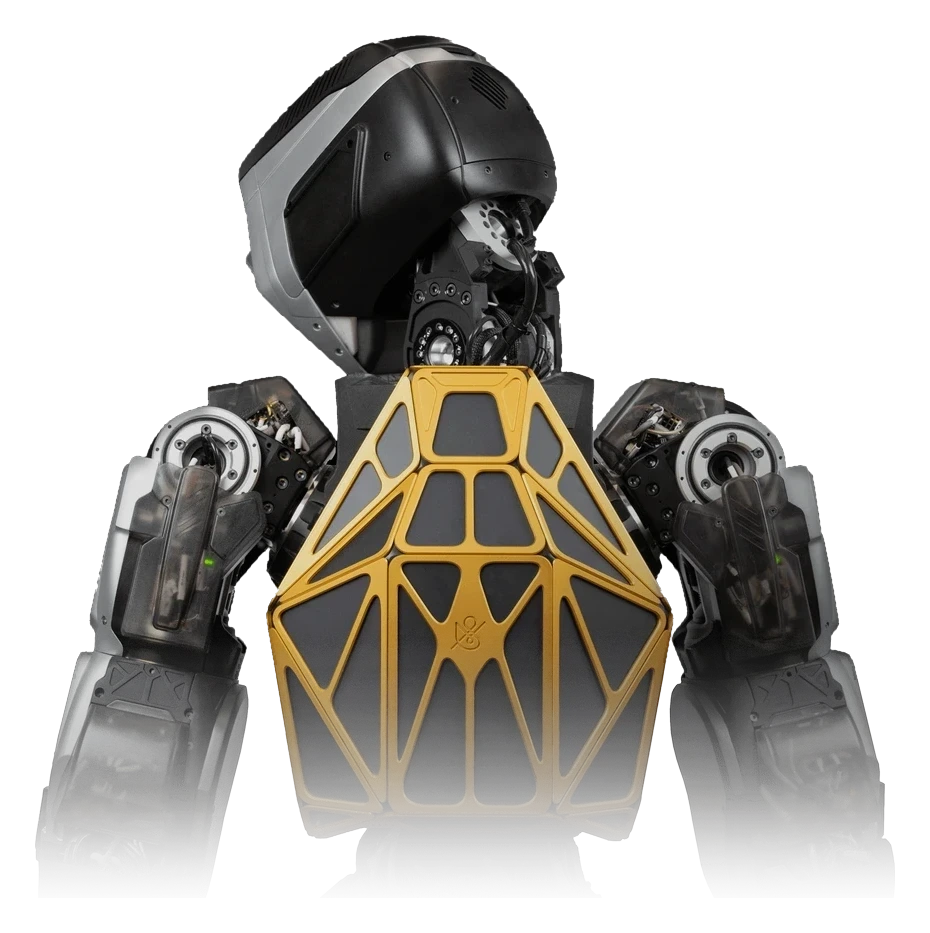
Sanctuary AI Phoenix Gen 7

Sanctuary AI · Launched Jun 2024

Dexterous hands and modular limb design represent genuine engineering. Teleop-dependent model and absent shipping timelines leave commercial readiness unproven.

Level II
Assisted Autonomy
1 sources reviewed ·
Promising Progress
Real progress, not ready yet
Reassessed
Dec 25
View history
Pre-Release Assessment
Plausible · 51 of 100
Assessed 2025-12-25 · PRE-RELEASE
Track Record60 / 100

25% weight

Engineering65 / 100

25% weight

Demo Match55 / 100

20% weight

Readiness35 / 100

15% weight

Openness40 / 100

15% weight

Modular platform with plausible hand engineering and manufacturing-focused scope. Sanctuary AI's prior shipping history reduces mechanical engineering risk. Teleop-dependent operation and absent commercial timelines leave viability unproven.

Open questions before a Robovations Score can be computed
  • Timeframe for non-pilot customer commercial shipping.
  • Autonomous task execution capability demonstrated outside scripted scenarios.
  • Operator workload, latency sensitivity, and skill requirements per task class.
  • Total cost of ownership and consumable/maintenance pricing structure.
  • Regulatory certification pathways in target industrial markets.
  • Hand joint durability under repeated manipulation over 6+ month field deployment.

Will the Sanctuary AI Phoenix Gen 7 fit your scenario?

Pick what matches your setup. The fit updates as you go.

Where it operates
Primary tasks
Supervision needs
Timeline
How Sanctuary AI Phoenix Gen 7 holds up
Where it operates
Primary tasks
Supervision needs
Timeline
Specifications

The full spec sheet.

Manufacturer-published values.
Sanctuary AI Phoenix Gen 7
Sanctuary AI · Released Jun 2024
This robot’s rank in categoryCategory median
Weight154lbs55661.4 lbs
Wi-FiSupported
Mapping & navigation

Operator control with onboard sensors; autonomous navigation not documented.

Lifecycle

The record since launch.

3 tracked events since launch
20252026TODAY1234
  1. 1
  2. 2
  3. 3
    RELEASE · JUN 1, 2024First shipped
  4. 4
Ownership & reliability

How it holds up after the purchase.

Owner reports · manufacturer documentation

Pilot deployment with sparse field data limits assessment; firmware iteration history not documented.

Sanctuary AI ships platforms to partners with mixed public failure reports. Dexterous hands prone to joint stiffness after months of use; operator intervention required for recovery.

Owner effort~2 hrshands-on time per month
Reliability trendUnprovenowner-reported arc to date
What goes wrong, and who fixes it
Failure pointLikelihoodResolution
Hand joint stiffnessIncremental friction increase, reduced dexterityOccasionalOwner fixInspect joint lubrication, apply grease
Camera or depth-sensor degradationDust damage, operator control quality degradedOccasionalOwner fixClean or replace sensor unit
Communication latencyTask difficulty increases, safety risk risesOccasionalOwner fixCheck network connectivity, restart control
Maintenance cadence
Daily365×a year

Charging via dock or direct connector; estimated duration not published.

Weekly52×a year

Joint lubrication inspection for hand and arm actuators; grease type not disclosed.

Monthly12×a year

Sensor calibration for onboard cameras and IMU drift compensation.

Seasonallya year

Cable and connector inspection, contact cleaning on tele-op receivers.

Yearlya year

Joint stiffness assessment and potential actuator replacement if performance degrades; cost and availability unquantified.

As neededVariesno fixed cadence

Software firmware updates for bug fixes and operator interface improvements; downtime unknown.

Safety flags
CautionDexterous hand collision hazardOperator must maintain situational awareness during teleoperation.
CautionNo force-limiting safety certificationCollision impact is significant; no documented safety standards.
NoteOperator fatigue error riskFatigue-related error rates not documented; training essential.
Common questions

What buyers actually ask.

5 answered
Operation
Is Phoenix Gen 7 available for consumer purchase?
No. The platform operates exclusively in pilot deployments with manufacturing partners. Sanctuary AI has not announced a consumer release date, retail channel, or pricing model.
Operation
Can it operate without a human operator?
Demonstrated operation relies on operator control or predefined task scripts in controlled environments. No published autonomous task demonstration exists independent of human intervention or scripting.
Operation
What makes the hands different from other humanoid platforms?
Sanctuary AI specifies 16 degrees of freedom per hand, targeting precision object manipulation. Third-party independent verification of dexterity claims and force-feedback capability is not yet published.
Operation
Is there an SDK or research access program?
Documentation appears restricted to active pilot partners. Open SDK availability or academic research access has not been announced; access likely requires direct partnership negotiation.
Ownership
What is the expected operating cost per year?
No published cost structure, consumable replacement intervals, or service pricing exists. Industrial deployment costs likely exceed research-lab budgets; financing models unannounced.

Cite & embed

Reference the Sanctuary AI Phoenix Gen 7 classification.

Embed the Autonomy Ladder™ mark or copy the citation. The mark links back to this assessment and updates if the classification changes.

Citation
Where to next

Three ways to keep going.

For shoppers

Stack against a peer.

Open the compare builder pre-loaded with the Sanctuary AI Phoenix Gen 7 and Trifo Lucy — side-by-side score, autonomy, fit profile, and trade-offs.

3 peers ready to stack right now.
For browsers

See every Level II.

Every robot we’ve classified at assisted autonomy — sorted by readiness, score, and price. Filter by category, manufacturer, or release date.

Browse the database

Updated weekly with new entries and reclassifications.