
Fourier GR-3
Purpose-designed for elderly care with demonstrated safe physical interaction and task autonomy. The form factor and published capabilities suggest genuine care-domain focus. Consumer market entry has not been announced; pricing has been indicated at above 200,000 yuan (approximately $27,500 USD) for institutional buyers.
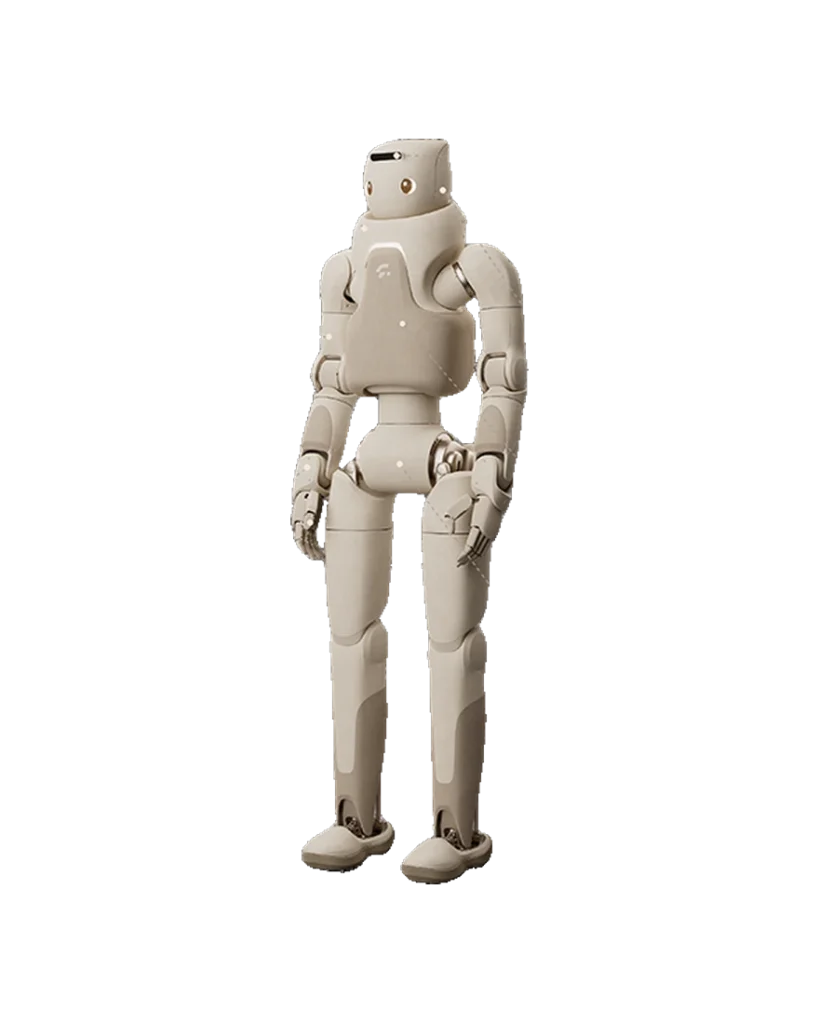
Will the Fourier GR-3 fit your scenario?
Describe your scenario using the controls. Each choice reads the spec sheet for you, flagging where the Fourier GR-3 is built for your space and where it isn’t.
A classification of fit for the conditions you set — not a recommendation. Verdicts describe engineering design intent, not test results.
The full spec sheet.
Manufacturer-published figures, measured against every humanoid robots we track.
Position shows where the figure sits across the tracked category — not a quality judgment.
How the assessment has moved.
Every announcement, release and reassessment behind the current classification.
-
Jul 2026 · AssessmentPre-Release Assessment recorded at 54 of 100
What people actually ask.
OperationIs the Fourier GR-3 available for home use by individuals?
OperationWhat care tasks has GR-3 been demonstrated performing?
OperationDoes GR-3 operate autonomously in care scenarios or require staff control?
OperationWhat is Fourier Intelligence's track record with prior humanoid platforms?
OperationHow does the GR-3 respond to unexpected situations in a care environment?
 II
II
Weave Isaac 0
 II
II
Sanctuary AI Phoenix Gen 7
 II
II
LimX Dynamics Oli
 II
II
Figure 03
Reference the Fourier GR-3 classification.
Embed the Autonomy Ladder™ mark or copy the citation. The mark links back to this assessment and updates if the classification changes.