How do robot vacuum docks hook up to your plumbing?
The newest mop docks refill their own clean water and flush the dirty down a drain. That means a tap, a pipe, and a new place to spring a leak.
On this page4 sections
Picture a flexible hose run behind a dishwasher, down to the shut-off valve under a kitchen sink, and spliced into the cold line with a tee fitting. At the other end of it sits a robot vacuum’s base station.
One hands-on install did exactly that to a Roborock S8 MaxV Ultra, and afterward the dock refilled its own clean water and sent the dirty water to a drain. Nobody carried a tank to the sink again.
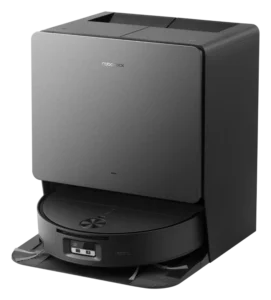
That connection is the pitch behind the 2026 flagship mop docks. The Roborock Saros 10R offers a slim refill-and-drainage dock, the Dreame X40 Master builds the plumbing into an eight-in-one base, and the Narwal Freo X Ultra takes a $199.99 water-exchange kit that drops into the base it already ships with.
What the hookup asks of the house, and what it leaves on the owner’s list once the water runs on its own, is the part the box does not picture. The chore it removes is real. The system it adds is also real, and it can leak.
What the dock actually connects to
Two lines do the work. A fresh-water line taps a pressurized supply, usually the cold feed under a sink or behind a toilet, and keeps the dock’s clean side full. A drain line carries the used water off to a p-trap or a standpipe, the same place a sink empties.
Term
P-trapThe curved section of drain pipe under a sink that always holds a little water, sealing sewer gas out of the room. A plumbed dock’s dirty-water line empties into one, or into a standpipe beside it.Not every kit does both halves. The cheaper ones add a fresh-water line only, topping up the clean tank while the dirty water still gets carried out by hand. The full systems add the drain line too, and that second connection is what removes the other trip.
The chore this replaces is small but relentless. A standard mop dock holds a clean tank and a dirty tank, and someone still has to top up one and pour out the other every few days. The plumbing is aimed at exactly that handful of minutes a week.
Between the two lines the base runs its ordinary wash cycle, just without the tanks. It rinses the mop, flushes the used water away, and draws in fresh water for the next pass. The vacuum still empties its own bin into a bag. Only the water changes hands on its own.
Distance is the first wall most homes hit. One plumbing guide notes the dock documentation calls for keeping the refill and drain pipes within about 6 meters, or 19.7 feet, with no threshold taller than 0.79 in in the robot’s path. Site the dock farther from a water source than that and the install is off the table before it starts.
The hoses themselves shape the room. The same guide advises that if a line would cross a doorway, a threshold, or the path the robot cleans, the dock belongs somewhere else, and that a shut-off valve buried behind a stack of stored boxes rules a spot out on its own.
Figure
What a plumbed dock does, and what it leaves
- Clean water tankRefills clean water
- Dirty water tankDrains dirty water; you: clears hair from the drain channel
- Sealed dust bagChanges the dust bag
- Onboard binEmpties the bin
- FilterSwaps brushes and filters
- Mop padsWashes the mop
Two ways to get the water there
The makers split on how the water actually reaches the dock. One camp plumbs the base directly into the supply, the way the S8 MaxV Ultra and the Saros 10R do, so the station itself holds the fittings and the pumps. Shut that dock off and you have cut a live water line.
The other camp keeps the robot’s dock dry and adds a separate water station. SwitchBot’s S10 tucks that station under a kitchen toe-kick, and it carries no power cord of its own. When the robot parks against it, the vacuum’s own battery runs the station’s pumps to swap the water.
That design decides where the gear can live. A plumbed base has to sit near a tap and along floor the robot already covers. A detached station can hide in a cabinet, so long as the robot can still reach it between runs and still reach the rooms it is meant to clean.
Reliability cuts both ways between the two camps. A plumbed base keeps the connection permanent and tidy, but a failed seal sits on a line that is always under pressure. A battery-run station adds no wiring and no new outlet, at the cost of a second box the robot has to find and dock against on every cycle.
Three ways a 2026 mop dock reaches the water
| Robot | How it connects | Listed price |
|---|---|---|
| Roborock S8 MaxV Ultra | The dock plumbs straight into the supply | $1,899, plus about $100 for the refill base |
| SwitchBot S10 | A battery-powered water station under the toe-kick | about $1,199 |
| Narwal Freo X Ultra | A drop-in pump upgrades the stock base | $1,399, plus a $200 kit |
The prices cluster, and the add-on is what tells you what you are really buying. On a plumbed base the extra hardware is a few dollars of fittings, while a detached system is a whole second station. Either way the robot is most of the bill, and the water kit stays the cheap part until something drips.
The Freo X Ultra shows why the plumbing is only half the decision. It can start as a standard dock and take the pump later, but it carries no auto-empty bin, so its dust bag needs changing about four times as often as the toe-kick rival’s. The water runs itself while the dust does not.
During a run the detached system does more than top up. The robot returns to the station mid-clean to pull out the dirty water, rinse its roller mop and wash the filter, then leave with a fresh load. The convenience has a limit: the same install found the roller did not lift high enough to keep it off carpet.
Kit prices track the robot they bolt onto. One guide puts the Dreame hookups on machines from about $1,049 to $1,699 before any plumbing parts, and the Narwal exchange kit fits some models and not others, with the Freo Pro and the Z10 left off its list.
Among the plumbed designs, the S8 MaxV Ultra is the one most installs document, its stock Ultra base swapped for a low-profile refill unit and the fittings run to the sink. It is the clearest example of the direct approach, and of the fitting problems that come with it.
What the install asks of the house
The first step is a valve nobody has touched in years. Tapping the clean line means closing a cold-water shut-off that may not have turned since the house was built, and one install warns that an uncontrolled leak at that joint can do real damage before anyone notices it.
The dock’s spot has to work for the robot as well as the plumber. The guide calls for a hard, even floor and a strong signal at the base, and a clear run from it to every room on the schedule. A perfect under-sink tap is useless if the robot cannot get back to it.
Then the fittings rarely match out of the box. The install found the S8 MaxV Ultra ships only a half-inch tee where US plumbing usually runs three-eighths, and that the SwitchBot’s bundled connector leaked until it was replaced with the correct US fitting for about $13.
The listings promise a connection that clicks on without tools. The installs that documented it still ended up at a hardware store. This is well within a handy owner’s range, but it is plumbing, and the guide puts the work squarely on them: you find your existing pipe connections, identify them, and buy the right parts yourself.
Plan for the parts you will buy twice. The first fittings often leak or do not match, so a second trip for adapters is closer to the rule than the exception, and even the install that went smoothly kept the shut-off valve reachable for the day one of those joints lets go.
Where a clean under-sink run does not exist, the house decides. One reviewer could fit the water station in a single spot, wedged between a toilet and a pedestal sink, because it was pretty much the only place the dock could easily go. An older home with closed cabinets can offer no viable spot at all.
the actual water dock installation process was very easy, thanks to a suite of connectors and adapters that come included
What it still leaves the owner
The water chore does go away, which is the one job these docks were built to delete. With the lines connected there are no tanks to fill or empty. Everything else about owning a robot vacuum stays where it was.
One plumbing guide lists what the hookup never touches: bags, brushes, filters, mop pads, trays and sensors still need attention. The dust still fills a bag, the brushes still catch hair, the pad still wears thin. Plumbing moves none of that off the list.
The water path also brings upkeep of its own. Owner-troubleshooting guides for these docks trace most leaks to the parts the water runs through: drain channels clogged with hair and lint, hardened rubber seals, and a base plate that pools water when the dock sits slightly off level. The channel that used to drip into a tank now drips toward your floor when it backs up.
Even without a tank, the base earns a weekly look. The same guides find that owners who clean the base plate on a regular cadence rarely see leaks, and that using anything but the maker’s own solution can leave a foam that reads on the app like a hardware fault.
That is the trade the spec sheet leaves out. A plumbed dock removes the two water tanks and hands back a small plumbing system to keep an eye on. For a reader weighing it, the deciding factor is rarely the cleaning. It is whether a tee under the sink is a job the house and the hands can carry.
For the owner who clears those hurdles, the payoff is the small thing promised and no more. The reviewer who wedged the station between a toilet and a sink wrote that afterward they would “never have to worry about clean water tanks or dirty water tanks”, short of emptying the bin every few months and the odd bit of robot upkeep.