
Robomow RS630
Perimeter wire defines every square foot the RS630 cuts; within that boundary, it operates without intervention. Large cutting width and mulching deck suit 1/2-acre-plus lots where systematic coverage matters more than wire-free setup.

Will the Robomow RS630 work on your yard?
Describe your yard using the controls. Each choice reads the spec sheet for you, flagging where the Robomow RS630 is built for your space and where it isn’t.
A classification of fit for the conditions you set, not a recommendation. Verdicts describe engineering design intent, not test results.
The full spec sheet.
Priced near the category median, with every figure charted against the category below.
- Footprint
- 24.4 × 27.2 in · 11.4 in tall
- Weight
- 45 lbs
- Battery
- 172 Wh · Li-ion
- Network
- Cellular
- Cutting width
- 22 in•
- Cutting height range
- 0.8-3.1 in•
- Max area
- 34,400 sq ft•
- Max slope
- 36%•
- Blade system
- 2 blades•
- Boundary method
- Buried perimeter wire
Perimeter wire boundary with random-pattern and systematic zone coverage; no GPS or vision
Position shows where the figure sits across the tracked category, not a quality judgment.
Living with it.
Wire breaks are the dominant failure mode; the mower itself is mechanically stable.
Owner reports across multiple seasons describe consistent cutting performance and rare electronic failures. Wire breaks from edging tools or aerators are the most reported service event; replacing and splicing wire is a documented, routine owner task.
$1,999 to buy, then about $60 a year for the replaceable parts below. Over three years that is roughly $180 past the sticker price. Excludes electricity and any repairs.
- BladesEvery 3-6 months$25–45
Replacement cadence from the maintenance schedule; prices shown where the source documents them.
CautionSpinning blade deck exposed: Free-floating blade spins during operation; keep children and pets off the lawn during scheduled runs.
CautionNo camera or object detection: The RS630 has no vision system; it relies on contact bumpers to detect obstacles, not avoidance.
NotePerimeter wire current: Low-voltage signal wire is not a shock hazard; safe to handle, but disruption stops operation.
How the assessment has moved.
Every announcement, release and reassessment behind the current classification.
-
Aug 2026 · AssessmentRecord status: Verified → Provisional
-
Aug 2026 · AssessmentRobovations Score revised 65 → 66
-
Aug 2026 · AssessmentRobovations Score rescored under v4.2: 60 → 65
-
Aug 2026 · AssessmentRobovations Score rescored under v4.0: 62 → 60
-
Jul 2026 · AssessmentMaintenance 72 → 52, Reliability 68 → 85, 3 other dimensions · overall held at 62
-
Jul 2026 · AssessmentRobovations Score recorded at 62 of 100
-
May 2013 · ReleaseLaunches targeting residential lots up to 3000 square meters
How Robomow RS630 compares.


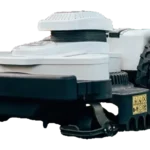
What people actually ask.
OperationDoes the RS630 require burying the perimeter wire, or can it be left on the surface?
OperationWhat happens if the RS630 encounters a wire break mid-season?
OperationCan the RS630 handle Bermuda or St. Augustine grass, or is it calibrated for cool-season turf?
OperationDoes the RS630 work in rain, and should it be scheduled for wet conditions?
CompatibilityIs the RS630 Wi-Fi connected, and is the app required for normal operation?
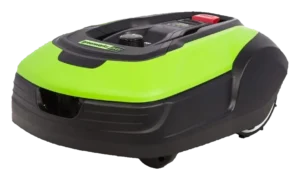 II
II
Greenworks Optimow 15
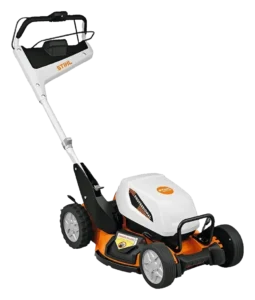 II
II
Stihl iMow 7
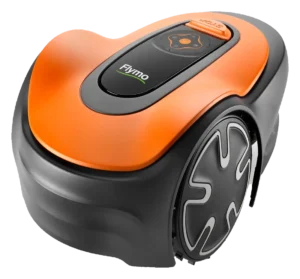 II
II
Flymo EasiLife Go 200
 II
II
Stihl iMow 6 EVO
Where it's sold
We may earn commission from qualifying purchases. This does not influence classification.
Reference the Robomow RS630 classification.
Embed the Autonomy Ladder™ mark or copy the citation. The mark is served from this record, so a reassessment updates it on your page automatically.
Get the embed code and citation
Scale proportionally only, up to 2× (536px wide)(224px wide). No recolouring, cropping, rotating, or re-typesetting.
Robovations. "Robomow RS630: Autonomy Level II (Assisted Autonomy)." Autonomy Ladder™, assessed August 2026. https://robovations.com/robots/robomow-rs630/
- Link it. The mark must point at this record. An unlinked mark is not authorised.
- Hot-link it. Never download, self-host, or re-upload the image. A saved copy stops updating, and a mark that has stopped updating is a claim we no longer stand behind.
- A classification, not an endorsement. It may not appear beside language implying Robovations recommends, rates, or approves the product.