What does ‘AI-powered’ mean on a robot vacuum?
Roborock calls it Reactive AI; Eufy calls it AI.See. What the label covers inside the machine, and what it made of one reviewer’s hallway full of shoes.
On this page3 sections
“I don’t know how many hundreds of models of poo we created out of Play-Doh and paint,” iRobot’s chief executive, Colin Angle, told a technology journalist in September 2021. Everyone at the company with a dog, he said, was told to photograph whatever the dog left behind.
The work went into iRobot’s new Roomba j7, whose front camera could pick out four things on a floor: shoes, socks, cords and pet waste. Getting there took more than a million labeled images, collected from more than a thousand homes.
iRobot had more than 170 objects in development, and those four were the only ones it was confident enough to deploy. That is the machinery behind the AI label on a robot vacuum: a model trained on labeled photographs to name what the camera sees. It can name only what it was shown.
So if you have ever pulled a charger cable out of a robot, this is the part that was meant to see it coming. Does it know the things lying around your home? And what does it do with the ones it doesn’t?
On the Roborock S8 MaxV Ultra, the system is called Reactive AI 2.0, and it recognizes 73 objects. Eufy’s version is AI.See, and its listing for the RoboVac X10 Pro Omni promises “AI detecting 100+ obstacles.” Both numbers count the categories each model was trained to name.
What the makers count
How many things each camera is trained to name
| Robot | What it recognizes, as stated | Stated by |
|---|---|---|
| iRobot Roomba j7 (2021) | Four things: shoes, socks, cords and pet waste, out of more than 170 in development | Colin Angle and a technology journalist |
| Roborock S8 MaxV Ultra | 73 objects | Roborock’s US product page |
| Eufy RoboVac X10 Pro Omni | “100+ obstacles” | Eufy’s own listing |
What the camera model does
Roborock pairs the camera on the S8 MaxV Ultra with 3D structured light, which projects a pattern onto the floor ahead and reads depth from the way the pattern bends over objects. The Eufy uses an RGB camera and an LED. The depth reading tells a robot that something is in the way and how big it is.
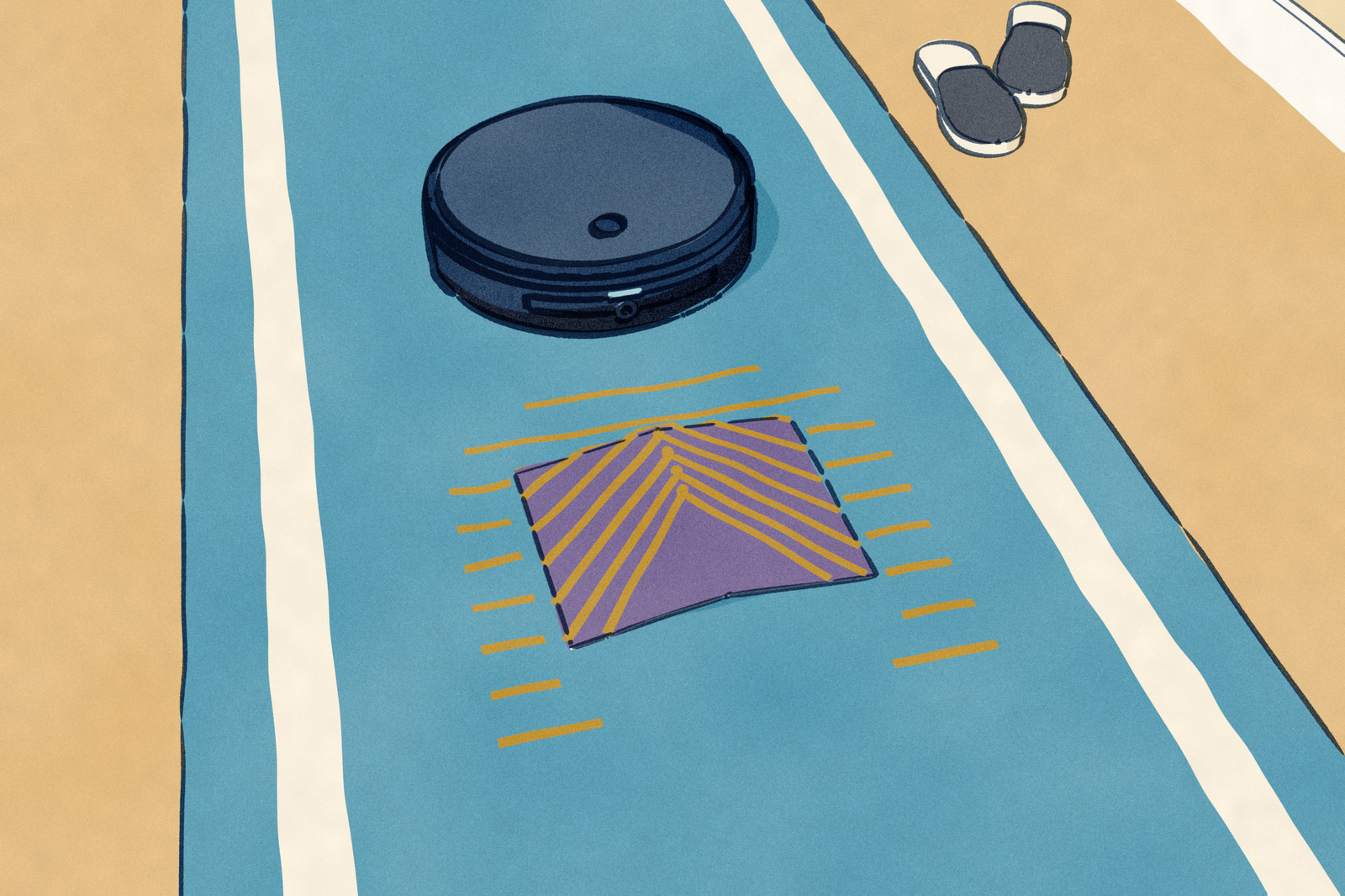
The trained model adds a name to the shape. A name lets a robot give a cable a wide berth while still cleaning tight along a chair leg, or leave a margin of clean floor around whatever the dog left. An object missing from the list gets no name, and the robot has only the depth measurement to go on.
The label stretches over smaller jobs, too. Both cameras also recognize floor types, and the Roborock’s tells one kind of room from another. Each is a model trained for one narrow job, and each learned from pictures of real homes that people labeled.
Those pictures travel. Low-angle photos from iRobot development robots went to gig workers labeling them for Scale AI, and screenshots surfaced in groups on social media. The view a model learns from is the one your own robot has of your floor.
Same robot, two reviews
A list of 73 names says what the Roborock model was trained on. It says nothing about your hallway. Two reviews of the S8 MaxV Ultra, written in two homes, came back with opposite reports.
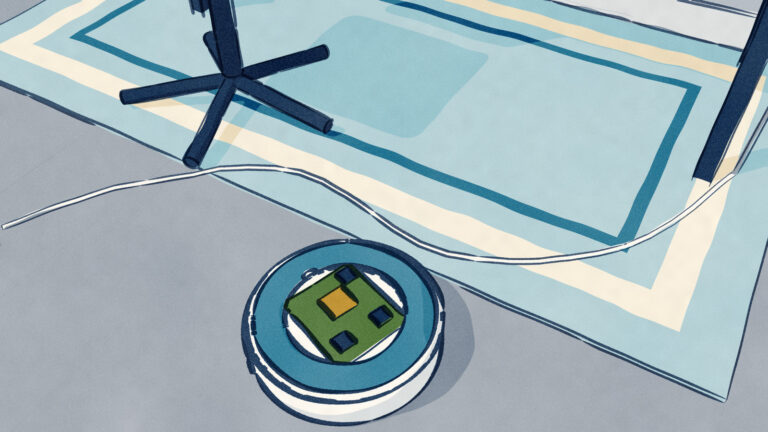
In one hands-on review from April 2025, the app showed photos of what the robot had steered around: the power cable of a tower fan, identified with 88% confidence, and a folded pair of socks labeled “fabric,” which the reviewer called technically correct.
The second reviewer lived with the same model for two months in 2024 and reported the opposite. Shoes left in his hallway were “particularly irresistible to the Roborock,” and he had to rescue half-eaten shoelaces from the robot’s mouth almost every time he forgot to move them.
Cables fared no better. One phone charger cable had to be dug out from deep inside the robot. The robot also knocked over a ladder leaning against a wall, then trapped itself between the ladder and other furniture.
Unfortunately, there seems to be something fundamentally wrong with Roborock’s obstacle detection.
So which review is right? Both can be. Each comes from one reviewer in one home, and a classifier judges pixels. What the pixels show depends on the floor.
Picture white Apple headphones on a white carpet, or a black power cord crossing a carpet patterned with black squiggles. Both were named as hard cases when the j7 came out. A shoelace lying flat has a different problem: it sits well below the 3 cm height in Roborock’s spec.
The chores the dock took over
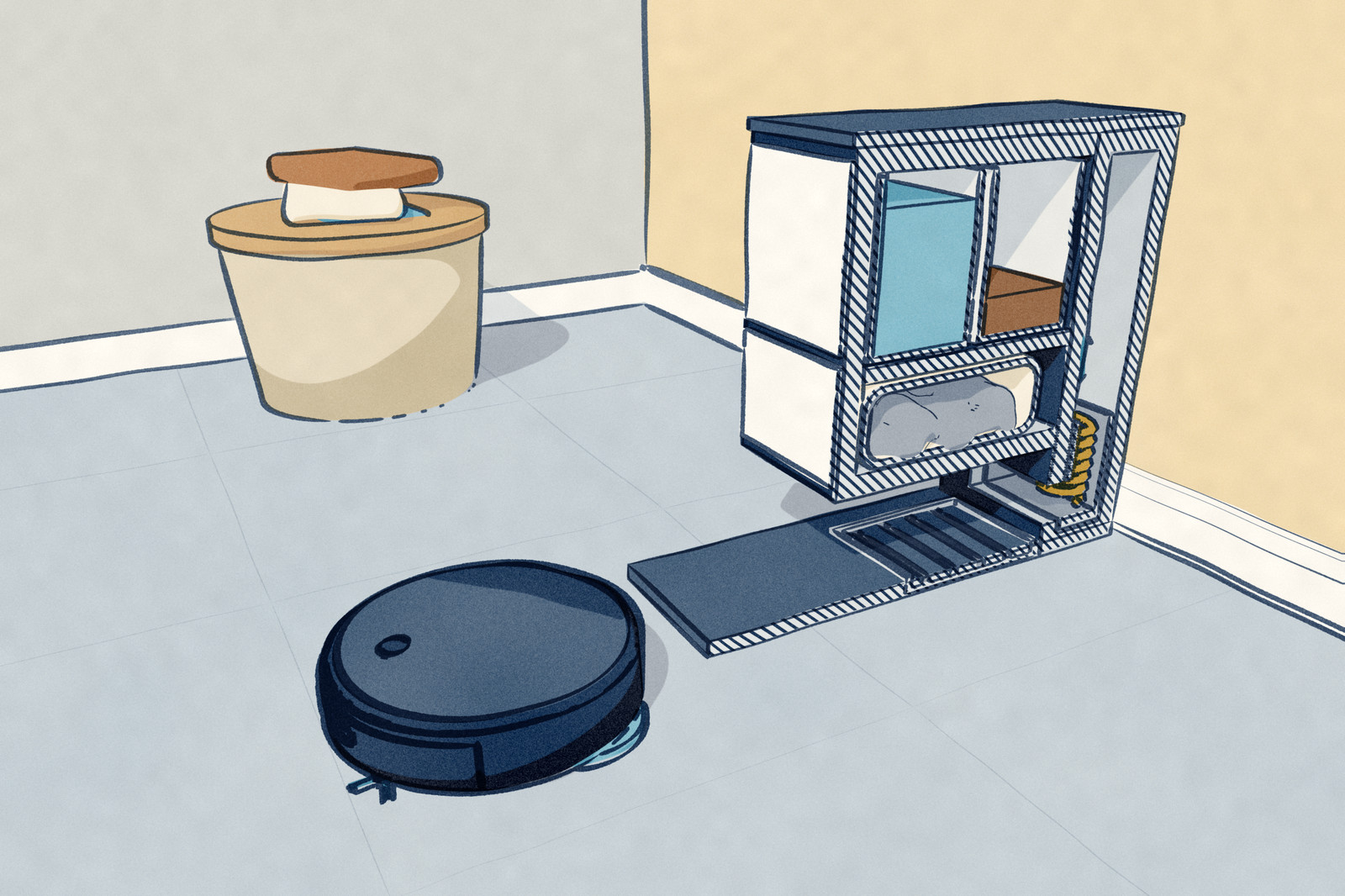
The S8 MaxV Ultra’s dock, the RockDock Ultra, handles the chores that come after a run. It empties the robot’s bin into a bag meant to last seven weeks, washes the mops in 140°F water, dries them with hot air, refills the robot’s water tank and doses detergent.
Eufy’s station for the X10 Pro Omni runs through much the same list, and all of it is plumbing, heating and airflow. Those chores come around after every run. A recognizer earns its keep only on the days something is left on the floor.
So AI-powered, on a robot vacuum, means a camera and a model that can name a set list of things, from four on the first j7 to more than 100 on the Eufy. The name changes how the robot steers. Whether it gets the name right depends on what is on your floor, and on the floor underneath it.
iRobot’s answer on the j7 was to ask. When the robot met an obstacle, it could send its owner a picture and ask whether to put a keep-out zone around it. After all those Play-Doh models, the last call went to the person holding the phone.