Can you replace the battery in a cordless robotic pool cleaner?
A cordless pool robot is mostly a sealed lithium battery, and that battery is where the recalls, the fade and the discontinuations all land.
On this page3 sections
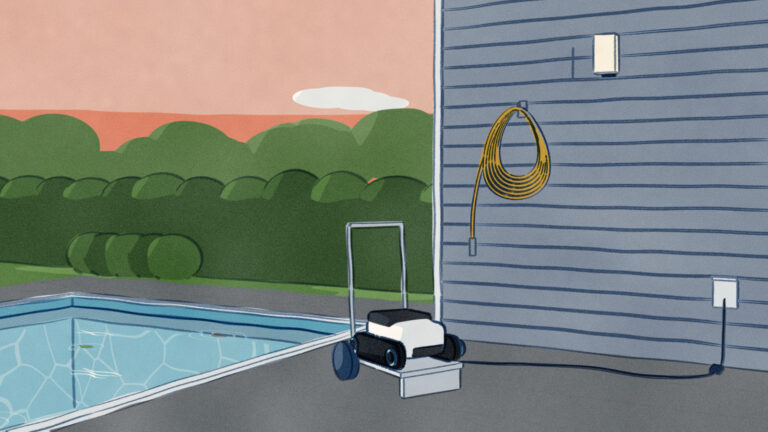
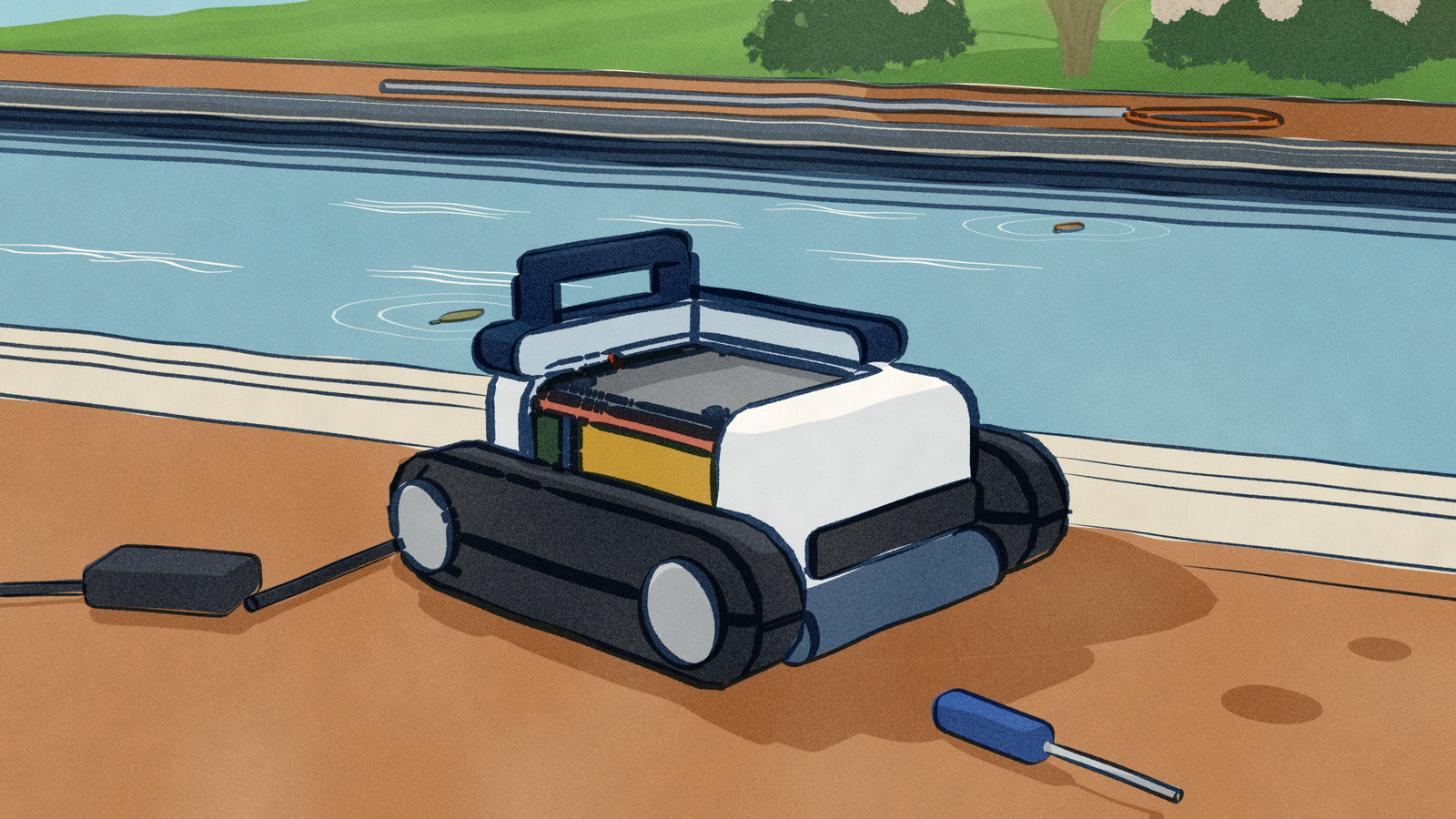
A cordless robotic pool cleaner spends most of its life as a sealed plastic shell, charging on a deck. Drop it in the water and it crawls the floor and climbs the walls on its own power, with no cord running back to an outlet. That freedom is the pitch, and it comes from one lithium battery sealed inside the hull to keep the water out.
The spec sheets sell the rest: suction in liters per minute, runtime in hours, a scrub along the waterline. What they skip is what happens to that sealed battery after a few seasons in sun and chlorine, and whether you can do anything about it once it starts to fade.
That question sits past the point launch coverage reaches. A cordless cleaner hides its most important part, the battery, inside a hull built to keep water out, and that same seal keeps you out. When the battery fades, or when a safety notice pulls the whole model off the market, the owner is left deciding what a sealed, spent machine is still worth.
The battery is the machine
On a corded cleaner the cord is the lifeline and the motor is the part that wears. Cut the cord and the battery takes over both roles. It powers every run, and it is also the component with a fixed number of lives in it.
Lithium packs hold most of their capacity for several hundred full charge cycles before the decline is noticeable, which for an owner running the cleaner a couple of times a week over a six-month season is a few years of ordinary use. Then runtime starts dropping, and a cleaner that once finished the pool on one charge begins quitting halfway.
Figure
What the battery decides
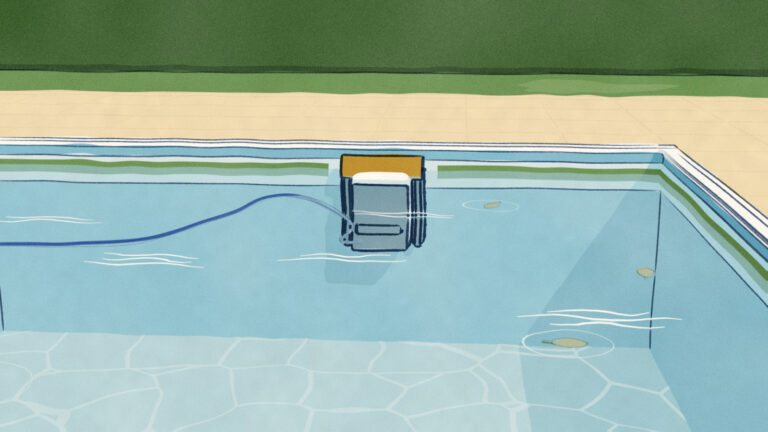
- Reach along the floorThe floor inside the cord. It is a circle around the supply, and shorter than the cord, because the cord has to drop the depth of the pool before it can run along the floor.
- Out of reachBeyond the cord, whatever the battery holds. A hard edge you can measure with a tape.
- RuntimeNo cord, so the whole basin is reachable. The limit is charge rather than cable length: when the pack is done the clean stops wherever it is, and the pack holds less each year.
So can you simply open it up and drop in a fresh pack? Here the sealed hull turns from a feature into a trap. The seal that keeps pool water off the electronics also keeps the owner out of the battery bay.
Most consumer cordless cleaners use housings that are not built for user replacement, with battery service routed back through the maker or an authorized center. When the maker stops selling a pack for a given model, that route runs out, and a fading battery becomes a dead machine. Out of warranty, a service-center swap can cost enough to compete with simply buying the next model.
A few newer cleaners are built the other way. The Seauto SAT40, for one, ships a lithium pack an owner can unclip and swap in a few minutes without tools, which keeps a working chassis out of a landfill when only the cell is spent. It is still the exception on a shelf full of sealed shells.
Aftermarket packs have appeared for a handful of popular models, sold by battery specialists rather than the robot makers. Fitting one means opening a hull built to stay closed, and it carries none of the maker’s testing on a component whose failure mode, as the recalls show, is fire. For most owners it is not a real option.
When a recall is also a discontinuation
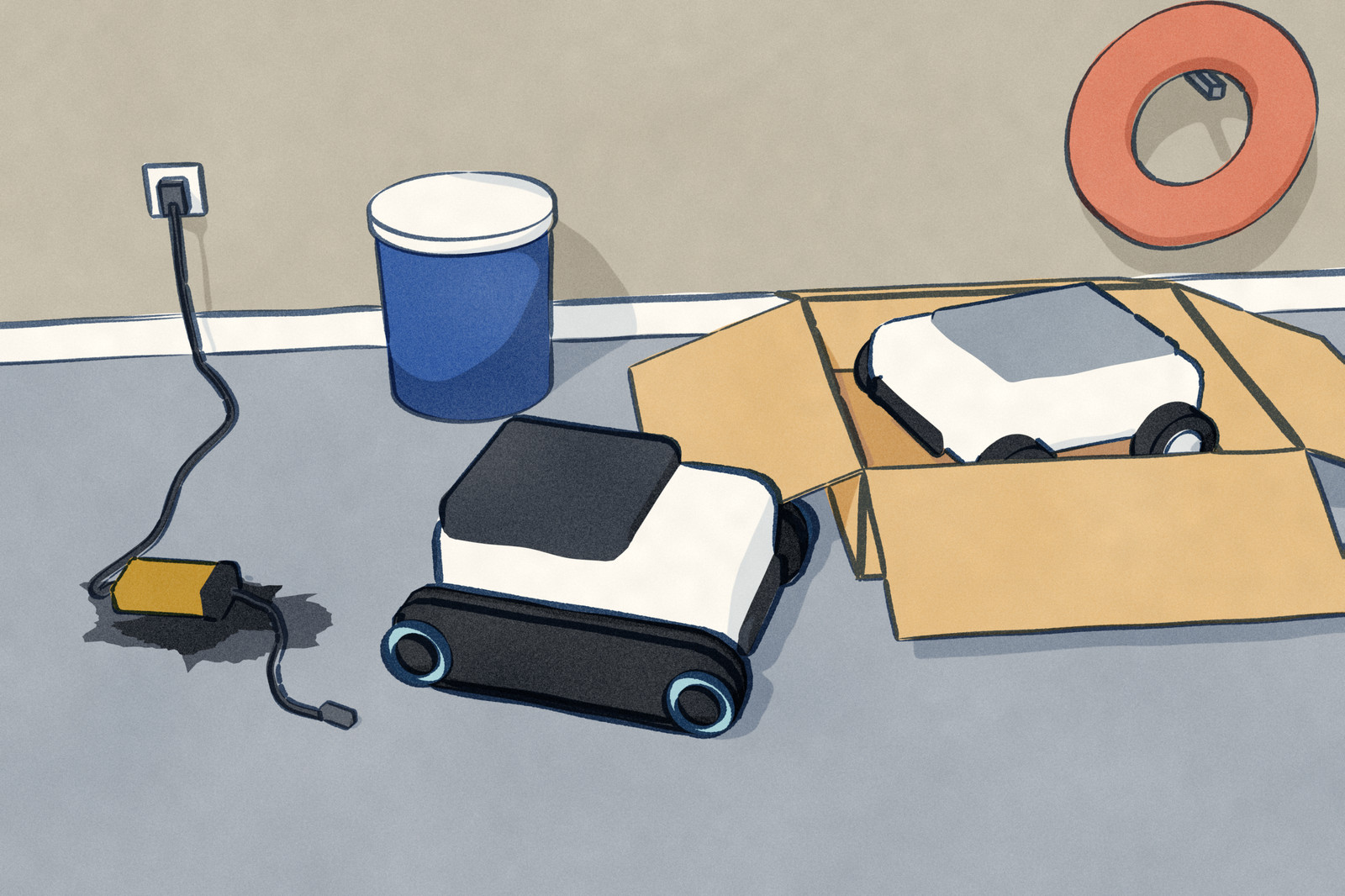
The sealed battery is not only the part that dies quietly. It is also the part that has been catching fire, and the recall record for cordless pool cleaners reads as a short, repeating loop.
The lithium-ion battery in the recalled pool vacuums can overheat, posing burn and fire hazards to consumers.
U.S. Consumer Product Safety Commission recall notice, April 2026
That notice, from April 2026, recalled about 5,000 Wybot Osprey 700 Max and S1 cleaners after ten reports of overheating, nine of them causing property damage. It was not the first of its kind, or the second.
The loop started with Aiper. In August 2023 the Commission recalled roughly 22,000 Aiper Elite Pro cleaners whose batteries could overheat and short-circuit, and owners were sent a free Seagull Pro in exchange.
The model handed out as the safe replacement did not stay safe. In March 2025 about 32,660 Seagull Pro cleaners were recalled after 19 reports of units melting, smoking or catching fire while charging, and the fix this time was a free Scuba S1.
The specific fault moved around the power system each time. The Elite Pro’s battery could short-circuit when charged without its adapter; the Seagull Pro’s large current adapter could overheat on its own; the Wybot packs overheated both while charging and while idle. The constant is the part under suspicion: the thing that stores or delivers the charge.
Each recall shipped owners a newer model
| Cordless cleaner | CPSC recall | Units | Free replacement |
|---|---|---|---|
| Aiper Elite Pro GS100 | August 2023 | 22,000 | Aiper Seagull Pro |
| Aiper Seagull Pro | March 2025 | 32,660 | Aiper Scuba S1 |
| Wybot Osprey 700 Max and S1 | April 2026 | 5,000 | Wybot C2 |
Read down the last column and the remedy is always a different, newer model. None of these recalls repaired a battery or swapped a cell. Each one retired the machine an owner had and shipped a successor, so a safety recall doubled as a discontinuation of the model before it.
None of this is an accident of one brand. The makers in the recall record all belong to the cordless-first wave that reached backyard pools around 2023, and they share the design that creates the problem: a large lithium pack sealed into a hull that spends its summers in heat, sun and chlorinated water.
The battery does the hardest job in the worst conditions, and it is the part the owner sits furthest from.
What to check before you buy
For a cordless pool robot, two documents tell you more than the suction figure does. One is the recall list the Commission keeps, searchable by brand. The other is the maker’s own parts page: is a replacement battery sold there, and for how long after the model is retired.
The split that matters is between the two kinds of owner this record produces. The owner of a recalled model is, in one sense, fortunate: the maker is obliged to ship a free, newer machine. The owner of a model that was simply discontinued, with no safety notice attached, is owed nothing.
A cordless pool cleaner is, underneath the scrubbing and the mapping, a battery an owner cannot get at. When the battery is spent the machine is spent, whether it goes out in a recall notice or just stops finishing the pool one August.
So the owner of a quietly discontinued cleaner is left with the shell from the start, charging on the deck, still waterproof and still sealed, holding a little less each season until the day it holds none.