Signals
Beijing is slowing humanoid robot listings. The world bought 7,000 of the machines last year.
Two Reuters reports landed on the same day and describe the same gap from opposite ends. Chinese regulators are quietly holding back humanoid robot flotations while they ask where the revenue comes from, and the body that counts the robots says most of the ones sold last year went to research rather than to work.
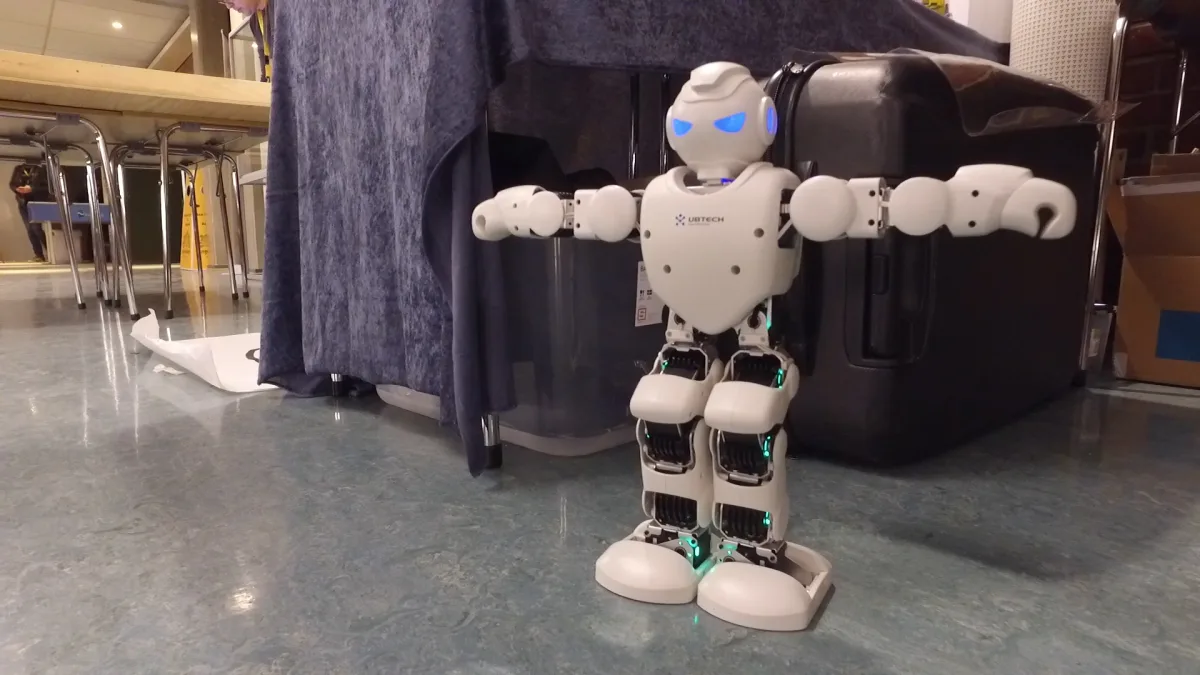
Photo by Kartverket on Wikimedia Commons (CC BY 2.0)
Chinese regulators have begun using informal “window guidance” to hold back humanoid robot companies seeking stock market listings, Reuters reported on 21 September, while they examine whether the valuations and the revenue behind them reflect commercial demand. At least half a dozen firms are preparing to float, among them Deep Robotics, X Square Robot and AGIBOT. The slowdown followed a volatile debut for Unitree Robotics, whose shares rose more than fivefold in Shanghai in mid August and have since fallen 55 percent from their peak. Mech-Mind Robotics fell nearly 20 percent from its own debut-day high on 1 September.
A second Reuters report the same day supplied the figure the first one implies. The International Federation of Robotics counted roughly 7,000 humanoid robots sold worldwide in 2025.
Humanoid robots sold worldwide, 2025
7,000
International Federation of Robotics, reviewed by Reuters. Bank of America Global Research forecasts 90,000 shipments in 2026 and 1.2 million by 2030.
The conditions attached to both numbers are the story. Susanne Bieller, secretary general of the IFR, said the humanoid robots sold last year “were often used for research and data collection rather than productive work,” and that carmakers testing them in factories were doing so in single-digit or sometimes double-digit numbers. On the financing side, Mech-Mind chief executive Shao Tianlan alleged in a WeChat post this month that some highly valued embodied-AI firms were generating revenue through data collection centers, related-party deals and other unsustainable arrangements ahead of their listings. Reuters cited one estimate that valuations could fall 60 to 70 percent if revenue from data collection centers were stripped out. Ruiying Zhao of S&P Global Market Intelligence described investor sentiment as shifting from “blanket euphoria to selective rationality.”
What the two reports establish together is narrow, and worth stating precisely. Three parties with different incentives, a securities regulator, a competing chief executive, and the trade body that counts the machines, are each questioning whether humanoid revenue and humanoid deployment reflect ordinary commercial demand. That is a claim about disclosure and about how the units are being used. All three arrived at it independently in the same week.
It does not establish that humanoid robots do not work, that the engineering has stalled, or that the longer forecasts are wrong. A regulator slowing a listing calendar is making a judgment about what a prospectus shows, not about what a machine can do, and 7,000 is a count of units sold rather than units working. What it does remove is the inference that sales volume and deployment are the same thing. On the IFR’s own account they are not, and the gap between the two is where a reader should keep their attention.