Skip to content
Saved
Humanoid Robots

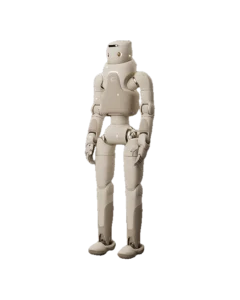
RobotEra Star1

RobotEra

Gobi Desert footage and chopstick demos document real locomotion and manipulation capability. The hardware is credible; autonomous task sequencing in unstructured environments without scripting or human intervention is not yet publicly confirmed.

Level II
Assisted Autonomy
7 sources reviewed ·
Promising Progress
Real progress, not ready yet
Reassessed
Jun 14
View history
Pre-Release Assessment
Plausible · 53 of 100
Assessed 2026-06-14 · PRE-RELEASE
Track Record52 / 100

25% weight

Engineering68 / 100

25% weight

Demo Match58 / 100

20% weight

Readiness32 / 100

15% weight

Openness42 / 100

15% weight

Promising locomotion and manipulation hardware with a credible multi-round funding arc and documented real-world demos. Provisional classification pending independent verification of autonomous task execution outside scripted or structured conditions.

Open questions before a Robovations Score can be computed
  • Whether ERA-42 achieves end-to-end autonomy without scripted conditions or human staging
  • Joint and actuator durability over sustained deployment cycles beyond demo footage
  • Whether XHAND1 dexterity transfers to unstructured manipulation tasks outside training distribution
  • Confirmed commercial pricing, distribution channel, and ship date for non-pilot customers
  • Safety certification status for unsupervised industrial deployment
  • Performance in the 2025 Beijing E-Town Half-Marathon relative to peer humanoids

Will the RobotEra Star1 fit your scenario?

Pick what matches your setup. The fit updates as you go.

Where it operates
Primary tasks
Supervision needs
Timeline
How RobotEra Star1 holds up
Where it operates
Primary tasks
Supervision needs
Timeline
Specifications

The full spec sheet.

Manufacturer-published values.
5′9″ average adult67.3 in5′ 7″FRONTDimensional drawing
RobotEra STAR1 · 138.9 lbs
This robot’s rank in categoryCategory median
Runtime240min60480 min
Weight138.9lbs55661.4 lbs
Mapping & navigation

Multi-sensor fusion; ERA-42 end-to-end embodied AI model integrating vision, language, touch, and proprioception

Official referencesProduct page
Lifecycle

The record since launch.

3 tracked events since launch
Ownership & reliability

How it holds up after the purchase.

Owner reports · manufacturer documentation

Prototype-stage hardware; no longitudinal owner data exists to assess reliability.

No shipping consumer units. Reliability verdict is deferred: the platform has logged outdoor locomotion footage and manipulation demos, but no independent failure-rate data or multi-month field records are available for analysis.

Reliability trendUnprovenowner-reported arc to date
What goes wrong, and who fixes it
Failure pointLikelihoodResolution
Joint actuator wearLocomotion degradation over timeOccasionalOwner fixManufacturer servicing; no documented self-repair path
Battery depletion mid-taskTask interruption; robot must return to chargeOccasionalOwner fixManual recharge; 4-hour runtime per charge documented
Sensor calibration driftNavigation or manipulation accuracy reductionOccasionalOwner fixSoftware recalibration; no documented cadence
Imitation learning task failureTask incomplete; human intervention requiredOccasionalOwner fixRe-demonstration or pipeline re-training
Maintenance cadence
As neededVariesno fixed cadence

Charging cycle management; 4-hour runtime requires planned recharge scheduling for sustained operations.

Joint and actuator inspection; cadence undocumented at prototype stage.

Software and firmware updates via ERA-42 model pipeline; release cadence not published.

Sensor calibration check after field use on uneven terrain.

XHAND1 tactile sensor inspection; 12-DOF hand involves fine mechanisms susceptible to contamination.

Imitation learning re-training when new tasks are introduced or environment changes.

Safety flags
CautionFull-body fall risk63 kg bipedal frame; fall at speed poses physical hazard to nearby persons.
CautionHigh joint torque pinch risk400 Nm peak torque at joints; unsupervised proximity not recommended.
NoteNo consumer safety certification documentedNo published CE, UL, or equivalent safety certification at current development stage.
Common questions

What buyers actually ask.

6 answered
Operation
What did the Star1's Gobi Desert run actually demonstrate?
In October 2024, RobotEra filmed two Star1 units running on Gobi Desert sand, grassland, and paved road, with the sneaker-equipped unit reaching 3.6 m/s (approximately 8 mph). The run lasted roughly 34 minutes. A trackside support crew was present throughout; the run was not an unassisted unsupervised deployment.
Operation
Is the Star1 the same robot as the RobotEra L7?
No. The L7 is a separate, later platform unveiled in mid-2025, described by RobotEra as an evolution of the Star1 lineage. The L7 features a different AI brain designation (ERA-42 in unified form) and a documented top speed of approximately 9 mph. Star1 and L7 are distinct products with different specs and commercial timelines.
Operation
What does XHAND1 add to the Star1's capability?
XHAND1 is a five-fingered, 12-DOF dexterous hand with tactile sensors, designed for precision manipulation tasks. Manufacturer demos show the Star1 with XHAND1 using chopsticks, cooking dumplings, pouring wine, and clinking glasses, using imitation learning trained on human demonstration data.
Ownership
Can the Star1 be purchased today, and what does it cost?
There is no consumer retail channel. The Star1 is listed as prototype-stage hardware available for business demo bookings. Third-party aggregator sites cite a reference figure around $120,000, but the manufacturer has not published a confirmed price and describes commercial availability as under development.
Operation
What industrial deployments has the Star1 been involved in?
RobotEra reports its fleet (which encompasses multiple robot models, not exclusively Star1) operating across logistics centers, retail, and exhibition settings, including partnerships with China Post and SF Group. Specific deployment counts attributable to the Star1 platform alone are not broken out in public manufacturer disclosures.
Operation
Does the Star1 require a teleoperator for tasks?
RobotEra’s ERA-42 model is described as enabling autonomous task execution via imitation learning. However, the documented capability profile, including the Gobi run and cooking demos, involves structured conditions with engineering staff present. Independent verification of unsupervised end-to-end task completion in unstructured settings has not been published.

Cite & embed

Reference the RobotEra Star1 classification.

Embed the Autonomy Ladder™ mark or copy the citation. The mark links back to this assessment and updates if the classification changes.

Citation
Where to next

Three ways to keep going.

For shoppers

Stack against a peer.

Open the compare builder pre-loaded with the RobotEra Star1 and Trifo Lucy — side-by-side score, autonomy, fit profile, and trade-offs.

3 peers ready to stack right now.
For browsers

See every Level II.

Every robot we’ve classified at assisted autonomy — sorted by readiness, score, and price. Filter by category, manufacturer, or release date.

Browse the database

Updated weekly with new entries and reclassifications.