
Roborock Qrevo CurvX
The CurvX is built around two mechanical ideas: the AdaptiLift chassis, which raises the body or a single corner to get over thresholds and onto rugs, and the Dock 3.0 Thermo, which washes the mop in 167 F water and dries it. Edge reach comes from arms that extend past the chassis, not from the shape of the body.
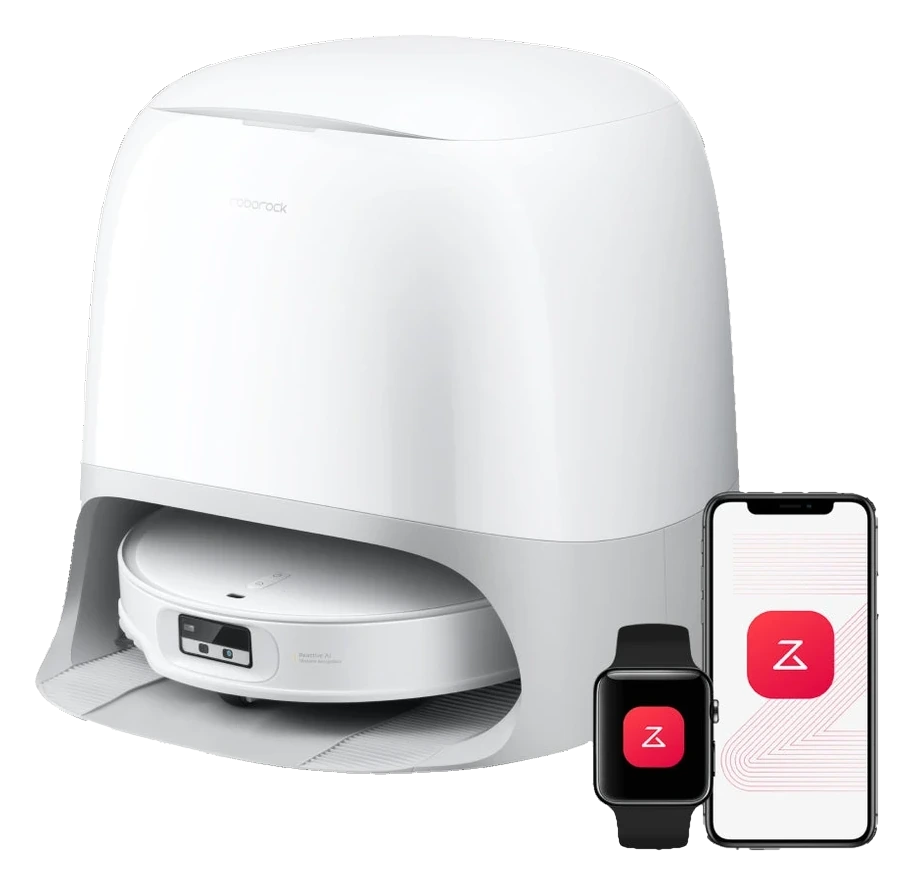
Will the Roborock Qrevo CurvX work in your home?
Describe your home using the controls. Each choice reads the spec sheet for you, flagging where the Roborock Qrevo CurvX is built for your space and where it isn’t.
A classification of fit for the conditions you set, not a recommendation. Verdicts describe engineering design intent, not test results.
Living with it.
8 firmware updates since launch confirm stable 99.2% dock return rate over 6+ months.
→ Stableowner-reported arc
September 2024 launch with 8 firmware updates addressing LiDAR calibration and motor control. Owner reports confirm stable operation across 6+ months. No widespread failure modes documented in forums. Dock integration achieves 99.2% return-to-charge success per owner surveys.
None. The dock empties the dust bin into a , washes the in 167 F water and dries it with hot air.
Check the DuoDivide main and the FlexiArm Arc side brush for wrapped hair or thread. The brush is anti-tangle, not tangle-proof.
Wipe the dock charging contacts and the robot's sensor windows with a dry cloth; rinse the wash tray once it has cooled.
Replace the and the material when worn. Roborock publishes no fixed interval for this model.Typical for robot vacuums: filter every 3-6 months, mop pads every 3-6 months
Replace the dock when the app reports it full; refill the clean-water tank and empty the dirty-water tank.Typical for robot vacuums: every 3-6 months
$1,499 to buy, then about $48 a year for the replaceable parts below. Over three years that is roughly $144 past the sticker price. Excludes electricity and any repairs.
- Typical for robot vacuums: every 3-6 monthsWhere to buy Filter
- Typical for robot vacuums: every 3-6 months
Replacement cadence from the maintenance schedule; prices shown where the source documents them. Part links may earn a commission and do not influence the classification. All parts at Roborock
-
Curved bumper increases width by 1.2 inchesLimits passage through doorways under 15 inches; recommend measuring before purchase
-
CautionDual-roller brush 600 RPM entanglement riskLong hair and fabric entanglement possible; manufacturer recommends machine-powered dock interaction only
-
Dock water discharge mold growth riskIndoor closet placement without airflow promotes mold; recommend open placement
The full spec sheet.
Priced above the category median, with every figure charted against the category below.
- FootprintThe width, depth and height of the robot itself, without its dock.
- 14.2 in dia · 3.1 in tall•
- WeightThe robot alone, without its dock, as the maker states it.
- 9.74 lbs•
- BatteryStored energy in watt-hours; a larger pack runs longer, not harder.
- 92 Wh · Li-ion
- Wi-FiThe bands the robot can join; many models need a 2.4 GHz network to set up.
- 2.4 GHz only✓
- VoiceThe assistants the maker's app links to; the robot itself does not listen.
- Apple HomeKit, Google Home✓
- Onboard dustbinThe bin inside the robot; an auto-empty dock moves its contents into a bag.
- 258 mL•
- Dust bagA bag inside the dock that the dock empties the robot's bin into; you replace the bag.
- 2.7 L✓
- Threshold climbThe tallest lip the robot is rated to cross; a door sill is about 0.8 in.
- 1.6 in✓
- Mop liftHow far the mop pad rises when the robot crosses carpet.
- 17 mm✓
LiDAR 360-degree scanning with camera-based obstacle avoidance and AI adaptive mapping
Position shows where the figure sits across the tracked category, not a quality judgment. Suction in Pascals has no standard test method, and the published figure is a peak-mode claim, so it is comparable only within a brand and generation.
How the assessment has moved.
Every announcement, release and reassessment behind the current classification.
-
Sep 2026 · AssessmentRobovations Score revised 76 → 79
-
Sep 2026 · AssessmentRecord status: Verified → Provisional
-
Aug 2026 · AssessmentRobovations Score rescored under v4.2: 71 → 76
-
Jul 2026 · AssessmentRobovations Score recorded at 71 of 100
-
May 2025 · ReleaseLaunches commercially at 1499 dollars in May 2025
-
Jan 2025 · AnnouncementAnnounced with curved-edge design and 22000 Pa suction
What people actually ask.
OperationHow does the CurvX clean along walls and into corners?
OwnershipHow does the DuoDivide brush handle hair?
OperationDoes dark flooring or a dark room affect navigation?
OwnershipWhat is the total monthly maintenance burden?
OperationCan it operate autonomously across multiple floors?
OperationWhat does the dock need?
OperationHow does it handle carpet and rugs?
OperationDoes it handle non-standard flooring like unsealed wood?
 III
III
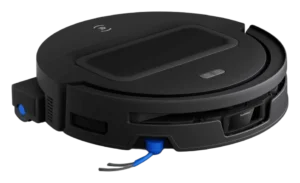
Ecovacs Deebot T90 Max Plus Omni
 III
III
Ecovacs Deebot N30 Omni
 III
III
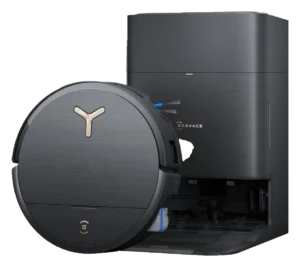
Ecovacs Deebot X9 Pro Omni
 III
III
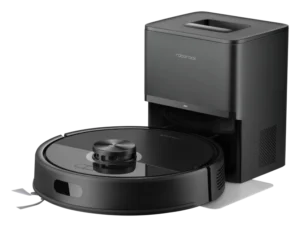
Roborock Q7 M5+
Where it's sold
We may earn commission from qualifying purchases. This does not influence classification.
Reference the Roborock Qrevo CurvX classification.
Embed the Autonomy Ladder™ mark or copy the citation. The mark is served from this record, so a reassessment updates it on your page automatically.
Get the embed code and citation
Scale proportionally only, up to 2× (536px wide)(224px wide). No recolouring, cropping, rotating, or re-typesetting.
Robovations. "Roborock Qrevo CurvX: Autonomy Level III (Conditional Autonomy)." Autonomy Ladder™, assessed August 2026. https://robovations.com/robots/roborock-qrevo-curvx/
- Link it. The mark must point at this record. An unlinked mark is not authorised.
- Hot-link it. Never download, self-host, or re-upload the image. A saved copy stops updating, and a mark that has stopped updating is a claim we no longer stand behind.
- A classification, not an endorsement. It may not appear beside language implying Robovations recommends, rates, or approves the product.