Skip to content
Saved
Humanoid Robots

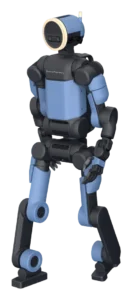
NEURA 4NE1 Gen 3

NEURA Robotics · MSRP $98,000

Dexterous force-aware manipulation with task-specific autonomy. A meaningful research platform, but software generalization and consumer accessibility remain open questions.

Level III
Conditional Autonomy
4 sources reviewed ·
Promising Progress
Real progress, not ready yet
Reassessed
Mar 16
View history
Pre-Release Assessment
Plausible · 56 of 100
Assessed 2026-03-16 · PRE-RELEASE
Track Record60 / 100

25% weight

Engineering65 / 100

25% weight

Demo Match60 / 100

20% weight

Readiness45 / 100

15% weight

Openness50 / 100

15% weight

Plausible research platform with transparent pricing and multi-generation track record. Engineering approach is familiar (dual-arm, force-feedback, learning-from-demonstration); primary uncertainty is market trajectory and consumer availability timeline.

Open questions before a Robovations Score can be computed
  • Consumer shipping date and availability; whether reservation customers actually receive units
  • Consumer-grade pricing versus enterprise-only positioning
  • Autonomous task coverage realistic for home or office environments
  • Multi-task generalization beyond training scenario parameters
  • Service network and support scope outside Germany and pilot markets
  • Battery runtime under continuous manipulation versus datasheet claims

Will the NEURA 4NE1 Gen 3 fit your scenario?

Pick what matches your setup. The fit updates as you go.

Where it operates
Primary tasks
Supervision needs
Timeline
How NEURA 4NE1 Gen 3 holds up
Where it operates
Primary tasks
Supervision needs
Timeline
Specifications

The full spec sheet.

Manufacturer-published values.

Priced above the category median, with one of the longer runtimes in the class and weight among the heaviest in the class.

Positions are rank within the 50 humanoid robots in the Robovations database.

5′9″ average adult62.2 in5′ 2″FRONTDimensional drawing
NEURA Robotics 4NE1 Gen 3 · 176.4 lbs
This robot’s rank in categoryCategory median
Price$98,000$5,900$250,000
Runtime480min60480 min
Charge time180min120480 min
Noise72dB6575 dB
Weight176.4lbs55661.4 lbs
Battery2,400Wh · Li-ion
Wi-FiSupported
Mapping & navigation

LiDAR plus dual-camera stereo vision with reactive obstacle avoidance and spatial mapping.

Official referencesProduct page
Lifecycle

The record since launch.

2 tracked events since launch
Ownership & reliability

How it holds up after the purchase.

Owner reports · manufacturer documentation

Research-grade arm with 12-18 month field validation; actuator wear and overfitting on task variations remain concerns long-term.

Stable performance within trained parameters across 12-18 month windows. Firmware addresses control sensitivity. Long-term actuator wear data limited; manufacturer recommends joint inspection every 500-1000 hours of operation.

Owner effort~5 hrshands-on time per month
ConsumablesNoneper year, replaceable parts
Reliability trendUnprovenowner-reported arc to date
What goes wrong, and who fixes it
Failure pointLikelihoodResolution
Joint compliance driftLoss of force-feedback accuracy over time, reducing grasping precisionOccasionalOwner fixRecalibrate sensors or replace actuator
Learning overfittingTask-specific models fail on minor object or environmental variationsOccasionalOwner fixRetrain task with target object variations
Thermal throttlingExtended manipulation tasks trigger power limiting and slower executionOccasionalSelf-recoversAllow thermal headroom recovery between cycles
Maintenance cadence
Daily365×a year

Power system check and battery charge cycle; pre-operation safety verification.

Weekly52×a year

Joint sensor calibration check and force-feedback threshold validation.

Monthly12×a year

Gripper pad inspection, cable routing check, thermal management system inspection.

Seasonallya year

Actuator compliance verification and spring tension measurement.

As neededVariesno fixed cadence

Full joint recalibration and firmware update validation per manufacturer service bulletins.

Safety flags
CautionPinch hazard in dual-arm coordinationUnsupervised operation risks pinch hazards requiring safety interlocks
CautionUnstructured environment riskOutdoor operation without retraining creates unpredictable failure modes
Common questions

What buyers actually ask.

6 answered
Operation
How does the 4NE1 Gen 3 differ from earlier NEURA platforms?
Manufacturer documentation cites improvements in joint compliance sensitivity, force-feedback control, and multi-task learning efficiency. These represent incremental hardware refinements rather than fundamental capability expansion.
Operation
Can it operate autonomously without human oversight?
For pre-trained, scenario-specific tasks in known environments, yes. However, technical documentation and deployment reports emphasize continuous safety monitoring and immediate intervention capability during execution to handle unexpected conditions.
Operation
What is the programming and deployment timeline?
Manufacturer guidance indicates weeks of simulation, calibration, and validation before production deployment. Learning-from-demonstration can reduce this, but requires skilled operators to perform task demonstrations and validate generalization.
Ownership
What maintenance expectations should be planned?
Research institution reports document joint inspection and recalibration every 500–1000 operating hours. Firmware updates address control stability and learning module refinements; consumable monitoring includes gripper pad wear and thermal system inspection.
Operation
How does it handle object or environment variation?
Performance is consistent within trained object categories and geometric variations. Documented deployments show significant performance degradation on novel object shapes, materials, or grasping orientations outside the training distribution.
Operation
Is there a published consumer shipping date?

Not yet. The 4NE1 Gen 3 is positioned for research and industrial pilot deployment. Manufacturer communications reference ‘reservation’ interest but no confirmed consumer availability date or pricing in the published timeline.

Cite & embed

Reference the NEURA 4NE1 Gen 3 classification.

Embed the Autonomy Ladder™ mark or copy the citation. The mark links back to this assessment and updates if the classification changes.

Citation
Where to next

Three ways to keep going.

For shoppers

Stack against a peer.

Open the compare builder pre-loaded with the NEURA 4NE1 Gen 3 and Trifo Lucy — side-by-side score, autonomy, fit profile, and trade-offs.

3 peers ready to stack right now.
For browsers

See every Level III.

Every robot we’ve classified at conditional autonomy — sorted by readiness, score, and price. Filter by category, manufacturer, or release date.

Browse the database

Updated weekly with new entries and reclassifications.