
- Changes
- 2
- Tracking since
- Jun 2025
- Latest
- Jan 8, 2026
- Net movement
- Classification stable
- 2026
-
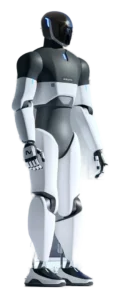
NEURA 4NE1 Gen 3 appears at CES 2026 with expanded pilot program signals
NEURA Robotics unveiled the 4NE1 Gen 3 at CES 2026 in Las Vegas, presenting the design publicly for the first time in collaboration with Studio F.A.
Full assessment4 claims · 3 technical notes · 2 sources
Where it standsAutonomy LadderIIIIIIIVVLevel IIIConditional AutonomyHuman ReadinessReady NowNew to MarketWaitKnown IssuesNot ratedPre-Consumer Assessment03050717675PromisingWhat happenedPorsche. The CES showing also introduced the 4NE1 Mini and a new NEURA Quadruped Robot. Manufacturer communications highlighted ongoing industrial pilot activity and reservation interest without announcing a consumer availability date or updated pricing.
WatchingNext: whether CES engagement converts to disclosed pilot customer announcements or a narrowed release window.
Bottom lineCES 2026 was a commercial visibility exercise for the 4NE1 Gen 3, not a capability announcement. The platform's classification and readiness assessment are unchanged.
ImpactOn autonomy
- No new autonomy capabilities announced; Gen 3 hardware and software architecture unchanged from Automatica showing
- Collaborative workspace operation reiterated as primary deployment mode
- Task-specific training requirement remains a documented constraint on autonomous coverage
On readiness
- CES appearance maintains platform visibility with institutional and industrial buyer audience
- No consumer shipping date or pricing update disclosed at CES 2026
- Reservation interest noted by manufacturer; no confirmed order count or delivery schedule
- Industrial pilot framing reinforces non-consumer positioning in near term
Claim check4 maker claims checked against the record. Open one to read the finding.
Platform ready for industrial pilot deployment
Documented findingManufacturer communications reference ongoing pilot programs; no specific customer names, deployment counts, or outcome data published as of CES 2026Reservation interest signals consumer market demand
Documented findingReservation interest is noted in manufacturer communications; conversion rates, pricing tiers, and delivery timelines were not disclosed at CES 2026NEURA Robotics is expanding internationally
Documented findingCES debut included new-generation reveal with Studio F.A. Porsche design collaboration and two additional platform introductions (4NE1 Mini, NEURA Quadruped); confirmed international deployment footprint outside Germany is not documented in available press coverage4NE1 Gen 3 is production-ready hardware
Documented findingPlatform presented at CES uses same Gen 3 specification as Automatica 2025 showing; no production ramp data or manufacturing volume figures were disclosedEvidence2 sources · 1 linked
- 1NEURA Robotics Press Release (CES 2026)7 Jan 2026
- 2CES 2026 Official Exhibitor Directory7 Jan 2026named, not linked
Technical notes3 sectionsCES 2026 Context
NEURA Robotics unveiled the 4NE1 Gen 3 at CES 2026 in Las Vegas in January 2026, presenting the design publicly for the first time. The robot was developed in collaboration with Studio F.A. Porsche. The CES showcase also introduced the 4NE1 Mini and a new NEURA Quadruped Robot. This represented the platform’s first full public reveal rather than a repeat appearance.
Platform Status at Time of Showing
The 4NE1 Gen 3 specification presented at CES 2026 reflects the same hardware documented at Automatica: dual-arm 23 DOF configuration, LiDAR plus stereo-vision perception, tactile force-feedback skin, and approximately 100 kg payload capacity. MSRP documented at $98,000 in institutional channels; no consumer-tier pricing was disclosed.
Commercial Signals
Manufacturer communications at CES referenced industrial pilot programs and reservation interest without providing customer names, deployment numbers, or timeline commitments. This positions the CES showing as brand and commercial visibility work rather than a product capability or availability advance.
- 2025
-
NEURA 4NE1 Gen 3 debuts at Automatica 2025 with dexterous manipulation demo
NEURA Robotics showcased the 4NE1 Gen 3 at Automatica 2025 in Munich, demonstrating dual-arm dexterous manipulation with force-sensitive tactile skin and a documented payload capacity approaching 100 kg.
Full assessment4 claims · 3 technical notes · 2 sources
Where it standsAutonomy LadderIIIIIIIVVLevel IIIConditional AutonomyHuman ReadinessReady NowNew to MarketWaitKnown IssuesNot ratedPre-Consumer Assessment03050717675PromisingWhat happenedThe demo represented the first public showing of Gen 3 hardware and confirmed multi-generation capability progression.
WatchingNext: whether pilot deployment commitments translate to production availability timelines.
Bottom lineHardware capability demonstrated at Automatica 2025 is credible and advances the platform, but deployment readiness depends on software integration scope that was not shown publicly.
ImpactOn autonomy
- Dual-arm force-feedback coordination demonstrated in live manipulation tasks
- Tactile sensor array enables contact-aware grasping across varied object surfaces
- Reactive obstacle avoidance shown in shared workspace alongside human operators
- LiDAR plus stereo-vision navigation confirmed functional in exhibition floor conditions
On readiness
- First public Gen 3 hardware appearance establishes platform credibility for institutional buyers
- Payload rating near 100 kg opens industrial assembly use cases previously out of reach
- No consumer pricing or availability timeline disclosed at Automatica showing
- Deployment requires technical integration team; no turnkey offer announced
Claim check4 maker claims checked against the record. Open one to read the finding.
Super-sensitive skin enabling human-safe collaboration
Documented findingPress coverage describes tactile sensor array providing force-feedback; specific contact-force thresholds and certification status not publicly documented at time of showingCan lift 220 pounds (approximately 100 kg)
Documented findingPayload figure cited in press coverage; demonstrated in controlled exhibition conditions with structured objects; performance on irregular loads in uncontrolled environments not independently verifiedGeneralized dexterous manipulation for work and life
Documented findingDemo tasks were structured and pre-configured; manufacturer documentation acknowledges task-specific training requirement before deployment in new scenariosMulti-generation capability progression
Documented findingManufacturer materials reference improvements in joint compliance and force-feedback sensitivity versus prior 4NE1 generations; direct comparative specs not publishedEvidence2 sources · 1 linked
2125 Jun 202527 Jun 2025filed 25 Jun 2025- 1Forbes27 Jun 2025
- 2Automatica 2025 Official Exhibitor Coverage25 Jun 2025named, not linked
Technical notes3 sections
Hardware Specification Highlights
The Gen 3 4NE1 is a full-body humanoid platform with dual arms providing 23 DOF total articulation. Payload capacity of approximately 100 kg was demonstrated at Automatica 2025 and cited in press coverage. Tactile skin with distributed force-feedback sensors covers contact surfaces, enabling compliance-aware grasping across varied object geometries. Physical dimensions documented at 158 cm height and 80 kg body weight (manufacturer spec sheet; unit weight confirmed separately at 176.4 lbs in Robovations record).
Perception and Navigation
Navigation architecture integrates LiDAR with dual-camera stereo vision for spatial mapping and reactive obstacle avoidance. System operates in structured indoor environments; outdoor terrain and dynamic unstructured environments are not part of the documented operational design domain at this generation.
Context
Automatica 2025 was held in Munich in late June 2025. The 4NE1 Gen 3 was among several next-generation humanoid platforms shown at the event. No firmware version or software release identifier was associated with the Automatica demonstration in available press coverage.