Skip to content
Saved
REVEALED 2023.08REASSESSED 2026.08.04
Apptronik

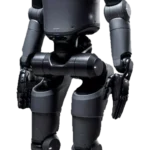
Apptronik Apollo

Anthropomorphic form factor with dexterous arms and demonstrated bipedal locomotion. Engineering signals maturity; whether the company can ship autonomous household operation without teleoperation as a crutch remains unproven.
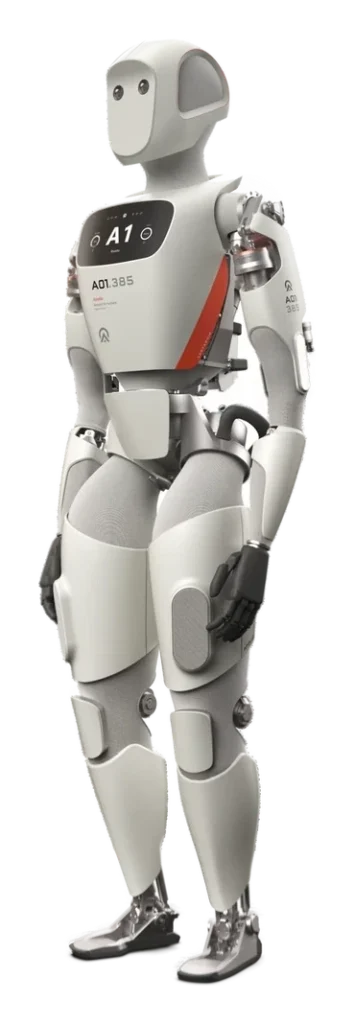
Apptronik Apollo
PriceNot listedNot tracked yet
FIT CHECK

Will the Apptronik Apollo fit your scenario?

Describe your scenario using the controls. Each choice reads the spec sheet for you, flagging where the Apptronik Apollo is built for your space and where it isn’t.

Where it operates

Primary tasks

Supervision needs

Timeline

A classification of fit for the conditions you set, not a recommendation. Verdicts describe engineering design intent, not test results.

SPECIFICATION

The full spec sheet.

Manufacturer-published figures, measured against every humanoid robots we track.

5′9″ average adult68 in5′ 8″FRONTDimensional drawing
Key specificationsManufacturer-published
Weight
160 lbs
Where it lands · ranked across 54 humanoid robotsThis robotMedianTypical range
Runtime240min
60 min600 min
Near median
Weight160lbs
26.46 lbs197.4+ lbs
Near median

Position shows where the figure sits across the tracked category, not a quality judgment.

RECORD

How the assessment has moved.

Every announcement, release and reassessment behind the current classification.

Coming soon
Just launched
Active updates
Settled
Discontinued
  1. Jul 2026 · AssessmentPre-Release Assessment recorded at 49 of 100
  2. Jul 2026 · AssessmentPre-Release Assessment revised 49 → 51
  3. Aug 2026 · AssessmentPre-Release Assessment revised 51 → 59
Editorial comparisons

How Apptronik Apollo compares.

All comparisons →
Common questions

What people actually ask.

7 answered
OperationCan Apollo operate without a human teleoperator?
Apptronik has published no end-to-end autonomy claim. Mercedes-Benz described employees transferring task knowledge to Apollo through teleoperation and augmented reality, with autonomous operation named as the next step, so teleoperation is documented as a training and data-collection channel rather than a stated runtime requirement. How much of a work cycle Apollo completes without operator input is not disclosed.
ComparisonHow does Apollo's arm design compare to other humanoid platforms?
Apollo has been shown with simplified task grippers sized for boxes and totes rather than multi-fingered hands. Comparative durability, speed, and precision data against other humanoid platforms is unavailable.
OperationHow is Apollo sold?
Apollo is a commercial platform and is not sold at retail. Deployments have run under negotiated programs with named customers: Mercedes-Benz from March 2024, expanded alongside a Mercedes investment in March 2025; GXO Logistics from June 2024; and Jabil from February 2025. Standard commercial terms have not been published.
OperationWhat is Apptronik's manufacturing and delivery track record?
Apptronik emerged from university robotics with institutional funding. Apollo has run in paid customer programs since March 2024, and Apptronik operates Robot Park sites where fleets run continuously to collect production data. Unit volumes built and delivered have not been published.
OperationDoes Apollo climb stairs or traverse uneven terrain?
Published demonstrations cover flat surfaces and low-incline walking. Stair and off-road capability is not documented. Direct manufacturer inquiry recommended for task-specific capability claims.
OperationWhat are the battery specs and operational runtime?
Capacity, charge time, and runtime have not been published. Endurance and the charge or swap cadence determine how much of a shift a unit covers, and neither Apptronik nor its named customers have disclosed those figures.
OwnershipHow much does Apollo cost?
No price has been announced. The only public figure from Apptronik is a target bill of materials under $50,000, which is a build cost target rather than a purchase price. Terms for the customer programs have not been disclosed.

Cite / Embed

Reference the Apptronik Apollo classification.

Embed the Autonomy Ladder™ mark or copy the citation. The mark is served from this record rather than saved as a file, so it always shows the level we currently hold. If we reassess, it updates on your page by itself.

  • The mark must link to this record. An unlinked mark is not authorised.
  • No recolouring, cropping, rotating, restyling, or re-typesetting. Scale proportionally only, up to 2×: the seal to 536px wide, the standard to 224px.
  • Leave clear space equal to half the numeral tile on all sides: 32px on the seal, 22px on the standard.
  • The mark states a classification, not an endorsement. It may not appear beside language implying Robovations recommends, rates, or approves the product.
  • Hot-link the image from robovations.com. Do not download, self-host, proxy or re-upload it: a saved copy stops updating, and a mark that has stopped updating is a claim we no longer stand behind.
  • The mark is live. It reflects the classification on this record as it stands. If we reassess, it changes on your page automatically. If we withdraw the classification, it stops rendering. Nothing is required from you either way.
Citation
Where to next

Three ways to keep going.

For browsers

See every Level II.

Every robot we’ve classified at assisted autonomy. Sorted by readiness, score, and price. Filter by category, manufacturer, or release date.

Updated weekly with new entries and reclassifications.