Skip to content
Saved
REVEALED 2025.02REASSESSED 2026.08.04
Foundation

Foundation Phantom

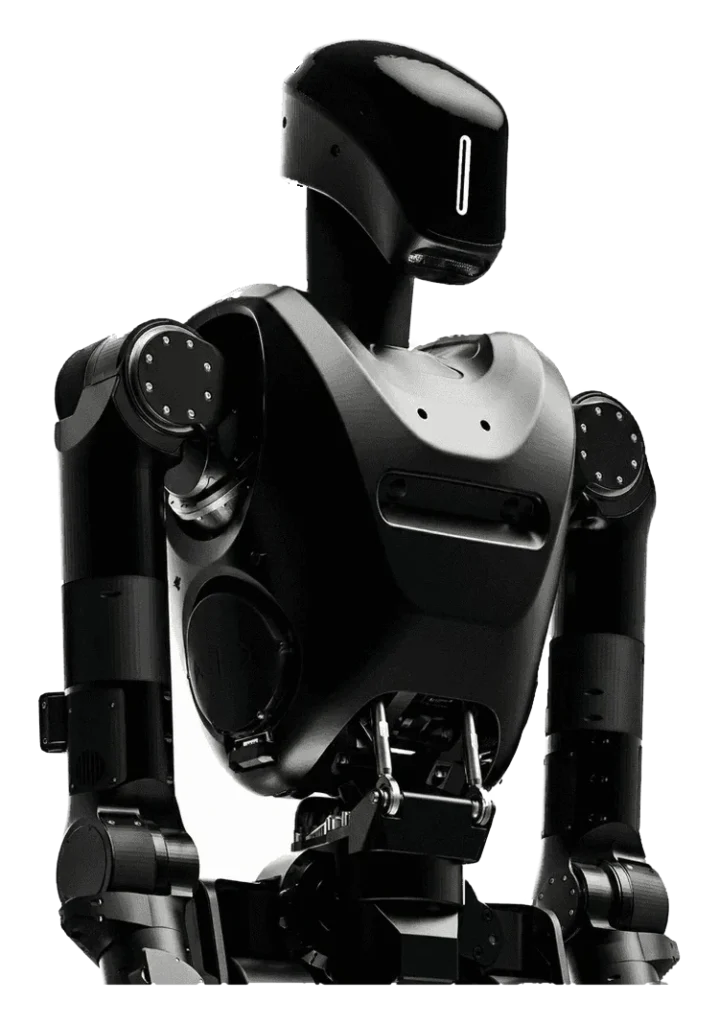
Proprietary rolling contact gearboxes and a camera-only perception stack differentiate the Phantom at the hardware level. Teleoperation remains central to the operating model, placing it firmly at Level II. The production gap between a reported 2025 target of approximately 40 units and a 10,000-unit 2026 target is the defining open question.
Foundation Phantom
PriceNot listedNot tracked yet
FIT CHECK

Will the Foundation Phantom fit your scenario?

Describe your scenario using the controls. Each choice reads the spec sheet for you, flagging where the Foundation Phantom is built for your space and where it isn’t.

Where it operates

Primary tasks

Supervision needs

Timeline

A classification of fit for the conditions you set, not a recommendation. Verdicts describe engineering design intent, not test results.

SPECIFICATION

The full spec sheet.

Manufacturer-published figures, measured against every humanoid robots we track.

5′9″ average adult68.9 in5′ 9″FRONTDimensional drawing
Key specificationsManufacturer-published
Weight
175 lbs
Mapping & navigation

Camera-only (8 cameras, no LiDAR); hybrid LLM reasoning plus physics-based action models; reinforcement learning locomotion

Where it lands · ranked across 54 humanoid robotsThis robotMedianTypical range
Runtime120min
60 min600 min
Near median
Weight175lbs
26.46 lbs197.4+ lbs
Above median

Position shows where the figure sits across the tracked category, not a quality judgment.

RECORD

How the assessment has moved.

Every announcement, release and reassessment behind the current classification.

Coming soon
Just launched
Active updates
Settled
Discontinued
  1. Jul 2026 · AssessmentPre-Release Assessment recorded at 39 of 100
  2. Aug 2026 · AssessmentPre-Release Assessment revised 39 → 41
Common questions

What people actually ask.

7 answered
OperationWhat tasks has the Phantom MK1 actually performed in documented deployments?
Automotive parts racking and unracking in a US factory (reported as 2025 pilot deployment) and logistics runs plus reconnaissance sweeps in Ukraine (February 2026). Both contexts involved supervised operation, not fully autonomous task completion. The Ukraine testing was reported in May 2026 as showing the platform unsuitable for battlefield use without significant upgrades.
OperationDoes the Phantom MK1 use LiDAR for navigation?
No. Foundation uses eight cameras with no LiDAR, citing a philosophy that additional sensors add noise. The perception system pairs camera feeds with the hybrid LLM-plus-physics AI stack for environmental interpretation.
OperationWhat happened with Foundation's General Motors partnership claims?
In June 2024, CNBC reported that Foundation fundraising materials claimed GM as a committed customer with a targeted $300 million purchase order. GM denied any such commitment. Foundation co-founder LeBlanc confirmed the denial publicly.
OperationWhy is the Phantom MK1 classified at Level II if it has an onboard AI stack?
The Autonomy Ladder requires end-to-end task completion without teleoperator involvement. Manufacturer documentation and press coverage confirm teleoperation via VR headset or supervised remote control remains part of the operating model, which caps classification at Level II regardless of onboard capabilities.
OperationIs the Phantom MK1 available to purchase?
No retail or direct-purchase channel exists. The robot is available via research contracts and a lease model (approximately $100,000 per year) to qualified industrial and defense partners only.
OperationHow much can the Phantom MK1 carry?
About 20 kg, roughly 44 lb. Independent coverage and Ukraine’s February 2026 field testing agree on that figure, and the testers named it as a limitation for resupply work.
OperationWhat is the Phantom MK2 and what changes from the MK1?
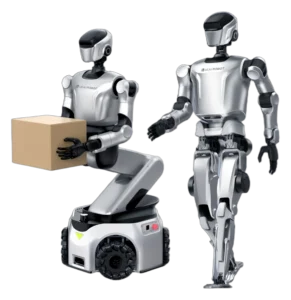
Foundation describes the Phantom 2 as doubling the MK-1’s payload, which would take it from about 20 kg (44 lb) to about 40 kg (88 lb). The reported change list runs wider than the actuators: consolidated electronics to reduce short-circuit risk, added waterproofing, larger battery packs, and cast-moulded bodywork to cut manufacturing cost. Waterproofing and battery capacity are two of the shortfalls Ukrainian testers named in the MK-1. The MK2 is dated to April 2026.

Cite / Embed

Reference the Foundation Phantom classification.

Embed the Autonomy Ladder™ mark or copy the citation. The mark is served from this record rather than saved as a file, so it always shows the level we currently hold. If we reassess, it updates on your page by itself.

  • The mark must link to this record. An unlinked mark is not authorised.
  • No recolouring, cropping, rotating, restyling, or re-typesetting. Scale proportionally only, up to 2×: the seal to 536px wide, the standard to 224px.
  • Leave clear space equal to half the numeral tile on all sides: 32px on the seal, 22px on the standard.
  • The mark states a classification, not an endorsement. It may not appear beside language implying Robovations recommends, rates, or approves the product.
  • Hot-link the image from robovations.com. Do not download, self-host, proxy or re-upload it: a saved copy stops updating, and a mark that has stopped updating is a claim we no longer stand behind.
  • The mark is live. It reflects the classification on this record as it stands. If we reassess, it changes on your page automatically. If we withdraw the classification, it stops rendering. Nothing is required from you either way.
Citation
Where to next

Three ways to keep going.

For browsers

See every Level II.

Every robot we’ve classified at assisted autonomy. Sorted by readiness, score, and price. Filter by category, manufacturer, or release date.

Updated weekly with new entries and reclassifications.