
Technology-shift
Vision-only robot mowers: can camera systems match RTK precision?
Lawn-mower autonomy splits between RTK (GPS-assisted, pre-mapped) and vision-only (camera-based SLAM, map-on-deploy).
We may earn commission from qualifying purchases. This does not influence the comparison.
The technological divide
Two architectures, two failure modes
The category has split into two architectural approaches. Each works well in some conditions and breaks down in others.
RTK (Real-Time Kinematic) GPS
A ground base station corrects the robot’s satellite position to within a few centimeters — but on a single frequency, so a blocked signal can drop the lock.
Uses satellite corrections (RTK signal) to achieve centimeter-level lawn boundaries. Requires pre-fence mapping and a base station. Cost-intensive and location-dependent, but highly precise for established property layouts.
- Consistent sub-5cm boundary accuracy
- Operates in low-light conditions
- Requires clear open-sky view
- Cannot map new layouts autonomously
vSLAM (visual simultaneous localization and mapping)
The robot finds its way by recognizing landmarks through an onboard camera, the way a person navigates by sight.
Uses onboard cameras to build a map and navigate without external signals. Deploys instantly on any lawn; no base station or setup. Maps visible edges only, so performance degrades in dim light or reflective terrain.
- Operates well in bright daylight
- Boundary varies with lighting conditions
- Deploys instantly, no pre-mapping
- Cannot detect buried or wire-based edges
Where each robot sits
Does the architecture pay off?
Horizontal: where each robot sits between the two architectures. Vertical: its documented result on the headline test.
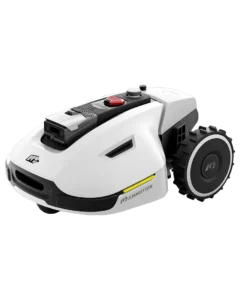
 Mammotion Yuka 2000Precise
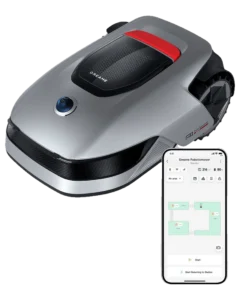
 Dreame Roboticmower A1Reliable
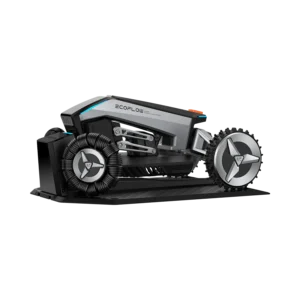
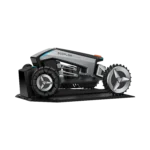 EcoFlow BladeStable
Vertical axis — documented result on: Maps lawn edges in full sunlight
What each architecture can and can’t do
Capability tests
Each capability is documented from owner reports, manufacturer specifications, or third-party reviews. No in-person testing.
Mammotion Yuka 2000Dreame Roboticmower A1EcoFlow BladeWhat the architecture difference means
Different homes, different sensor stacks
Where each architecture fits, by condition.
Established layouts with RTK hardware ready
RTK mowers suit properties where perimeter setup is feasible and centimeter-level precision is a requirement. The base station and initial mapping cost upfront, but boundary consistency then becomes automatic.
Frequent property changes or rental properties
Vision-only mowers deploy to any lawn instantly without external infrastructure. Trade-offs appear in shaded yards and reflective surfaces, where optical mapping drifts more than satellite-guided edges.
Mixed-light yards or tall shade trees
Neither architecture claims flawless performance under variable light. RTK remains precise in shadow but requires setup; vision-only struggles in shade and cannot deploy in dim conditions at all.
Common questions