
Mammotion Yuka 2000
Wire-free mower suited for residential yards seeking autonomy without boundary-wire labor. Vision-based navigation trades weather reliability for installation simplicity.
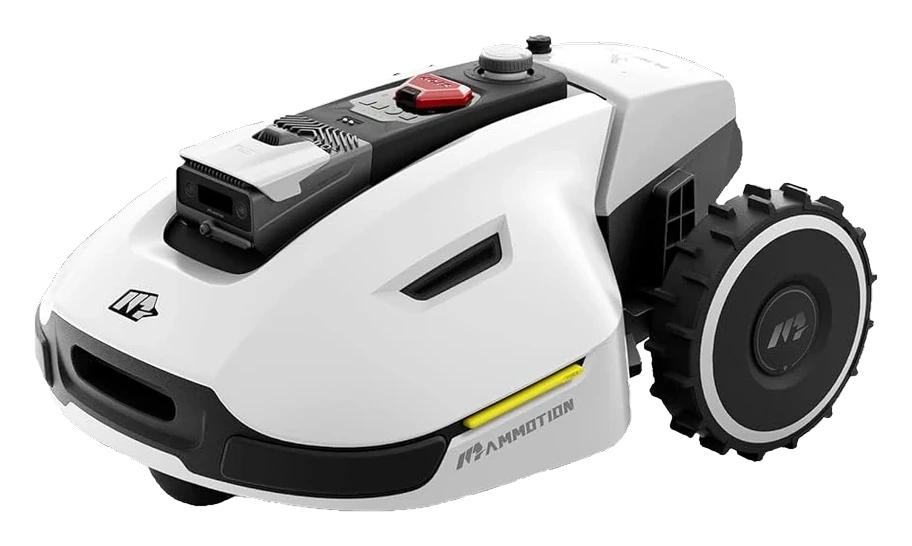
Will the Mammotion Yuka 2000 work on your yard?
Describe your yard using the controls. Each choice reads the spec sheet for you, flagging where the Mammotion Yuka 2000 is built for your space and where it isn’t.
A classification of fit for the conditions you set, not a recommendation. Verdicts describe engineering design intent, not test results.
Living with it.
Steady 12-month firmware improvements with occasional edge-case stuck instances; rare critical failures reported.
↗ Improvingowner-reported arc
Vision-based position tracking shows mapping drift after 90+ minutes affecting 10-15% of sessions per forums. Blade stall common in spring regrowth on thick or wet grass.
Inspect the for grass wrap and damage; clean the camera windows with a soft cloth.
Check the edges and the disc mounting bolts. Blades are stamped consumables sold in sets and are replaced rather than sharpened; grinding an edge removes the coating and weakens a blade running unattended.
Inspect the dock and clear debris from the charging plate.
Store the machine and its pack indoors above freezing, with charge in the battery. Do not run the pack down before storage; a lithium cell left near empty for months can self-discharge past its protection floor and not come back. Top it up during the layup, and re-check the map at the start of the season.
Swap the sweeping deck, allowing a few minutes per change, and reset the working slope limit to 18 percent while it is on.
$1,899 to buy, then about $80 a year in replaceable parts. Over three years that is roughly $240 past the sticker price. Excludes electricity and any repairs.
-
Blade contact risk minimalEnclosed design prevents finger contact during autonomous operation; no reported incidents in residential use.
-
CautionBoundary mapping accuracy criticalPoorly mapped boundaries may cause unintended movement; use visual markers to reduce collision risk.
The full spec sheet.
Priced near the category median, with every figure charted against the category below.
- FootprintThe width, depth and height of the robot itself, without its dock.
- 20.4 × 25.5 in · 13 in tall•
- WeightThe robot alone, without its dock, as the maker states it.
- 34.4 lbs•
- BatteryStored energy in watt-hours; a larger pack runs longer, not harder.
- 97 Wh · Li-ion
- Wi-FiThe bands the robot can join; many models need a 2.4 GHz network to set up.
- Supported✓
- Cutting width
- 12.6 in✓
- Cutting height range
- 1.2-3.9 in✓
- Max area
- 21,500 sq ft✓
- Max slope
- 45%•
- Boundary method
- Wire-free, RTK fused with 3D vision•
- Drive layout
- Rear-wheel drive
3D vision positioning with RTK fusion (UltraSense AI Vision, 200+ object recognition classes); separate RTK station taking corrections over home Wi-Fi or 4G
Position shows where the figure sits across the tracked category, not a quality judgment.
How the assessment has moved.
Every announcement, release and reassessment behind the current classification.
-
Sep 2026 · AssessmentRecord status: Verified → Provisional
-
Aug 2026 · AssessmentRobovations Score rescored under v4.2: 68 → 73
-
Jul 2026 · AssessmentRobovations Score revised 79 → 68
-
Apr 2026 · AssessmentRobovations Score recorded at 79 of 100
-
Apr 2024 · AnnouncementAnnounced as wire-free vision mower before commercial launch
What people actually ask.
OperationHow does it know yard boundaries without a physical wire?
OperationDoes it work reliably in rain or wet grass?
OperationWhat happens when battery runs low?
OperationHow steep of slopes can it handle?
OwnershipHow often do blades need replacement?
OwnershipDoes the sweeping deck attachment require extra maintenance?
OperationWhat happens if it gets stuck or encounters a malfunction?
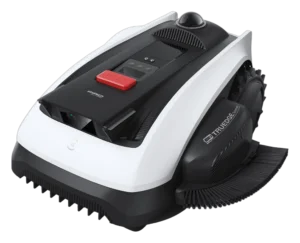 III
III
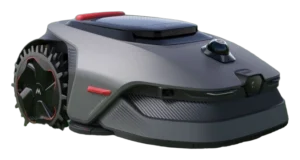
Ecovacs GOAT O1200 LiDAR PRO
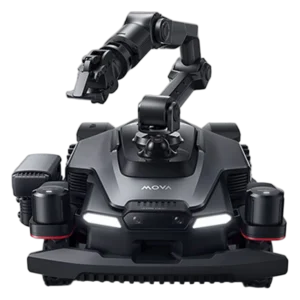
 III
III
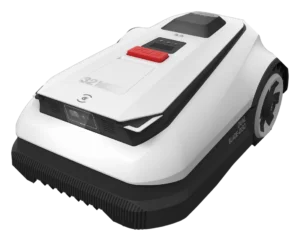
MOVA LiDAX Ultra Gen 2
Where it's sold
We may earn commission from qualifying purchases. This does not influence classification.
We are no longer finding a current new-stock listing for this robot. Remaining offers may be used, refurbished, or third-party — confirm the condition and price on the retailer’s page before buying.
Reference the Mammotion Yuka 2000 classification.
Embed the Autonomy Ladder™ mark or copy the citation. The mark is served from this record, so a reassessment updates it on your page automatically.
Get the embed code and citation
Scale proportionally only, up to 2× (536px wide)(224px wide). No recolouring, cropping, rotating, or re-typesetting.
Robovations. "Mammotion Yuka 2000: Autonomy Level III (Conditional Autonomy)." Autonomy Ladder™, assessed August 2026. https://robovations.com/robots/mammotion-yuka-2000/
- Link it. The mark must point at this record. An unlinked mark is not authorised.
- Hot-link it. Never download, self-host, or re-upload the image. A saved copy stops updating, and a mark that has stopped updating is a claim we no longer stand behind.
- A classification, not an endorsement. It may not appear beside language implying Robovations recommends, rates, or approves the product.