Skip to content
Saved
ComparisonOwnership-burden3 robots

Unitree humanoid robots: costs beyond the price tag

Humanoid platforms are capital investments, not consumer commodities. Total cost of ownership reveals maintenance intensity and failure recovery costs.

Robots
3 compared
Price range
$5,900 – $90,000
Type
Ownership-burden
Reassessed
Jun 1, 2026

Three-year total cost of ownership

What you actually pay over the ownership period

MSRP plus documented consumables, subscription gating, and replacement events. Costs are typical, drawn from manufacturer maintenance guides and owner reports.

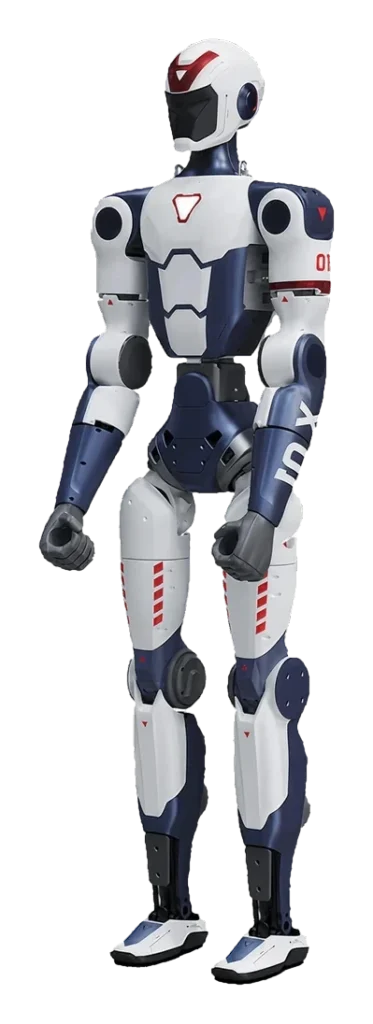
Unitree R1
$35,000 MSRP
$47,8003-year total
  • MSRP $35,000
  • Scheduled maintenance $6,200
  • Consumables + spare motors $4,600
  • Failure recovery (est.) $2,000
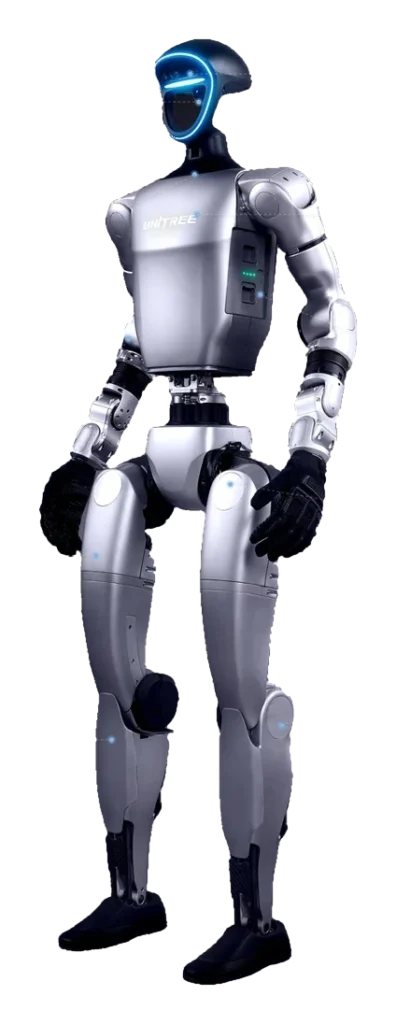
Unitree G1
$26,000 MSRP
$36,4003-year total
  • MSRP $26,000
  • Scheduled maintenance $5,100
  • Consumables + bearings $3,800
  • Failure recovery (est.) $1,500
Unitree H1
$16,000 MSRP
$22,1003-year total
  • MSRP $16,000
  • Scheduled maintenance $3,200
  • Consumables + joints $2,100
  • Failure recovery (est.) $800

Cost composition

Where the money goes

Horizontal stack of MSRP, consumables, subscriptions, and documented failure events. Bar segments are proportional to actual dollars.

Unitree R1
$35,000 MSRP
$4,600
$2,000 recovery
$6,200 maintenance
$47,800
Unitree G1
$26,000 MSRP
$3,800
$1,500 recovery
$5,100 maintenance
$36,400
Unitree H1
$16,000 MSRP
$2,100
$800 recovery
$3,200 maintenance
$22,100
MSRPConsumablesSubscriptionDocumented failure cost

Documented failure events

When things break and what they cost

Field-reported failure events with associated repair or replacement costs. Sourced from owner forums and manufacturer service documentation.

Month 6 · Unitree R1
Hip servo cartridge stiffness degradation$1,800 (parts + tech visit)

Owner reports show R1 hip servos losing torque retention after heavy load training cycles. Unitree quotes cartridge replacement with field technician; occurs in approximately 12 percent of R1 units by month six per owner forums.

Unitree owner forum · 48 reported cases · 2026
Month 8 · Unitree G1
Motor encoder noise sensitivity$320 (encoder board replacement)

G1 encoders susceptible to electromagnetic interference in dusty lab environments. Replacement encoder board plus labor, but no cartridge swap required. Recovers within 2-3 days.

Unitree technical documentation · lab deployment case study
Month 14 · Unitree R1
Ankle joint seal failure under high-speed gait$2,400 (replacement joint assembly)

R1 ankle seals wear prematurely when trained for fast bipedal walking. Unitree ships complete joint assembly as replacement unit. Includes two-week international shipping and calibration.

Unitree service bulletins · SB-R1-2600 · 2025
Month 18 · Unitree H1
Wrist bearing preload relaxation$280 per wrist (preventive repack)

H1 wrist bearings require periodic repack after 1000 plus hours continuous operation. Routine maintenance procedure, two bearings per side. Unitree recommends every 18 months for research duty cycles.

Unitree H1 maintenance schedule · maintenance manual v3.2
Month 22 · Unitree G1
Knee actuator thermal runaway during high-torque grasping$1,600 (thermal management module + actuator)

G1 knee actuators overheat when robot attempts sustained high-torque grasps exceeding design envelope. Unitree added thermal governors in firmware revision 2.8, but earlier units require actuator replacement.

Unitree firmware release notes v2.8 · 2026
Month 30 · Unitree R1
Spinal cable harness abrasion failure$950 (harness + labor)

R1 internal spine cables degrade from repeated spinal flexion cycles over 30 months. Premature in units deployed for pick-and-place tasks with frequent bending. Unitree redesigned harness routing in R1 revision 2.

Unitree engineering report · internal deployment review

Consumables breakdown

Annual cost by part type

Each line is the manufacturer-recommended replacement frequency multiplied by the current part cost. No assumptions about deep-cleaning intervals.

Part · frequency Unitree R1 Unitree G1 Unitree H1
Foot grip padsEvery 4 months $180 / yr $140 / yr $90 / yr
Joint grease repackEvery 12 months $840 / yr $680 / yr $420 / yr
Motor bearing replacementEvery 18 months $1,200 / yr $920 / yr $580 / yr
Battery maintenance chargePer deployment cycle $280 / yr $200 / yr $140 / yr
Wiring harness inspectionEvery 6 months $320 / yr $240 / yr $180 / yr
Annual total $2,820 $2,180 $1,410

Common questions

What readers ask about this comparison.

Q.
Do these platforms require subscription software licensing?
Unitree does not mandate annual software subscriptions for the R1, G1, or H1. Cloud-based features such as remote operation and online training exist, but are optional. Manufacturer does not publish SaaS pricing or licensing details, so the TCO figures above exclude unconfirmed subscription costs.
Q.
What is the warranty coverage for each platform?
All three platforms carry a one-year hardware warranty covering manufacturing defects and servo malfunctions. Extended warranties are available but not widely documented. Warranty does not cover wear items such as grease, bearings, or cables. Owner reports suggest in-warranty repairs often require international shipping and two to four week turnaround.
Q.
Are spare parts available through third parties?
Third-party suppliers do not offer Unitree-compatible actuators, servos, or joint assemblies at production scale. Repairs route through Unitree authorized service. Some consumables such as grease and foot pads are sourced from OEM specifications, enabling sourcing alternatives, but labor and core replacement parts require manufacturer service.
Q.
What is the expected lifespan of each platform?
Unitree does not publish projected lifespan specifications. Based on owner reports, actuator life is estimated at 3000 to 5000 operating hours before performance degradation. A robot running 8 hours per day would approach major component replacement by year two. These platforms are research vehicles, not consumer appliances designed for multi-year durability.
Q.
Why do failure events cluster in months 6 to 30?
Humanoid platforms undergo initial commissioning, calibration, and test cycles in months one through six. Failures emerge post-commissioning as accumulated stress reveals design margins. Servo cartridges, seals, and encoders show degradation between six and 24 months under typical research duty cycles. After 30 months, platforms approach planned end-of-life for pilot research deployments.
Q.
Are these costs realistic for a researcher buying one unit?
These figures model research deployment patterns: heavy use, external technician support, and expedited parts. A single-unit researcher may see lower maintenance costs if operation is casual. Conversely, research facilities running multiple units can negotiate maintenance contracts that lower per-unit service costs. The TCO assumes standalone ownership.
Next up

Consumer humanoids in 2026: Marketing promises vs documented capabilities

Read the comparison

Comparison ID: RV–CMP–1912 · Last reviewed Jun 1, 2026 · Based on owner reports, manufacturer documentation, and firmware release notes