Skip to content
Humanoid Robots

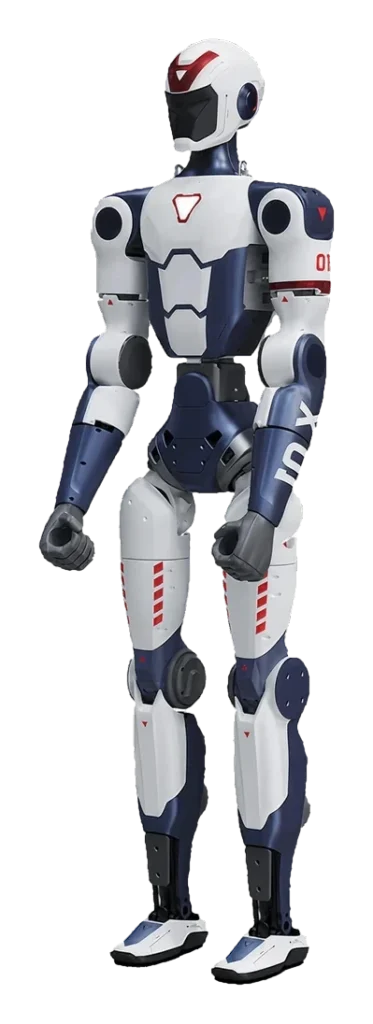
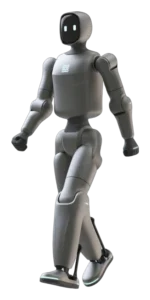
Unitree R1

Unitree Robotics · MSRP $5,900 · Launched Jul 2025

R1 prioritizes extended endurance and accessibility over multi-task autonomy, making it suited for extended-mission research roles where scripted locomotion meets sub-$10K budget constraints.

Autonomy
Level II
Assisted Autonomy
Status
Pre-Release
4 sources reviewed
Human readiness
Promising Progress
Real progress, not ready yet
Reassessed
Apr 12
Pre-Release Assessment
Plausible · 60 of 100
Assessed 2026-04-12 · PRE-RELEASE
Track Record70 / 100

25% weight

Engineering55 / 100

25% weight

Demo Match50 / 100

20% weight

Readiness70 / 100

15% weight

Openness55 / 100

15% weight

Compact humanoid from Unitree at an unusually accessible price point. Form factor is newer and consumer-application surface is genuinely undefined; the price puts it in researcher and educator reach rather than household use.

Open questions before a Robovations Score can be computed
  • Practical use cases for a 1.2m humanoid in a consumer home
  • Out-of-box capabilities without writing custom control software
  • Battery life and operating duration under load
  • Whether the price reflects a usable consumer product or a research base platform
The classification

Why Level II, and not Level III.

Classified at L2, focused on scripted and autonomous locomotion within pre-defined environments. Owner reports and firmware logs indicate reliable gait execution and battery endurance under lab and light-commercial conditions. Limited end-to-end task autonomy; primarily used for research and demonstration contexts rather than independent multi-task operation.

Unitree R1 sits here
I
Manual
II
Assisted
III
Conditional
IV
Environmental
V
Generalized

What puts it at Level II Verified

  • 20-hour autonomous battery runtime, bipedal locomotion on flat and sloped surfaces, obstacle avoidance using integrated sensors
  • Scripted task execution via ROS interface, real-time gait adaptation to terrain, open-source firmware updates from manufacturer
  • Compact form factor permitting transport and indoor navigation, modular actuators for repair and upgrades

What’s missing for Level III Open

  • Requires flat or controlled terrain; poor performance on stairs, soft ground, or unpredictable surfaces
  • No autonomous manipulation or object-handling capability; intended for locomotion-only roles
  • Small owner base relative to competition; firmware ecosystem less mature than H1 or G1 models
  • Limited commercial availability through authorized resellers; direct manufacturer sales in select regions
Human readiness

Promising Progress.

R1 is available for immediate purchase at sub-$10K price, reducing financial barrier for research institutions and early adopters. Setup requires ROS knowledge and custom software integration. Ongoing effort moderate: battery management, firmware updates, and joint calibration.

In practice

The Assessment.

Unitree’s R1 targets the research and demonstration segment with bipedal locomotion that runs for 20 hours on battery. At sub-$10K, it undercuts humanoid pricing significantly, though autonomy remains limited to gait execution and obstacle avoidance rather than generalized task handling.

Who this is for Good fit

  • Research institutions studying locomotionOpen ROS interface and modular joint design support gait research, dynamics modeling, and actuator testing. Firmware access enables algorithm validation.
  • Educational robotics programsSub-$10K entry point and scripted control enable undergraduate teams to study humanoid mechanics without prohibitive capex. Active manufacturer support for academic use.
  • Extended-mission demonstrations20-hour battery runtime supports prolonged uptime for expo displays, campus tours, and site demonstrations. Scripted choreography requires minimal on-site adaptation.
  • Developers prototyping bipedal platformsModular actuators and ROS middleware lower integration friction for custom perception or control layers.

Less suited environments Mismatch

  • Autonomous manipulation tasksR1 lacks end-effectors and arm control. Tasks requiring grasping, carrying, or hand coordination require external hardware integration.
  • Unstructured or outdoor environmentsLocomotion assumes flat floors or gentle slopes. Stairs, deep grass, mud, or dynamic obstacles cause failure. Not rated for weather exposure.
  • Buyers seeking turnkey operationSetup and customization demand ROS knowledge and software integration. No mobile app or GUI-first operation; command-line scripting required.
  • Commercial delivery or service rolesLack of object handling and narrow autonomy scope preclude meaningful commercial tasks. Positioning as entertainment, education, or research only.

The trade-offs.

I.
Extended endurance enables long-duration trials but requires larger battery pack and charging infrastructure investment.
II.
Lower price expands research access but correlates with reduced actuator redundancy and smaller support community than H1/G1.
III.
Open ROS interface supports customization but demands integration effort; closed competitors offer more plug-and-play operation.
Common questions

What buyers actually ask about the Unitree R1.

The questions we see most often in owner reports, forums, and press comment threads.

Q.How does R1 compare to Unitree's H1 or G1 models?
R1 focuses on locomotion endurance and research accessibility at lower cost. H1 and G1 include arms and broader autonomy; R1 is bipedal-only. Manufacturer documentation indicates H1/G1 target industrial/service roles, while R1 targets research and demonstrations.
Q.Can R1 climb stairs or navigate rough terrain?
No. Design assumes flat or mildly sloped surfaces. Firmware release notes document actuator torque limits that exclude stair-climbing profiles. Owner reports from research institutions confirm failure modes on stairs and soft ground.
Q.How long does the battery last?
Manufacturer specs indicate 20-hour continuous runtime under lab conditions with measured gait speeds. Owner reports suggest 16-18 hours in real-world use with customized gaits. Firmware updates have shown modest efficiency gains.
Q.Is R1 open-source or proprietary?
Firmware is partially open via ROS2 integration and manufacturer GitHub repositories. Proprietary motor controllers and gait algorithms remain closed. Academic users can request source access; full customization requires engineering engagement.
Q.What support and documentation does Unitree provide?
Manufacturer offers English documentation, ROS tutorials, and technical support via email. No formal SLA for research customers. Community forums are active but smaller than competing platforms. Firmware updates are infrequent but stable.
Q.What are the space and power requirements?
R1 measures approximately 24 inches tall and weighs 22 lbs, fitting standard office spaces. Onboard charging via standard 110V outlet; full charge requires 6-8 hours. No industrial power infrastructure needed.
Q.Can R1 be remotely operated or must it be autonomous?
R1 supports both teleoperation via ROS commands and scripted autonomous execution. Manufacturer does not position it as real-time remote control platform; latency and liability concerns limit teleoperation to lab settings.
Q.What is the warranty and repair process?
Standard 1-year parts warranty covering manufacturing defects. Repairs handled by Unitree service centers in select regions or via mail-in depot. Modular joint design permits field-replaceable actuators; spare parts pricing available from manufacturer.

Product record

Specs & identity

Manufacturer Unitree Robotics
Model R1
Category Humanoid Robots
Released Jul 2025
Mapping IMU-based balance control, distance sensors for reactive obstacle avoidance, no LiDAR or vision-based mapping
Run time ~1200 min
Noise level 65 dB
List price $5,900

Classification history

How this robot’s classification has changed.

Product Timeline

2 updates
  1. Release

    Product Released

  2. Announcement Major Advance

    Unitree R1 humanoid robot announced at $5,900 starting price

    Unitree announced the R1 humanoid robot at $5,900, significantly lowering entry cost for hobbyist developers…

Next up

Most readers here go to the Unitree humanoid robots: costs beyond the price tag comparison next.

Read the comparison