Can your robot vacuum, mower, and pool cleaner work together yet?
Three robots, three apps. In 2025 a shared standard put robot vacuums from different makers into one app. The mower and the pool robot test how far it reaches.
On this page3 sections
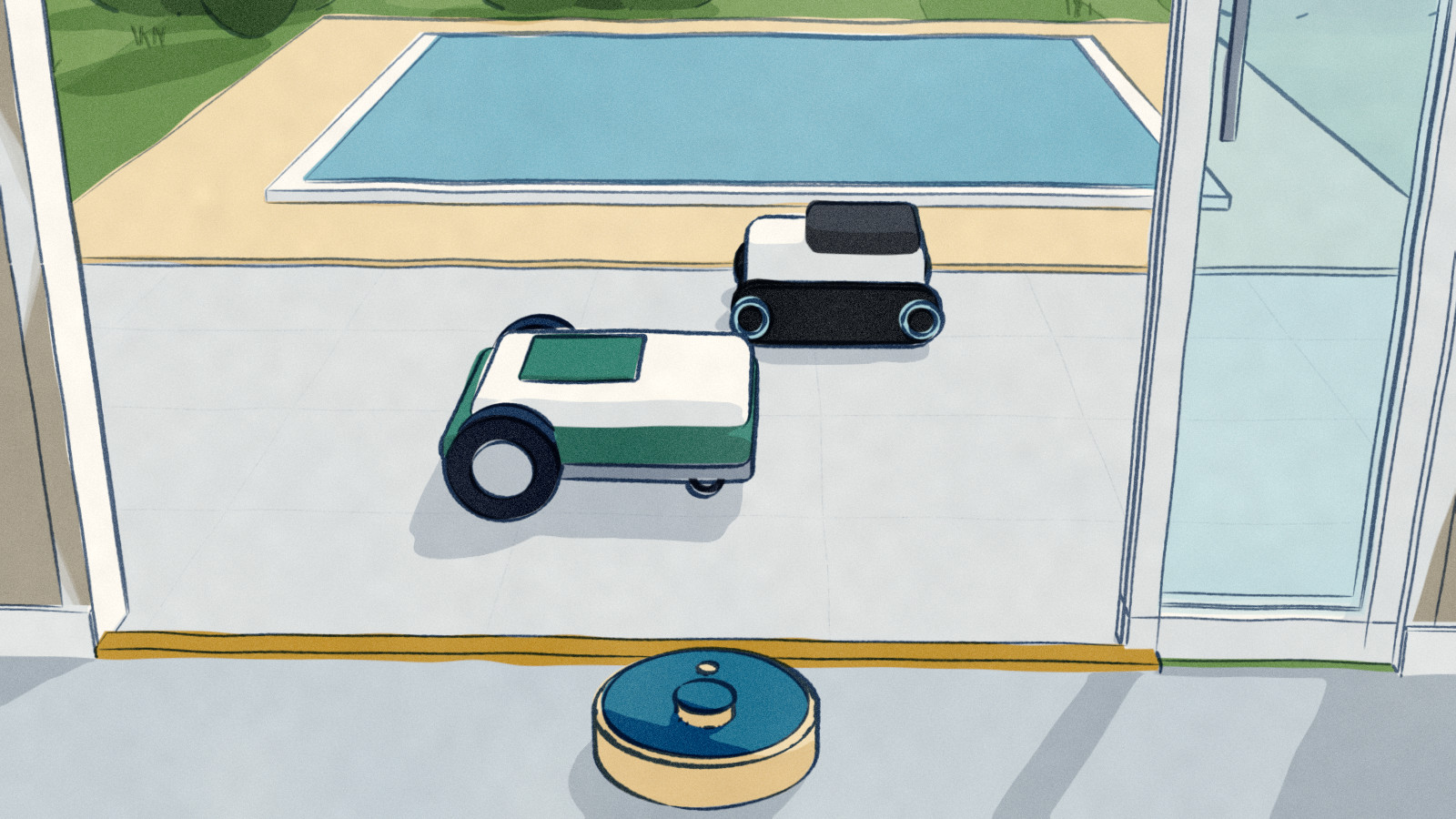
On a Saturday at a house with a lawn and a pool, three robots can be working at once. The vacuum has the ground floor, the mower has the yard, and the pool robot is somewhere along the bottom of the deep end. They arrived one at a time, often from whichever maker suited the job.
Put together, they make a drawer of unrelated appliances that happen to be robots. You start each one from a different app on your phone, and none of them knows the other two exist. So can they work together yet, or does the scheduling still fall to you?
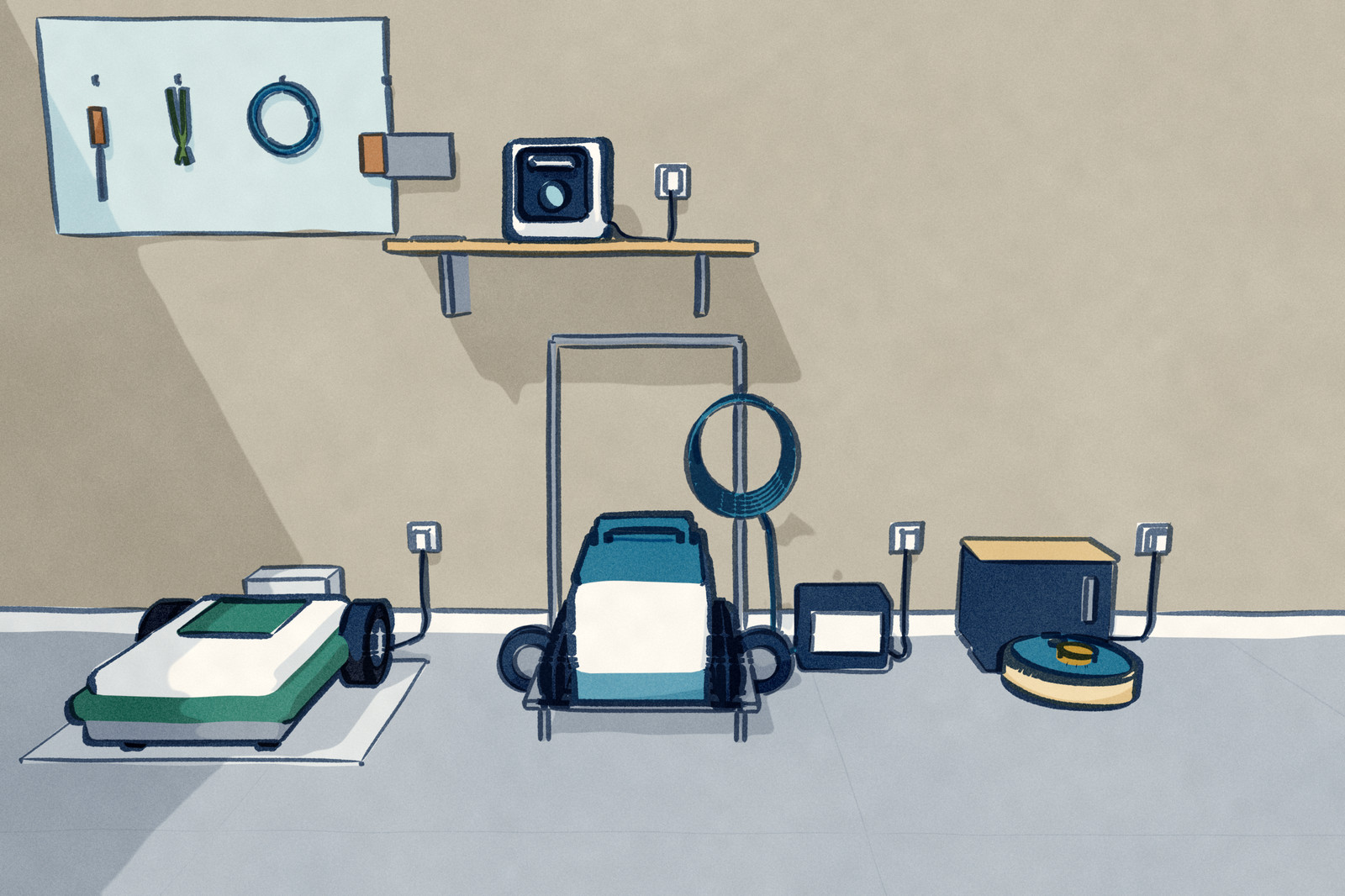
The fix on offer for the pile of apps is a shared standard called Matter, and in 2025 it reached robot vacuums in ordinary homes. How far it extends past the vacuum decides how many of those apps you keep, and whether one robot can ever hand a job to the next.
What Matter standardized for robot vacuums
Matter is governed by the Connectivity Standards Alliance, which added robot vacuums to the standard in October 2023. The vacuum’s device type covers the basics of a cleaning run: remote start and progress alerts, modes that separate dry vacuuming from wet mopping, and status such as brush condition, errors and charging.
Roborock’s support arrived in April 2025, in a firmware update the company rolled out to seven of its models over ten days. Among them were the S8 MaxV Ultra, the Saros 10 and the Qrevo Curv.
With iOS 18.4 or later, an iPhone could then run those vacuums from Apple’s Home app. Roborock’s own examples were an automation that cleans the living room every afternoon and asking Siri to “clean the kitchen.” The company named Google Home and Amazon Alexa among the other platforms.
So a Matter vacuum can be started, stopped, sent to a room and checked from a controller its maker didn’t build. For you, that puts the vacuum on the same screen as the lights and the thermostat, run from the same app.
Term
Matter controllerThe app or platform that sends a Matter device its commands and reads back its status, such as Apple’s Home app, Google Home or Amazon Alexa. The commands are the same whoever built the device, so one controller can run vacuums from different makers side by side.Where the mower and the pool robot stand
Matter’s list of robots is short. The September 2026 edition of its device list has a chapter for robotic devices, and the chapter holds a single entry: the robot vacuum. There’s no type for a robot mower and none for a pool robot.
The list does get as far as the lawn, though. It includes irrigation systems, the controllers that “schedule in-ground sprinkler systems for lawns.” So your sprinklers can answer to the same controller as your vacuum, while the mower that crosses that grass can’t join.
Why can’t the mower borrow the vacuum’s commands? One smart-home explainer answered that in July 2026: a mower needs commands and settings a vacuum never has, from “blade height, edge trimming,” to the position of the blades. As of that writing, there was “no way to integrate a robot lawn mower” into a Matter home.
Some automations still cross brands without Matter. A robot mower can be brought into Home Assistant, an automation platform, though “other platforms are lagging behind.” Otherwise, the mower’s schedule lives in its maker’s app, one more icon on your phone.
The pool robot is harder still to get hold of, because it works underwater. Beatbot’s AquaSense 2 Ultra returns to the surface and parks there after a run or when its battery runs low, and your app gets a notification. While it’s down on the pool floor, the app can do less.
Users can remotely control AquaSense 2 Ultra and switch modes through the app, but only when operating on the water surface.
What coordination would take
In a coordinated home, the mop would wait until the vacuum had finished the kitchen, and two cleaners sharing a floor would split it between them. That takes robots that publish where they are and what they plan to do, a shared model of the space, and something to settle it when two plans collide.
The first of those already exists, inside one brand. iRobot introduced the Roomba s9+ in May 2019 with a linking feature it calls Imprint. With it, a Braava jet m6 mop can be set to start mopping automatically once the s9 or another linked Roomba has finished vacuuming.
The link works because iRobot wrote both ends of the exchange. Between brands, the shared language is Matter, and the vacuum’s entry in it describes the vacuum alone: its mode, its progress, its brushes, its errors. Nothing in it carries another machine’s position or plans.
So the practical multi-robot home in 2026 is a set of parallel monologues. Each robot keeps its own map of its own ground, and the vacuum’s map of the ground floor and the mower’s map of the yard never meet. At a doorway or an open patio door, neither machine has any way to know the other is there.
For now, the three don’t work as one system. Only the vacuum has a place in Matter, the one handoff that works stays inside a single brand’s floor cleaners, and the mower and the pool robot are left out of the standard entirely.
On that Saturday, the scheduler is you. A Matter label can take the vacuum’s app off your phone, and the other two keep theirs. The handoffs stay in your head: the vacuum in the morning, the mower in the afternoon, the pool robot whenever nobody is swimming.