
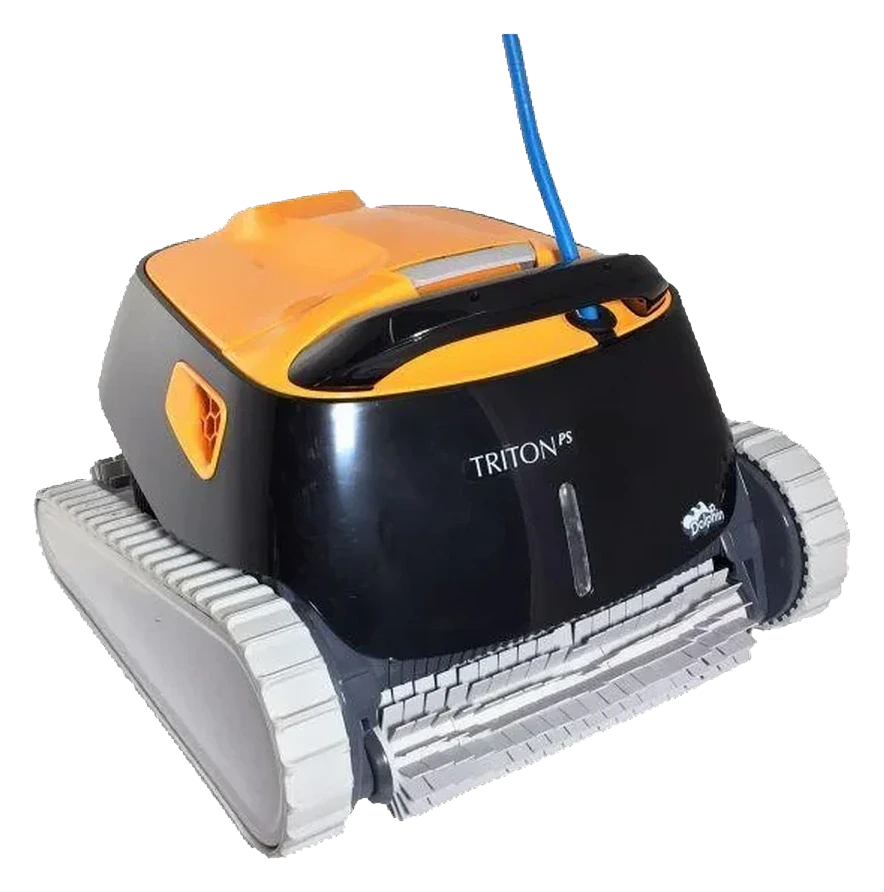
Maytronics Dolphin Triton PS
PowerStream steering jets hold the unit against the surface, which keeps the brush in contact on floors and walls and in moving water. Deployment is manual and there is no app: cycle selection and the weekly timer sit on the poolside power supply unit. Trade-off: the model is discontinued, with Maytronics moving the segment to the Dolphin ACTIVE line, so a new unit is no longer ordered from the manufacturer.
Will the Maytronics Dolphin Triton PS work in your pool?
Describe your pool using the controls. Each choice reads the spec sheet for you, flagging where the Maytronics Dolphin Triton PS is built for your space and where it isn’t.
A classification of fit for the conditions you set, not a recommendation. Verdicts describe engineering design intent, not test results.
The full spec sheet.
Priced below the category median, with every figure charted against the category below.
- Footprint
- 15.8 × 17.5 in · 11.4 in tall•
- Weight
- 18.7 lbs•
- Max pool length
- 39.4 ft•
- Cycle length
- 120 min•
- Power type
- Corded✓
- Surfaces cleaned
- Floor, walls and waterline✓
- Cable length
- 50 ft•
Two independent motors: floor and wall via PowerStream jet pressure
Position shows where the figure sits across the tracked category, not a quality judgment.
Living with it.
Eight years in market with stable two-motor operation. PowerStream pump and independent floor motor create dual failure vectors, but documented field performance shows rare pump seal failures.
Owner reports from eight-year user base document consistent performance with minimal unplanned service calls. PowerStream pump replacement (rare, ~$400 if needed) is the most common service intervention. No documented motor failures in field data. Filter cartridge is annual consumable.
The independent record is still forming. Failure modes are listed once an outside source reports them.
$1,049 to buy, then about $125 a year for the replaceable parts below. Over three years that is roughly $375 past the sticker price. Excludes electricity and any repairs.
- Filter
Replacement cadence from the maintenance schedule; prices shown where the source documents them.
CautionJet pressure hazard near drain areas: PowerStream jet can dislodge debris into main drain if directed at drain cover. Keep drain clear and avoid positioning cleaner near drain intake.
CautionCable entanglement and trip hazard: 60-foot manual-storage cable creates trip risk on pool deck. Secure coiling away from entry points and high-traffic areas required.
How the assessment has moved.
Every announcement, release and reassessment behind the current classification.
-
Sep 2026 · AssessmentRobovations Score revised 59 → 53
-
Aug 2026 · AssessmentRobovations Score recorded at 59 of 100
-
Aug 2026 · AssessmentRobovations Score withheld: too little independent evidence
-
Aug 2026 · AssessmentRobovations Score rescored under v4.2: 71 → 59
-
Jul 2026 · AssessmentRobovations Score revised 70 → 71
-
Jul 2026 · AssessmentRobovations Score recorded at 70 of 100
What people actually ask.
OperationWhat is PowerStream, and does it damage plaster or tile?
OperationDoes the Triton PS require a separate dock motor or power supply compared to the E10?
OperationCan I use a 40-foot cable on the Triton PS, or does it require the full 60 feet?
ComparisonHow does the Triton PS compare to the E70 if I want wall and waterline coverage?
OperationIs the Triton PS still in production, or should I expect the model to be discontinued?
OperationWhat can the operator adjust on the Triton PS?
 III
III
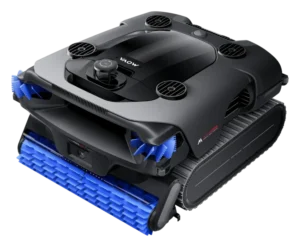
MOVA Rover X10
 III
III
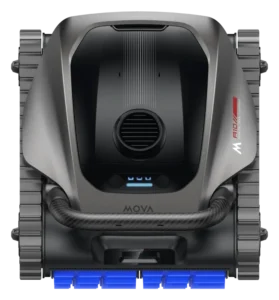
MOVA Diver A10
 III
III
Roborock RockAqua P1
 III
III
Polaris EPIC 8520
Where it's sold
We may earn commission from qualifying purchases. This does not influence classification.
Reference the Maytronics Dolphin Triton PS classification.
Embed the Autonomy Ladder™ mark or copy the citation. The mark is served from this record, so a reassessment updates it on your page automatically.
Get the embed code and citation
Scale proportionally only, up to 2× (536px wide)(224px wide). No recolouring, cropping, rotating, or re-typesetting.
Robovations. "Maytronics Dolphin Triton PS: Autonomy Level III (Conditional Autonomy)." Autonomy Ladder™, assessed August 2026. https://robovations.com/robots/maytronics-dolphin-triton-ps/
- Link it. The mark must point at this record. An unlinked mark is not authorised.
- Hot-link it. Never download, self-host, or re-upload the image. A saved copy stops updating, and a mark that has stopped updating is a claim we no longer stand behind.
- A classification, not an endorsement. It may not appear beside language implying Robovations recommends, rates, or approves the product.