Skip to content
Saved
RELEASED 2021REASSESSED 2026.08.07
Hayward

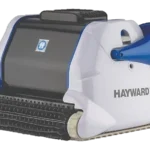
Hayward AquaVac 6 Series

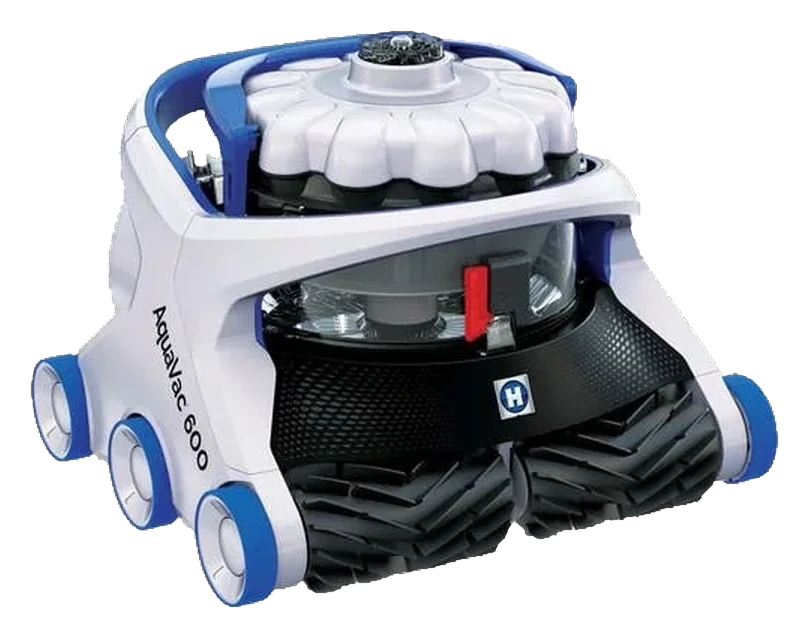
Hayward's entry into smart pool cleaning adds six variable-speed rollers with adaptive traction for wall and waterline climbing, plus mapped coverage, without batteries. A capable cleaner for owners who value floor-to-waterline reach over autonomy.
Hayward AquaVac 6 Series
PriceNo list priceRetail price not tracked
FIT CHECK

Will the Hayward AquaVac 6 Series work in your pool?

Describe your pool using the controls. Each choice reads the spec sheet for you, flagging where the Hayward AquaVac 6 Series is built for your space and where it isn’t.

Pool type

Pool size

Debris load

Coverage you want

A classification of fit for the conditions you set, not a recommendation. Verdicts describe engineering design intent, not test results.

SPECIFICATION

The full spec sheet.

Manufacturer-published figures, measured against every robot pool cleaner we track.

18 in16.5 in10 inDimensional drawing
Key specificationsManufacturer-published
Footprint
16.5 × 18 in · 10 in tall
Weight
18.3 lbs
Wi-Fi
Supported
Surfaces cleaned
Floor, walls and waterline
Mapping & navigation

Mapped boundary coverage with systematic floor and wall traversal; roller-driven waterline contact.

Where it lands · ranked across 75 robot pool cleanersThis robotMedianTypical range
Weight18.3lbs
7.9 lbs46.3 lbs
Near median

Position shows where the figure sits across the tracked category, not a quality judgment.

OWNERSHIP

Living with it.

Mechanical arm adds complexity; corded design and proven pump integration support steady performance with proper cartridge maintenance.

Owner reports span 2-4 years of service. Documented issues center on arm alignment drift and occasional cartridge bypass around seals. Pump integration failures are rare with compatible setup.

Owner effort~60 minhands-on per month
Consumables$150replaceable parts / yr
Reliability trend Stableowner-reported arc
What goes wrong · 4 documented · 0 self-recover
Occasional
Wall-climbing arm misalignmentIncomplete wall coverage; waterline contact becomes sporadic
Owner fixManual arm realignment; check for debris lodged in pivot joint. Inspect quarterly.
Occasional
Cartridge or bag filter bypassAlgae and fine sediment slip past filter; pool clarity declines faster
Owner fixReplace filter element; check seal integrity. Occurs at 5-6 month intervals on high-debris pools.
Occasional
Pump flow mismatch or suction line blockageCleaner loses suction and navigation stalls
Owner fixInspect suction line for debris; verify pump flow rate matches manual specs
Rare
Corded power connection corrosionLoss of power or intermittent operation
Owner fixReplace power plug or entire cord; store indoors seasonally
Upkeep routine
Each useEvery cycle
Lift the cleaner out, open the debris canister by its red release knob and empty it, then rinse the canister with fresh water.
Weekly52×/yr
Rinse the cleaner body with fresh water to clear pool chemistry, and check the brushes and rollers for embedded grit.
Monthly12×/yr
Inspect the drive rollers and brush surfaces for wear and confirm wall contact is consistent.
Seasonal4×/yr
Inspect the floating cable and the control unit's supply cord for abrasion or cuts. The control unit runs from a GFCI-protected receptacle and should not be run through an extension cord. Store the cleaner and control unit indoors over winter if the pool is not used year round.
As neededno fixed schedule
Untwist the floating cable, and replace brushes once worn.
Safety notes

CautionArm pinch point at wall junction: The articulated arm can pinch fingers if operator manually guides it. Hands off during operation.

NoteSuction hazard during operation: All suction-based cleaners present suction risk to swimmers. Keep the cleaner running in unoccupied pools only.

RECORD

How the assessment has moved.

Every announcement, release and reassessment behind the current classification.

Coming soon
Just launched
Active updates
Settled
Discontinued
  1. Aug 2026 · AssessmentRecord status: Verified → Provisional
  2. Aug 2026 · AssessmentRobovations Score rescored under v4.2: 68 → 70
  3. Aug 2026 · AssessmentRobovations Score rescored under v4.0: 78 → 68
  4. Jul 2026 · AssessmentRobovations Score revised 70 → 78
  5. Jul 2026 · AssessmentRobovations Score recorded at 70 of 100
Editorial comparisons

How Hayward AquaVac 6 Series compares.
All comparisons →
Common questions

What people actually ask.

5 answered
OperationHow does the AquaVac 6 Series climb walls and reach the waterline?
Six variable-speed drive rollers with adaptive traction carry the cleaner up the wall and along the waterline. There is no separate climbing arm and no additional brush mechanism for the wall pass. Hayward’s manual gates a Waterline Only mode to Wi-Fi models, so waterline-focused runs are available on the 650 rather than across the whole series.
OwnershipCan the AquaVac 6 integrate with my existing pool pump and filter?
It does not connect to them at all. The AquaVac 6 Series is self-contained: it carries its own motor and pump and draws Safety Extra Low Voltage from a poolside control unit over a floating cable. Hayward’s manual describes no connection to the pool’s suction line, return line or filtration. There is no flow-rate requirement, no compatible-pump list and no plumbing work to do.
OwnershipWhat is the filter cartridge or bag cost and replacement interval?
There is neither. The 6 Series is filterless. Hayward’s SpinTech system spins water through 18 hydrocyclones into a self-cleaning, self-flushing TouchFree debris canister, and Hayward’s claim for the design is that suction does not fall away as the canister fills. Emptying is by the canister’s red release knob. No cartridges, no bags, no filter media in the ownership cost.
CompatibilityDoes the AquaVac 6 have Wi-Fi or app control?
It depends on the model. The AquaVac 650 is Wi-Fi enabled at the power supply and pairs with the Hayward AquaVac Connect app, which adds SpotClean remote steering, a programmable weekly schedule and selectable color themes. The 600 carries no radio and runs a recurring 48-hour cycle instead. Two features in Hayward’s manual, including Waterline Only, are marked as available on Wi-Fi models only.
OperationHow does it handle tight corners and deep-end walls?
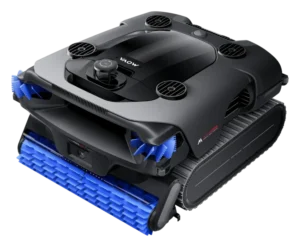
Wall and waterline work is done by the drive rollers rather than by a separate mechanism, so corner behavior follows the same traction and turning limits as the floor pass. Hayward publishes no coverage percentages for corners, recessed steps or ledges, and none are stated here. Tight recessed steps and sharp ledges are the geometry most likely to need a manual pass.

Cite / Embed

Reference the Hayward AquaVac 6 Series classification.

Embed the Autonomy Ladder™ mark or copy the citation. The mark is served from this record, so a reassessment updates it on your page automatically.

Get the embed code and citation
124161
268112
Clear space 3222 on all sides
Embed code

Scale proportionally only, up to 2× (536px wide)(224px wide). No recolouring, cropping, rotating, or re-typesetting.

Citation

Robovations. "Hayward AquaVac 6 Series: Autonomy Level III (Conditional Autonomy)." Autonomy Ladder™, assessed August 2026. https://robovations.com/robots/hayward-aquavac-6-series/

  • Link it. The mark must point at this record. An unlinked mark is not authorised.
  • Hot-link it. Never download, self-host, or re-upload the image. A saved copy stops updating, and a mark that has stopped updating is a claim we no longer stand behind.
  • A classification, not an endorsement. It may not appear beside language implying Robovations recommends, rates, or approves the product.
Where to next

Three ways to keep going.

For browsers

See every Level III.

Every robot we’ve classified at conditional autonomy. Sorted by readiness, score, and price. Filter by category, manufacturer, or release date.

Updated weekly with new entries and reclassifications.