Skip to content
Saved

Technology shift/Robot Vacuums/4 robots compared/Reviewed Apr 21, 2026

LiDAR vs camera robot vacuums: which works in the dark?
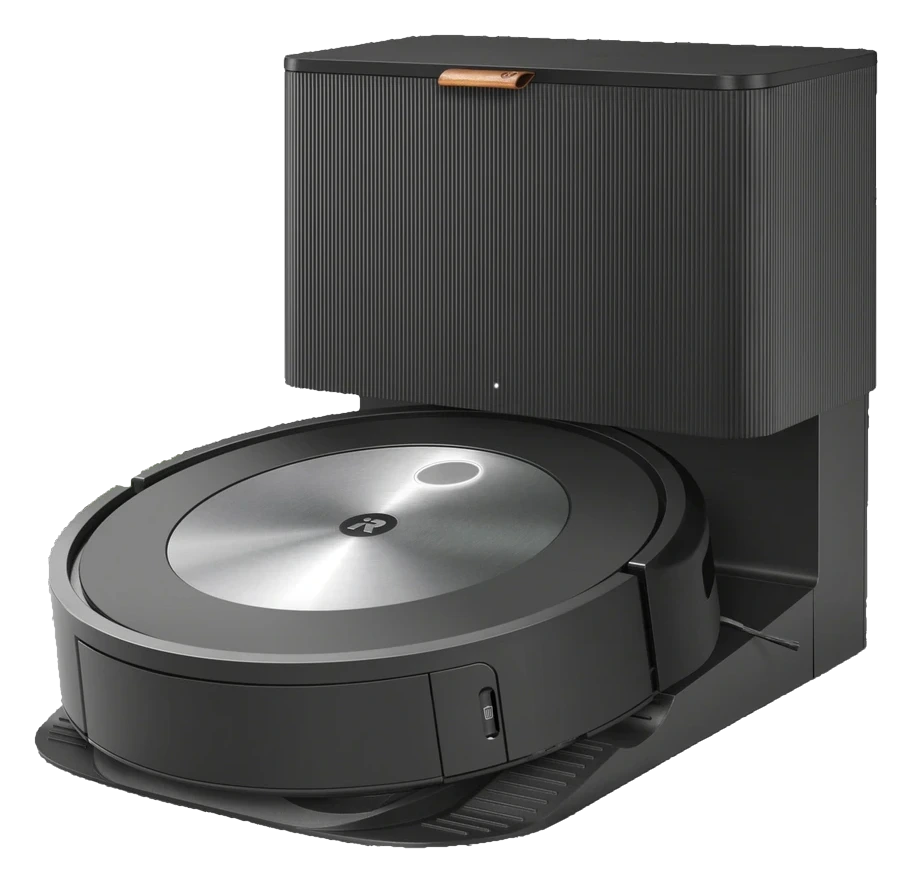
vSLAM (visual SLAM) against LiDAR-first navigationTwo architectures for the same job. Each is documented to work in conditions the other is documented to struggle in.
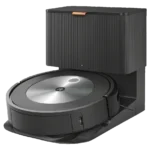
iRobot Roomba j7+View recordiRobotIIIj7+Navigation approachvSLAM (visual SLAM)
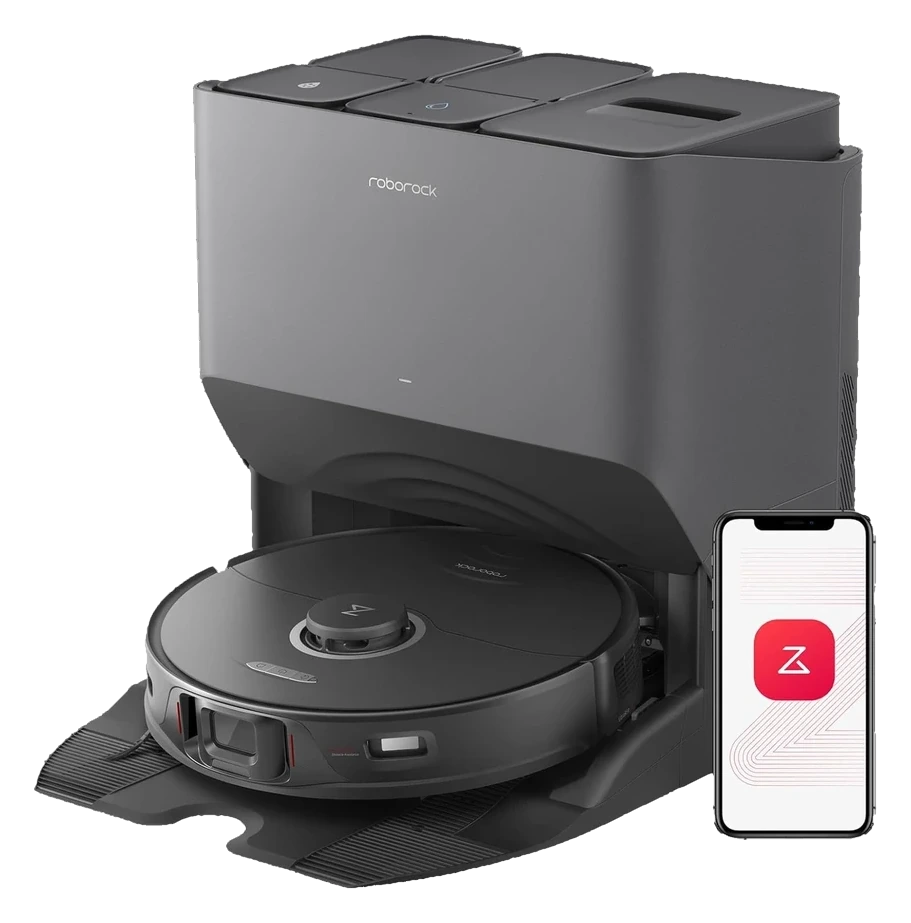
Roborock S8 Pro UltraView recordRoborockIIIS8 Pro UltraNavigation approachLiDAR-first navigation
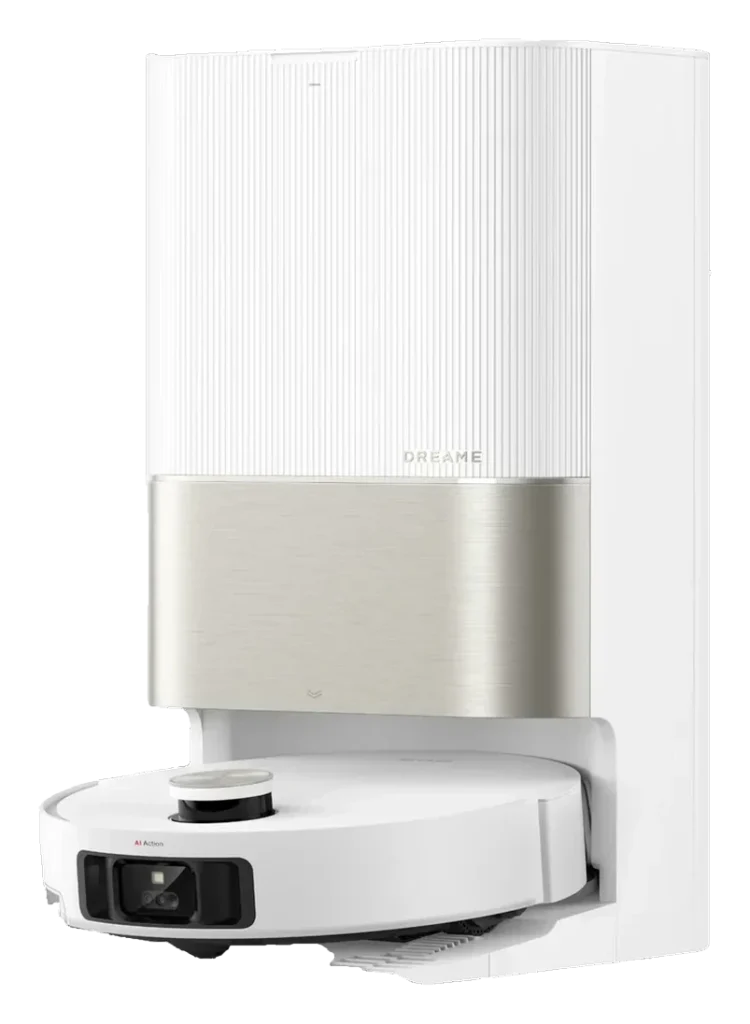
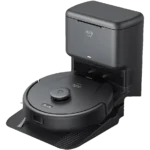
Dreame X50 UltraView recordDreameIVX50 UltraNavigation approachLiDAR-first navigation
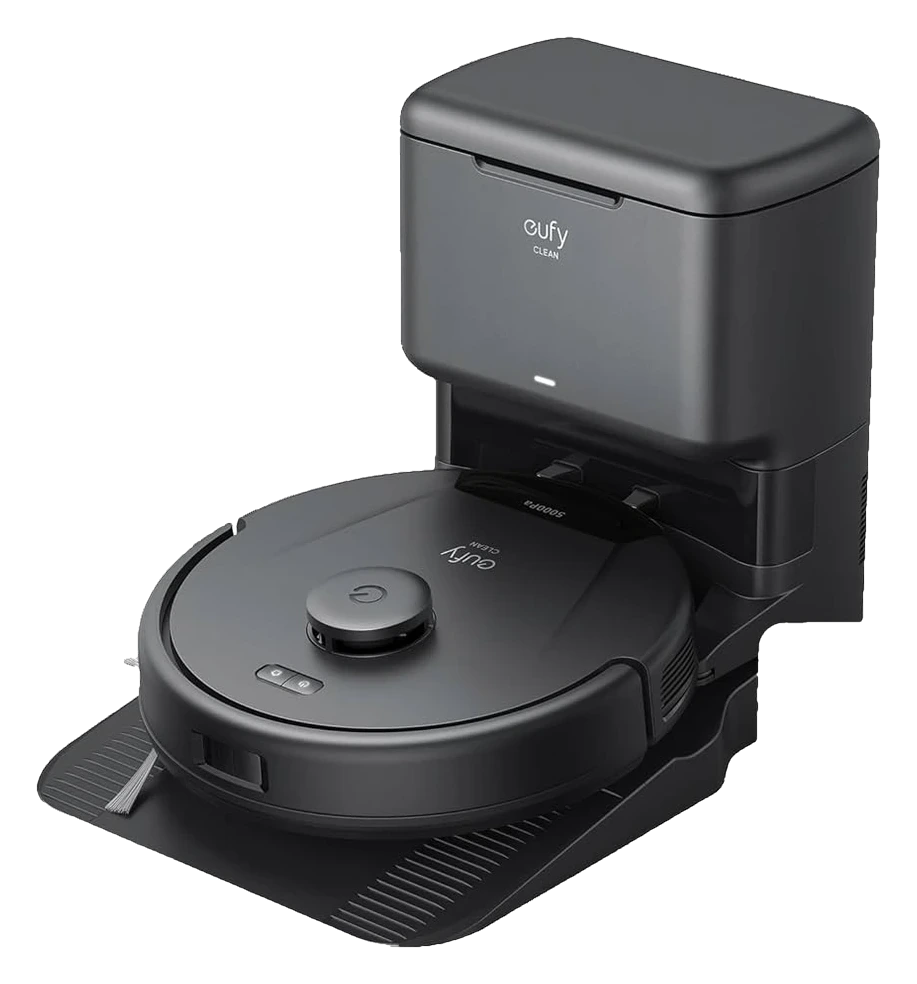
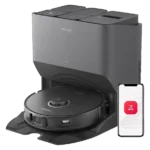
Eufy Clean L60View recordEufyIIL60Navigation approachvSLAM (visual SLAM)
Full specifications19 measurements · 66 of 76 documented
MSRP
$800
$1,599
$1,699.99
$299
Rated runtime
75 min
180 min
220 min
120 min
Charge time
120 min
240 min
240 min
240 min
Battery capacity
31.8 Wh
74.9 Wh
92 Wh
37.4 Wh
Battery type
Li-ion
Li-ion
Li-ion
Li-ion
Suction power
1,700 Pa
6,000 Pa
20,000 Pa
5,000 Pa
Noise level
68 dB
71 dB
68 dB
51 dB
Navigation
vSLAM camera (PrecisionVision AI) with optical floor-type sensing
LiDAR SLAM with Reactive 3D obstacle avoidance (3D structured light plus infrared), cliff detection, real-time mapping. No camera on this model.
VersaLift retractable LiDAR with 360-degree coverage, dual RGB cameras, AI obstacle avoidance, visual SLAM mapping
LiDAR-based room mapping with bump sensor obstacle detection
Connectivity
wifi, bluetooth, alexa, google_home
wifi, alexa, google_home
wifi, bluetooth, matter, alexa, google_home
wifi, alexa, google_home
Dimensions (W×D×H)
13.8 × 13.8 × 3.4 in
13.8 × 13.8 × 3.82 in
13.5 × 13.5 × 3.5 in
13.4 × 13.4 × 3.9 in
Weight
7.5 lbs
10.8 lbs
9.99 lbs
5.1 lbs
Readiness
Ready Now
Ready Now
Ready Now
Not documented
Released
Sep 2021
Apr 2023
Feb 2025
Jun 2023
Dock type
Auto-empty
Auto-empty, mop washing, drying, auto water refill
Auto-empty, mop washing, hot-water washing, drying, auto water refill
Charge-only dock, no self-emptying
Threshold climb
0.6 in
Not documented
2.4 in
0.8 in
Onboard dustbin
Not documented
350 mL
395 mL
350 mL
Water tank capacity
Not documented
200 mL
Not documented
Not documented
Mop lift
Not documented
20 mm
10.5 mm
Not documented
Dust bag capacity
Not documented
2.7 L
3.2 L
Not documented

The technological divide

Two architectures, two failure modes

The category has split into two architectural approaches. Each works well in some conditions and breaks down in others.

Approach A · Camera-only navigation

vSLAM (visual SLAM)

1

The robot finds its way by recognizing landmarks through an onboard camera, the way a person navigates by sight.

Builds a map of the room using a camera feed. Requires ambient light for feature extraction. Cheaper to manufacture, simpler to upgrade in software.

  • Strong daylight mapping
  • Cheap, fast firmware updates
  • Degrades sharply below 50 lux
  • Defeats on reflective floors
vs
Approach B · LiDAR + sensor fusion

LiDAR-first navigation

The robot measures the distance to nearby objects by timing reflected laser pulses, building a live map of its surroundings.

Uses laser distance measurement, independent of visible light. Hybrid systems combine LiDAR with cameras for object recognition. Higher BOM cost.

  • Consistent in any light condition
  • Mapping accuracy unaffected by floor
  • Defeats on transparent obstacles
  • ~$80-120 higher BOM

Where each robot sits

Does the architecture pay off?

Horizontal: where each robot sits between the two architectures. Vertical: its documented result on the headline test.
Handles itPartialStruggles
Roborock S8 Pro UltraYes
Dreame X50 UltraYes
iRobot Roomba j7+IR-assisted
Eufy Clean L60Fails
AvSLAM (visual SLAM)LiDAR-first navigationB

Vertical axis: documented result on Maps a dark room (<5 lux)

What each architecture can and can’t do

Capability tests

Each capability is documented from owner reports, manufacturer specifications, or third-party reviews. No in-person testing.

CapabilityiRobot Roomba j7+Roborock S8 Pro UltraDreame X50 UltraEufy Clean L60
Maps a dark room (<5 lux)No ambient lightIR-assistedYesYesFails
Detects dark furnitureBlack sofas, dark woodPartialDetectsDetectsMisses
Reflective floor mappingTile, polished concreteDriftsStableStableDrifts
Schedules during sleep hoursLights off, midnight runsSlowedNormalNormalHalts
Detects transparent obstaclesGlass tables, clear binsYesMissesCamera-assistSometimes

What the architecture difference means

Different homes, different sensor stacks

Where each architecture fits, by condition.

Predictable, well-lit layouts

Camera-only architectures work in homes with steady lighting and few dark surfaces. Cost savings are real. The architectural gap closes when ambient light is reliable.

Variable light or reflective floors

LiDAR-first architectures absorb the variability that defeats camera-only systems. The premium covers laser distance measurement and the firmware to fuse with vision.

Mixed obstacle types

Hybrid sensor fusion (LiDAR + camera) is the only architecture that handles both dark furniture and transparent obstacles. Currently the most expensive tier.

Common questions

What readers ask about this comparison.

Q.
Why does LiDAR matter in low light?
LiDAR uses infrared light pulses and measures reflections, making it independent of ambient illumination. Camera-based systems require sufficient visible light to distinguish obstacles and layout. In darkness, LiDAR continues functioning while camera-dependent navigation degrades. Manufacturer specifications document this distinction across all four robots.
Q.
Can camera-only robots handle night scheduling?
iRobot Roomba j7+ documentation acknowledges reduced performance below 50 lux and notes that scheduled nighttime runs require adequate ambient light or additional fixtures. Owner reports confirm increased collision rates and navigation errors when running in dark rooms. For reliable night scheduling, LiDAR-equipped models are necessary.
Q.
What is sensor fusion and why does it help?
Sensor fusion combines data from multiple sensors (LiDAR, camera, IMU) to make navigation decisions. The Roborock S8 Pro Ultra uses three modalities so that if one fails or degrades, others provide backup detection. Dreame X50 Ultra uses two modalities; Eufy Clean L60 uses only LiDAR. Redundancy increases reliability and reaction speed.
Q.
Does mapping quality differ between these approaches?
LiDAR-primary systems (Roborock, Eufy) produce maps independent of lighting conditions. Camera-assisted systems (Dreame) produce stable maps in partial light but degrade in complete darkness. iRobot Roomba j7+ maps built in daylight remain accurate at night, but new mapping during low-light runs becomes less precise.
Q.
How do reaction times compare?
Reaction speed depends on sensor type and processor speed. Roborock S8 Pro Ultra uses a high-speed processor enabling sub-20ms LiDAR reactions; Dreame X50 Ultra (Snapdragon) provides fast fusion processing; Eufy Clean L60 offers solid response but slower than premium models. iRobot Roomba j7+ reaction times degrade in darkness when camera-dependent.
Q.
Which is best for varied lighting?
Roborock S8 Pro Ultra excels across all lighting conditions due to multi-sensor redundancy. Dreame X50 Ultra handles mixed light well but prefers partial visibility. Eufy Clean L60 performs reliably in any light but lacks the advanced features of pricier models. iRobot Roomba j7+ is best in naturally lit homes only.
Next up

Can robot vacuums climb thresholds and room transitions?

Read the comparison
Comparison ID: RV–CMP–1903 · Last reviewed Apr 21, 2026 · Based on owner reports, manufacturer documentation, and firmware release notes