
Goal-based/Robot Window Cleaners/4 robots compared/Reviewed Jun 23, 2026
Frameless and edge-only glass: which window robots actually hold an edge?

 View recordHOBOTIIIS7 Pro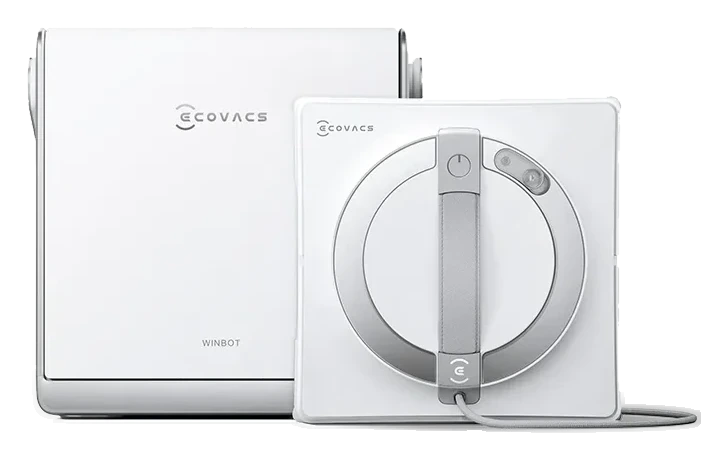

Full specifications17 measurements · 59 of 68 documented
The investigation
5 questions this comparison examines
What does each robot use to detect a frameless edge?
Edge detection architecture varies significantly across these four robots. The method a robot uses determines whether it can hold position without a physical frame to reference against.
 HOBOT-S6 Pro
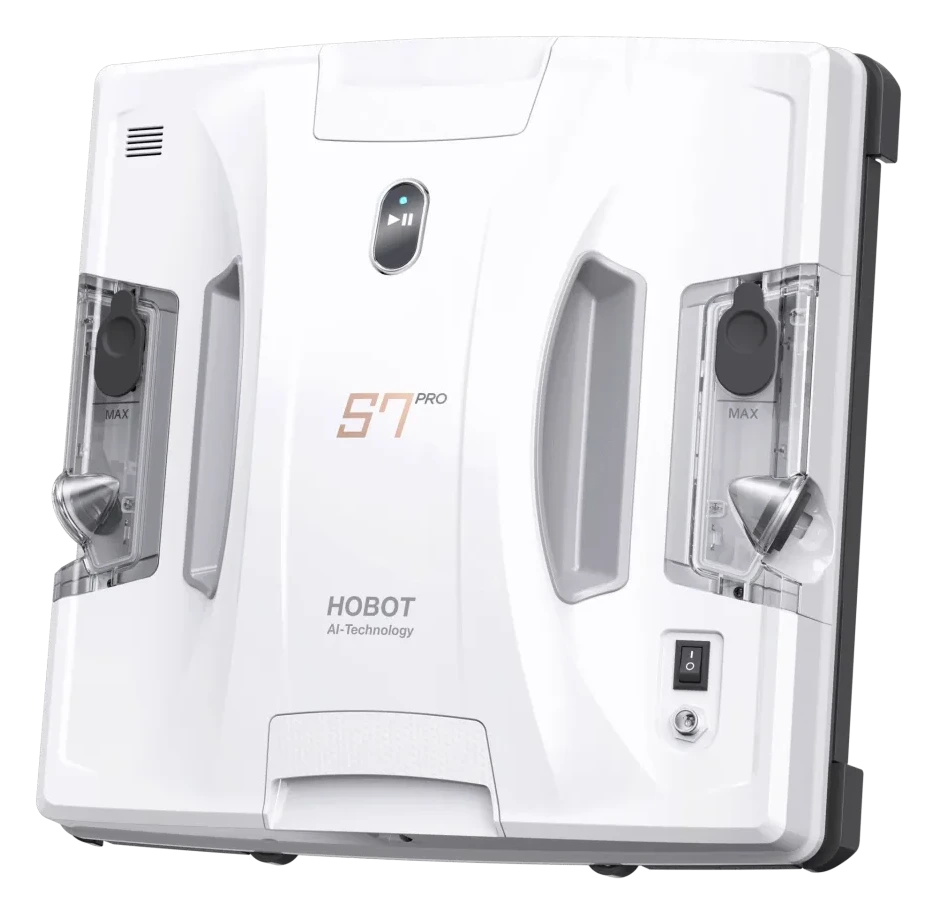
 HOBOT S7 Pro
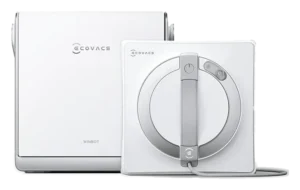 Ecovacs Winbot W2 Pro Omni
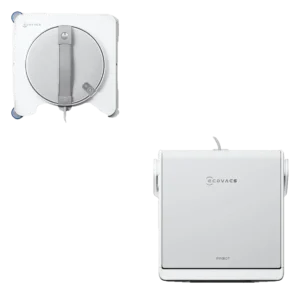 Ecovacs Winbot W2S Omni
Ecovacs product documentation for the W2S Omni explicitly lists TruEdge precision rated to within 0.04 in of window edges, and confirms compatibility with frameless glass surfaces.
HOBOT product page for the S6 Pro cites frameless glass compatibility as a documented strength; the S7 Pro's skip-for list explicitly names frameless glass as outside its design scope.
Ecovacs W2 Pro Omni documentation recommends a minimum 1-inch frame-to-glass transition for secure tether anchor on frameless installations; custom brackets are listed as an add-on option.
How much suction headroom does each robot carry for unsupported glass?
On a frameless pane, suction adhesion is the only thing holding the robot to the glass. Suction headroom above minimum adhesion determines how much margin remains for edge dwell, pad pressure, and vibration.
HOBOT-S6 ProHOBOT S7 ProEcovacs Winbot W2 Pro OmniEcovacs Winbot W2S OmniEcovacs W2S Omni manufacturer specs list 8,000 Pa suction, verified via Ecovacs product page; the W2 Pro Omni lists 5,500 Pa on the same channel.
HOBOT S7 Pro suction is documented at 4,800 Pa per Amazon product listing; HOBOT-S6 Pro suction figure is not published in available documentation.
Does frameless glass change the operational setup for each robot?
Setup steps on frameless glass differ from framed installations. Tether routing, sensor calibration, and operator involvement shift when there is no physical ledge to anchor against.
HOBOT-S6 ProHOBOT S7 ProEcovacs Winbot W2 Pro OmniEcovacs Winbot W2S OmniHOBOT-S6 Pro product documentation identifies frameless glass compatibility as a documented strength and does not require frame geometry for edge-sensor reference, unlike the S7 Pro which lists frameless as outside its design scope.
Ecovacs W2 Pro Omni documentation notes optional installation brackets for frameless retrofits priced at approximately $50-80; this is the only product in this comparison requiring an add-on component for frameless operation.
What does per-pane coverage actually look like without a frame to track against?
Coverage pattern within a single pane tests how thoroughly each robot cleans when sensor reference points are absent or reduced. The question is whether path-planning logic degrades on frameless glass.
HOBOT-S6 ProHOBOT S7 ProEcovacs Winbot W2 Pro OmniEcovacs Winbot W2S OmniEcovacs W2S Omni spec sheet documents triple wide-angle nozzles paired with dual rotating pads; manufacturer describes the system as targeting mineral deposits before pad contact.
HOBOT-S6 Pro documentation lists 600 RPM reciprocating dual mop pads and ultrasonic spray; S7 Pro also uses dual reciprocating mops but spray system details are not confirmed in available documentation.
Ecovacs W2 Pro Omni owner reports, collected via multi-language retailer reviews, note that WIN-SLAM edge coverage on frameless glass requires the optional installation bracket to maintain consistent path boundary reference.
How does anti-drop safety work when there is no frame to signal the edge?
Anti-drop behavior is critical on frameless glass because a missed edge means the robot leaves the surface rather than reversing into a frame. Each design handles this differently.
HOBOT-S6 ProHOBOT S7 ProEcovacs Winbot W2 Pro OmniEcovacs Winbot W2S OmniEcovacs W2S Omni documentation describes a 12-stage anti-drop system and explicitly notes a 30-minute adhesion hold on low battery, giving the operator time to respond before the robot detaches.
Both HOBOT corded models rely on continuous motor power and the safety rope as the sole fall-prevention mechanism; no low-power adhesion hold is documented in available specifications.
Ecovacs W2 Pro Omni owner reports note that wind detachment is rare; the tether reel is the documented fall-arrest mechanism with no secondary adhesion hold described in the manual.
In closing
What the evidence shows
Patterns that emerged across the questions above.
Frameless compatibility splits the field by design intent
The HOBOT-S6 Pro and Ecovacs W2S Omni document explicit frameless compatibility; the HOBOT S7 Pro lists frameless glass as outside its operating scope and the W2 Pro Omni requires an optional add-on bracket.
Suction headroom correlates with autonomy level on unsupported glass
The two Level III robots (S7 Pro at 4,800 Pa, W2S Omni at 8,000 Pa) carry documented suction figures; the two Level II robots diverge sharply, with the S6 Pro undocumented and the W2 Pro Omni at 5,500 Pa.
Anti-drop redundancy is not uniform across Level III models
Only the W2S Omni documents a layered anti-drop system with a timed adhesion hold; the S7 Pro's anti-drop relies on the safety rope without a documented secondary hold on frameless installations.
Common questions